
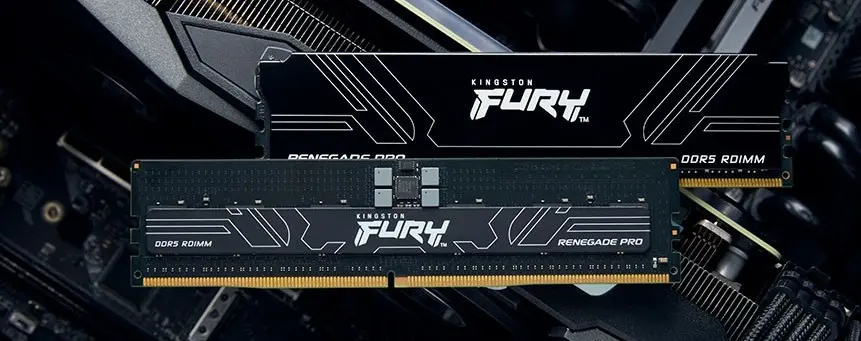
Kingston Technology continues to dominate the global DRAM module market, holding a 62 percent share according to data from GDM. This leadership position has remained unchallenged for 23 consecutive years, a streak that underscores the company's enduring influence on the memory industry. For builders and system integrators, this dominance means Kingston modules remain a ubiquitous standard in the global supply chain. The sheer volume of Kingston products in circulation ensures wide compatibility and availability for most consumer and enterprise needs.
Kingston's 23-year market dominance ensures its modules remain the standard for builders
The company achieves this market leadership by assembling, testing, and branding DIMM and SO-DIMM modules rather than manufacturing the memory chips themselves. Kingston sources its DRAM chips from major fabricators including Samsung, SK Hynix, and Micron. This business model allows Kingston to focus on quality control and brand reputation while leveraging the manufacturing scale of its chip suppliers. The result is a product line that is widely recognized and trusted by end-users and OEMs alike.
The remaining 38 percent of the global DRAM module market is fragmented among several other manufacturers. Key competitors in this space include Corsair, G.Skill, Crucial, and ADATA, alongside various smaller regional players. While these brands hold significant sway in specific niches like high-performance gaming or specialized server applications, they collectively trail Kingston in overall volume. This distribution highlights a market where one brand sets the baseline, while others compete on specific performance or aesthetic features.
We noted earlier that Innodisk has been pushing boundaries in the server space with their DDR5-8000 RDIMM for Edge AI applications. That development shows how other manufacturers are targeting high-bandwidth, specialized use cases rather than competing directly on general-purpose volume. Kingston's strategy appears to prioritize broad market coverage and reliability over chasing the absolute highest speed records in niche segments. This approach reinforces their position as the default choice for standard PC and server builds.
Discussion
0 comments
Log in to join the thread with a thoughtful take, question, or correction.