
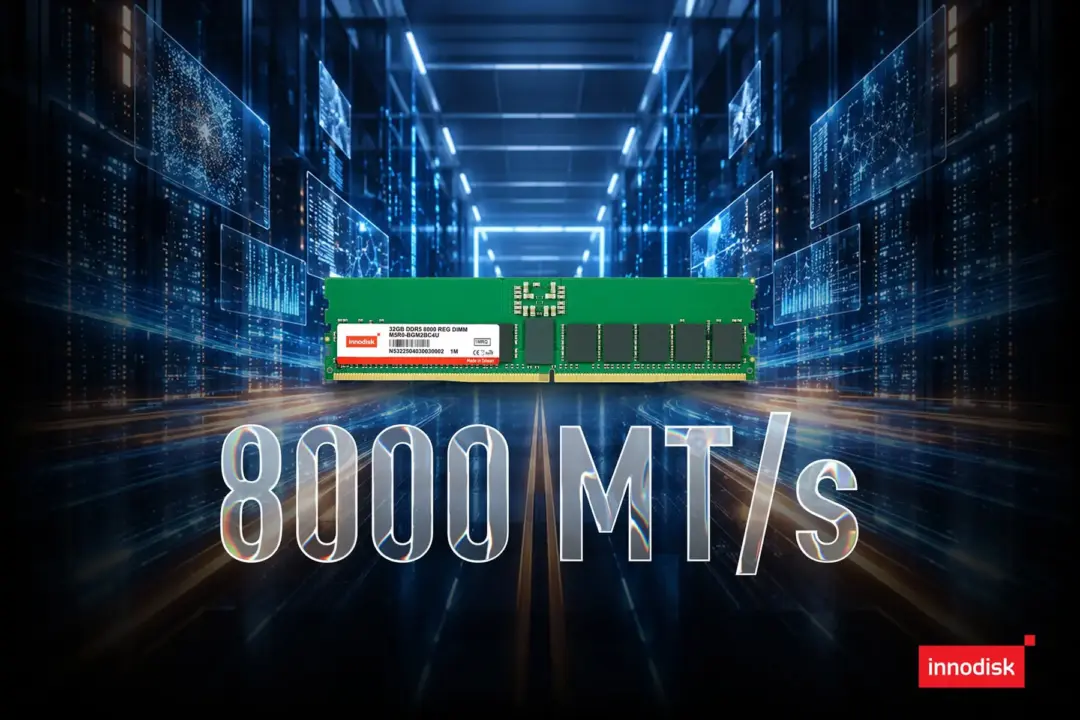
Enterprise servers and edge AI systems are hitting a wall where fast processors sit idle waiting for data. Innodisk solves this bottleneck with a new DDR5-8000 RDIMM that moves data at 8000 MT/s. This speed jump matters because it keeps high-performance computing pipelines full during heavy workloads. Buyers relying on large language models or digital twins will see less latency in data-heavy tasks.
New industrial DDR5 module hits 8000 MT/s to clear data bottlenecks
The DDR5-8000 RDIMM uses registered ECC architecture to maintain data integrity under load. Innodisk designed this module specifically for industrial-grade environments that demand stability. The product targets edge AI applications where system upgrades need to be flexible and reliable. Samson Chang, Innodisk's general manager for embedded DRAM, stated that efficient processing of massive data volumes is now as critical as raw computing power.
The module offers capacity options ranging from 16GB to 64GB to fit various server configurations. Innodisk claims this new series delivers an 11.1% performance improvement over the previous generation. The hardware includes integrated TVS diodes and eFuse protection to guard against electrical surges. It also features 30-micron gold-plated contacts with anti-sulfurization coatings to ensure long-term durability in harsh conditions.
Innodisk plans to expand this lineup with CUDIMM, CSODIMM, and ECC variants in the first quarter of 2027. We previously tracked CXMT DDR5 Memory Hits 8000 MT/s, which highlights the industry-wide push for higher bandwidth. This new Innodisk release adds another option for system builders seeking verified industrial memory solutions. The launch confirms that DDR5 speeds are now standard for next-generation AI infrastructure.
This release provides a concrete path for upgrading systems that struggle with current memory bandwidth limits. The combination of speed, capacity, and industrial protection features makes it suitable for critical edge deployments. Customers can now plan their hardware refreshes around these specific performance metrics. The availability of these modules supports the growing demand for reliable data processing in AI workloads.

Discussion
0 comments
Log in to join the thread with a thoughtful take, question, or correction.