
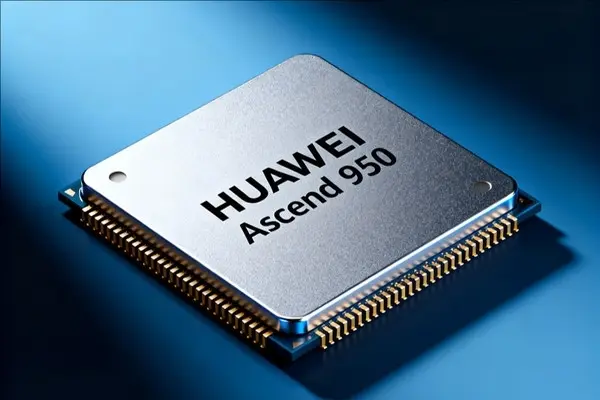
Sberbank plans to integrate Huawei Ascend processors into its GigaChat artificial intelligence model. The Russian bank acquired a significant stake in Element, the country's largest electronics manufacturer, to support domestic hardware capabilities. Western sanctions have restricted access to advanced computing chips in Russia. This procurement strategy aims to bypass those restrictions using Chinese-made alternatives.
Ascend 950PR and 950DT chips target inference and training tasks respectively
Huawei offers two variants of its Ascend 950 series for this workload. The Ascend 950PR focuses on inference tasks and delivers performance between the NVIDIA H100 and H200 models. It provides a 2.8 times performance improvement over the previously restricted Ascend 910B. The Ascend 950DT variant targets training workloads and is scheduled for release in the fourth quarter of 2026.
Huawei faces substantial production demands from major Chinese technology firms. ByteDance, Alibaba, and Tencent have secured large orders, with ByteDance alone committing approximately 38 billion RMB this year. The company aims to produce 750,000 units by 2026. Manufacturing relies on SMIC's 7nm DUV process, which requires an eight-month cycle from design tape-out to finished product.
Russia currently depends on stockpiled Western GPU inventory for its infrastructure. Domestic chip manufacturing capabilities lag approximately twenty-five years behind the global frontier. Sberbank's move highlights a shift toward Chinese hardware as sanctions tighten. The bank invested 27 billion RUB into Element to strengthen local electronics production.

Discussion
0 comments
Log in to join the thread with a thoughtful take, question, or correction.