
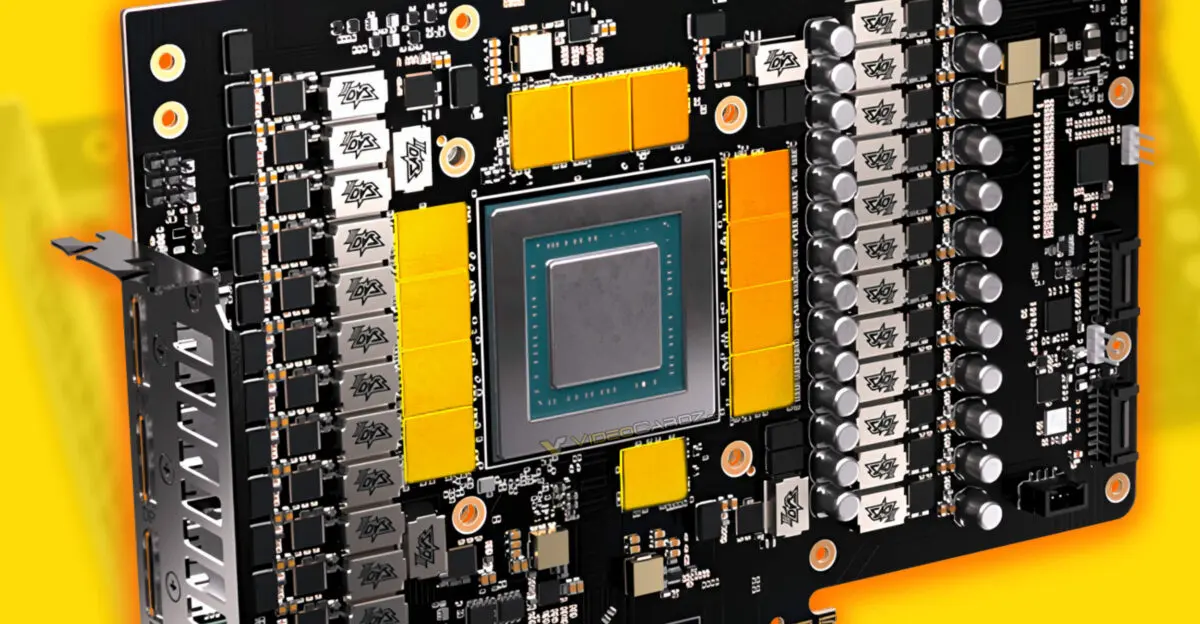
A Brazilian modding team has uncovered a hidden layer of diagnostic data in NVIDIA graphics cards that changes how enthusiasts can monitor hardware health. The discovery allows users to see temperature readings for individual memory chips rather than relying on a single hotspot average. This level of granularity matters because it helps users pinpoint specific thermal failures that standard software misses. Buyers and builders can now identify uneven thermal pad contact or a single overheating module before it causes system crashes.
Modders bypass standard limits to expose individual chip heat
The technical method relies on memory-mapped I/O, or MMIO, to access the GPU's internal registers directly. This approach bypasses the limitations of standard monitoring applications that typically report only the hottest sensor reading available. The team confirmed that the discovery works with mobile GPUs using GDDR6 memory. It also functions on desktop GeForce RTX 30 and RTX 40 Series cards equipped with GDDR6X memory.
- Supported GPU Architectures: Mobile GPUs with GDDR6; Desktop GeForce RTX 30 and RTX 40 Series with GDDR6X
- Access Method: Memory-mapped I/O (MMIO)
- Monitoring Software Behavior: Reports only the hottest sensor reading (hotspot), not an average
- Future Support: GDDR7 under study; GDDR6 desktop cards not yet enabled
Standard tools like GPU-Z currently display the highest temperature found across the memory modules. The new findings reveal that this value is a hotspot maximum, not an average across all chips. Individual readings can expose specific modules operating at significantly higher temperatures than the rest of the card. This precision helps diagnose crashes caused by a single faulty memory module or poor thermal interface material.
The modding team is currently studying support for upcoming GDDR7 memory standards. They have not yet enabled these specific readings for desktop cards that use standard GDDR6. A public tool based on these findings might face distribution hurdles because it requires an unsigned MMIO driver. Windows Defender could block such drivers, limiting the tool's accessibility for average users.
We looked at NVIDIA RTX 50 SUPER Delayed as in our earlier Nvidia coverage. NVIDIA has not responded to requests for comment regarding these hidden sensor readings. The team plans to share these findings with hardware monitoring developers to improve future software. This discovery provides a concrete path for more accurate hardware diagnostics without requiring official driver updates.

Discussion
0 comments
Log in to join the thread with a thoughtful take, question, or correction.