
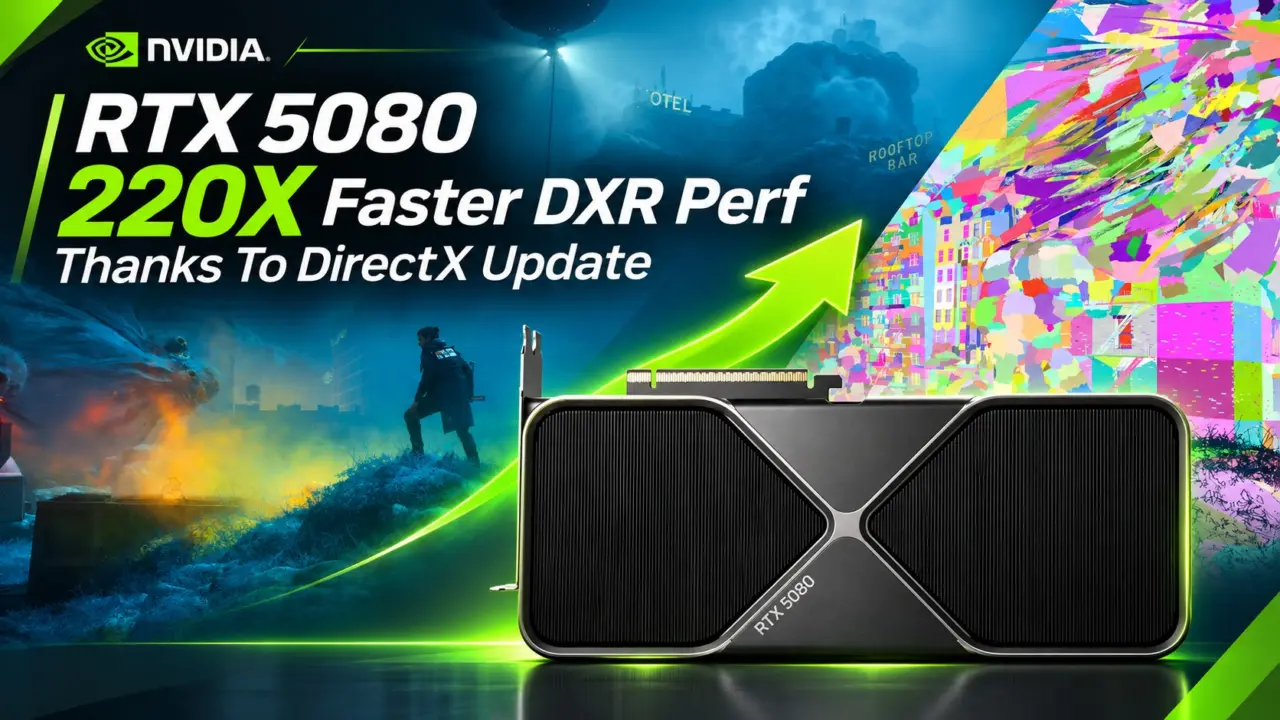
Independent test shows huge FPS gain from Microsoft's new DirectX Clustered Geometry technology on NVIDIA GeForce RTX 5080. Based on this test, if lots of developers can adopt it, the performance in future ray traced games will have big boost. But there are many important notes in the real world use case.
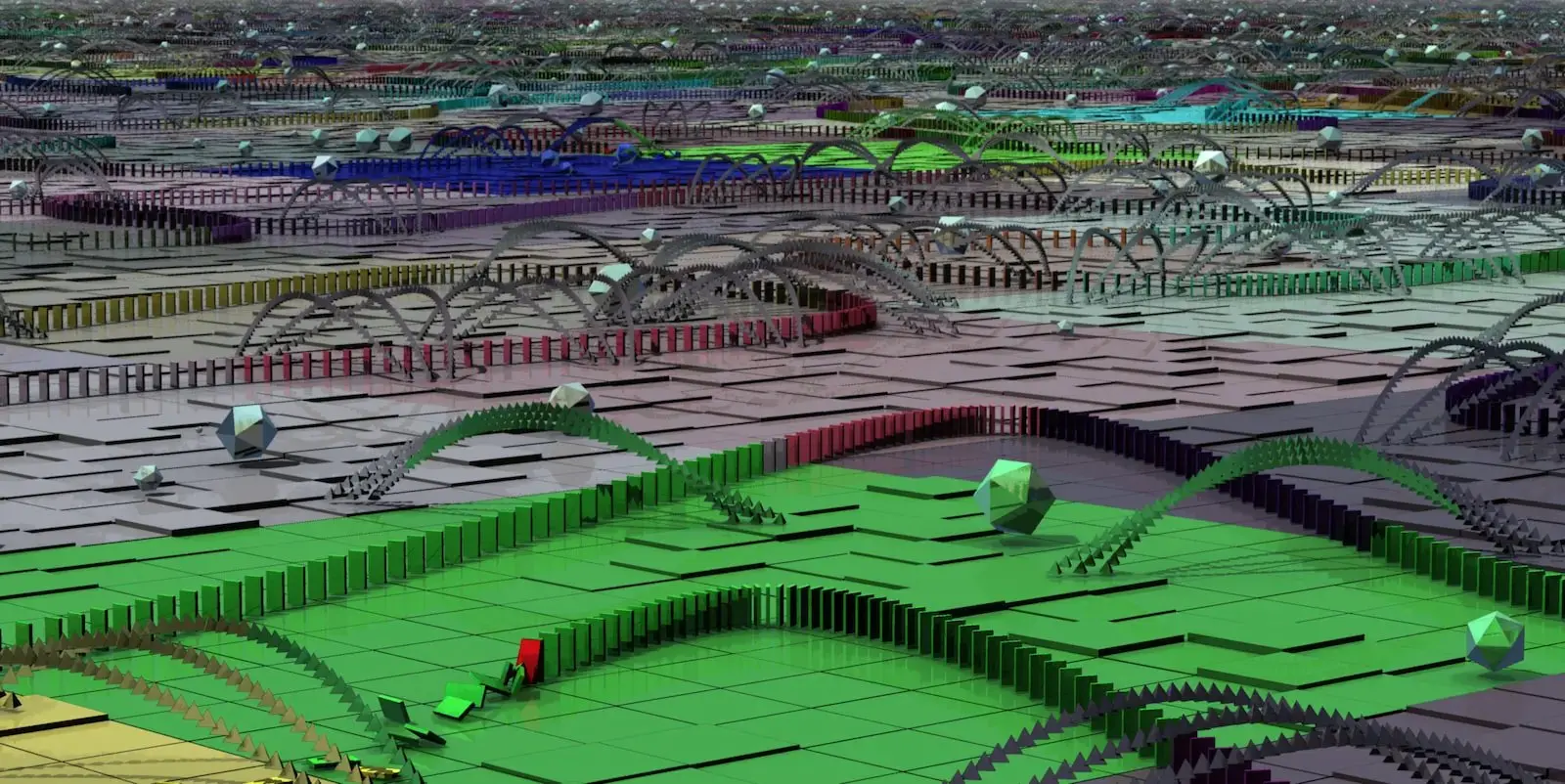
Independent testing reveals massive synthetic gains alongside significant memory savings
Osvaldo Pinali Doederlein, hardware reviewer, tested it with the NVIDIA GeForce RTX 5080 graphics card. The benchmark used Agility SDK 1.722 Preview, Game Ready Driver 621.01 to enable new ray tracing features. RTX 5080 is main hardware to test these particular DirectX features vs. traditional way.
- Frame Rate (Traditional BLAS): 1.4 FPS
- Frame Rate (Clustered Geometry): 310 FPS
- Acceleration Structure Rebuild (Traditional BLAS): 720 ms
- Acceleration Structure Rebuild (Clustered Geometry): 1.0 ms
- Acceleration Structure Memory (Traditional BLAS): 4,716 MB
In the data we can see a big difference between traditional ray tracing and this new way. Traditional BLAS get only 1.4 FPS. Clustered Geometry get 310 FPS.
The memory usage has also big drop, from 4,716 MB to just 267 MB. In synthetic test acceleration structure rebuild time dropped from 720 ms to 1.0 ms.
NVIDIA made a whitepaper to explain how they standardize their RTX Mega Geometry technology with Clustered Geometry and PTLAS. The RTX 5080 is about 3.4 times better vs. AMD Radeon RX 9070 XT in this particular Clustered Geometry benchmark. We have closely followed GeForce RTX 5080 (previously we have covered Galaxy RTX 5080 HOF Extreme hits).
Osvaldo Pinali Doederlein warned not to directly convert these numbers to games. For example this test sample doesn't have Level of Detail (LOD) system. In the real world path traced games have much more advanced optimization. So it's very unlikely that we get these extreme performance boosts.
The facts that we know so far is that RTX 5080 can use Clustered Geometry well in a controlled, synthetic environment. The hardware supports the required features in driver and SDK to all GeForce RTX generations. The extreme performance boosts are in this test environment. So it might not be that applicable to regular gaming.

The memory savings are actually the most interesting part here. Dropping from 4716 MB to 267 MB for the acceleration structure is a massive efficiency gain. It suggests the bottleneck was never the ray tracing math itself but the data management overhead.
310 fps on a synthetic test is wild but iirc these numbers often collapse in actual game engines 🤔
Does anyone have the raw build times for the traditional BLAS vs Clustered Geometry? The article only gives the rebuild time but I want to see the total pipeline cost.
The data shows the rebuild time dropped from 720 ms to 1.0 ms. That is the specific metric for acceleration structure generation. It confirms the cluster approach is vastly superior for dynamic scenes.
The author correctly notes the lack of an LOD system in this test. Real path traced games have complex optimization layers that this synthetic benchmark completely ignores. The 221x boost is likely not replicable in live environments.
AMD is down 3.4x in this specific metric. Hope the driver team is paying attention to how this compares to their upcoming RDNA 4 features.
The ray dispatch time actually went up slightly from 1.8 ms to 2.0 ms. This implies the GPU is spending more cycles processing the rays once they are dispatched. The win is entirely in the setup phase, not the execution phase.