
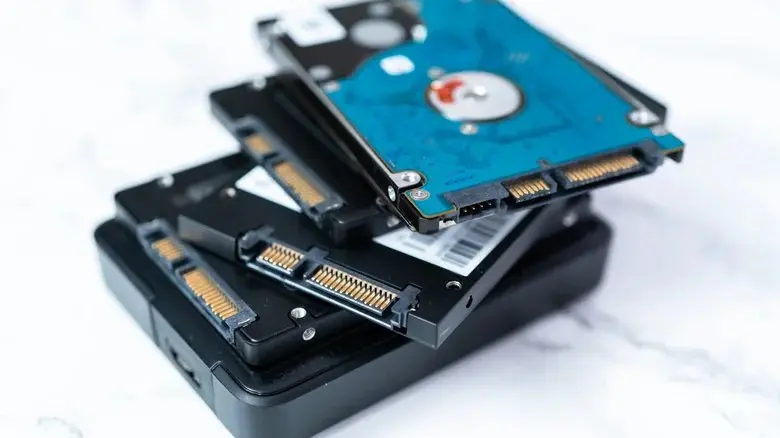
HDD and SSD prices will stay high for a long time, due to ongoing chip supply issues. The HDD/SSD price hikes may not be as dramatic as RAM, CPU or GPU price hikes. But, high prices are here to stay and are not transient in nature. This means that the price of storage is going to stay relatively high for the foreseeable future.
Analysts predict only slight declines starting in 2027 with no major correction until 2029 or 2030
There will be a need to plan for high storage costs for the foreseeable future. Both consumer and businesses will need to plan to pay more for storage for the near-term future. Don't expect things to return to a pre-pandemic price point anytime soon.
This high price problem applies to all major types of storage. Whether it's the old spinning disk HDDs, or newer NVMe/SATA SSDs, storage is generally expensive today.
Industry analysts point out that SSDs are suffering more than HDDs from flash memory shortages. People still like HDDs for their durability and cheapness for bulk storage.
It is interesting to see how different storage technologies are being affected by the same underlying chip supply issues. Storage price forecasts expect prices to stay high for several more years, before there's a big correction.
There's an expectation for some price reduction starting in 2027, as the recent "RAMageddon" chip supply shock effects fade away. But, it won't be a huge reduction. The market doesn't expect substantial price cuts until 2029 or 2030.
Long term outlook for storage prices is for things to stabilize at a much higher baseline price than pre-pandemic. This prolonged high price situation is a consequence of the complexities of semiconductor manufacturing and the fragility of supply chains. If you want big savings, you're going to have to plan ahead to make bulk storage purchases over multiple years.


This is exactly why I am holding off on any new drives until 2027.
Are the analysts citing specific NAND wafer yield issues or just general factory downtime at the major fabs? The distinction matters for the timeline.
The shortage is primarily in the advanced node capacity for NAND production lines. It is not just a yield problem but a lack of new capital expenditure for new factories.
At this rate I might just have to keep using my spinning rust from 2015 forever.
I doubt prices will ever truly stabilize at pre-pandemic levels because manufacturing complexity has fundamentally changed the cost floor.
tbh i think the 2029 date is optimistic given the supply chain fragility mentioned in the piece.