
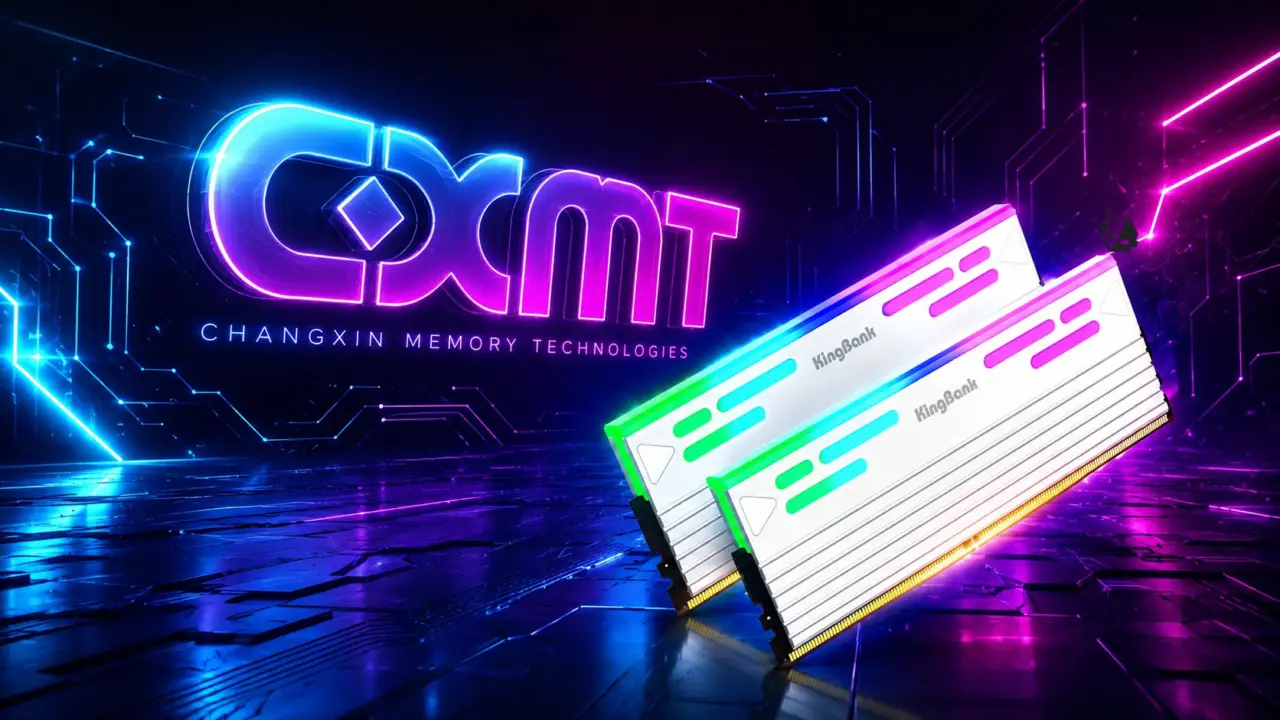
Server builders face a new pricing reality as CXMT raises the cost of its 64GB DDR5 memory modules above the $1,240 benchmark set by Samsung. This shift signals that Chinese memory manufacturers are moving upmarket and challenging established leaders on price, which directly impacts procurement budgets for data centers and high-end workstations. Buyers relying on cost-optimized server components must now account for higher baseline costs for high-capacity memory.
Chinese memory maker raises costs while tripling wafer output
CXMT manufactures these 64GB server-grade DDR5 chips using advanced fabrication processes that are currently scaling rapidly. The company operates fabs in Shanghai and Hefei, where it is aggressively expanding its production footprint to meet growing demand from global clients. This expansion includes evicting engineers from Huawei-linked vendor SiCarrier from its Hefei facility to strengthen its own operational control and negotiation leverage.
Specifications
- Capacity: 64GB
- Technology: DDR5
- Current Capacity: 200,000 wafers/month
- Target Capacity: 600,000 wafers/month
- Price: Above $1,240 USD
Current production capacity sits at approximately 200,000 wafers per month, but CXMT plans to triple this output to 600,000 wafers monthly. The company is investing in new fabrication lines to support this growth and is simultaneously testing Wafer-to-Wafer Hybrid Bonding technology. This next-generation bonding method aims to increase memory density and lower latency for future high-performance DRAM products.
Pricing for the 64GB module now exceeds $1,240 USD, surpassing the current rate Samsung charges for its comparable unit. We touched on CXMT DDR5 DRAM Supply Expands to in our earlier Cxmt coverage, noting the broader trend of Chinese memory entering consumer markets. Apple is reportedly seeking assurances from the US government to continue sourcing memory from CXMT, highlighting the geopolitical stakes in this supply chain shift.
CXMT is establishing itself as a premium supplier in the server memory market by outpricing Samsung while scaling production. The company’s move toward hybrid bonding and expanded wafer output positions it to compete for high-density data center contracts. Server architects should monitor these pricing and capacity changes as they plan next-generation infrastructure deployments.
Discussion
0 comments
Log in to join the thread with a thoughtful take, question, or correction.