
Hardware modders often assume that dumping a flagship cooler onto a budget card will unlock hidden performance. This experiment with the NVIDIA GeForce RTX 3060 proves that thermal headroom rarely translates to faster frame rates. Buyers looking for free performance boosts through cooling swaps should temper their expectations before attempting similar modifications.
Flagship cooling swap fails to overcome mid-range GPU power limits
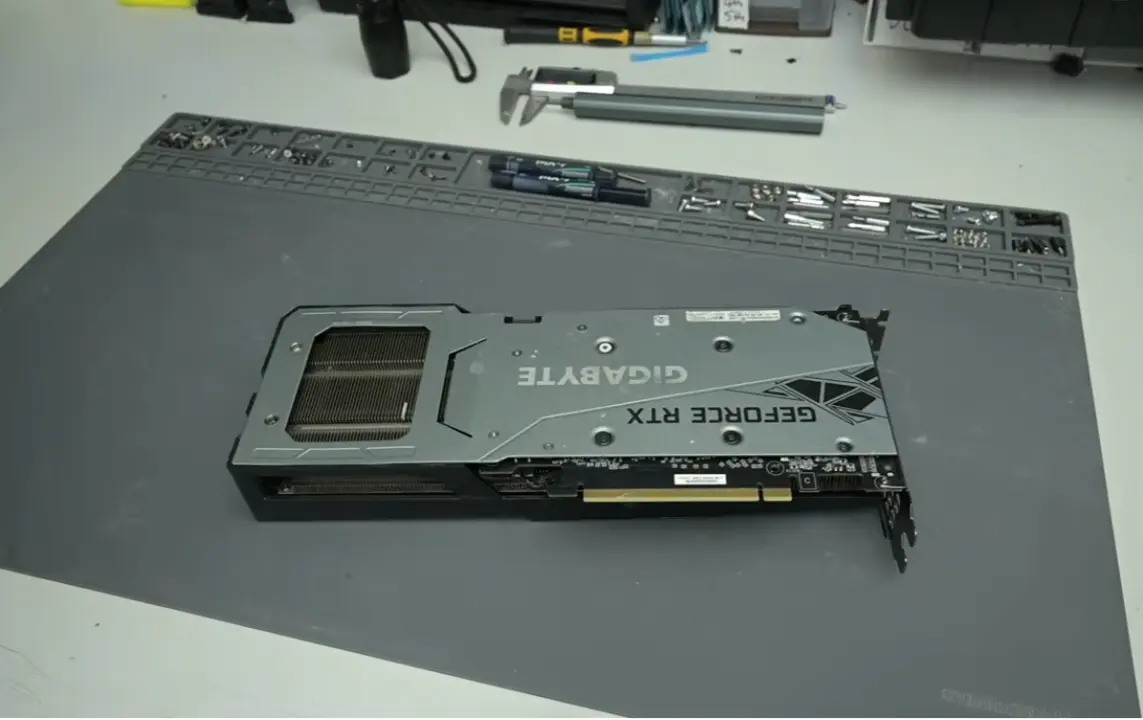
YouTuber TrashBench conducted the test by forcing an RTX 4090 cooler onto an RTX 3060 graphics card. The installation required cutting the cooler brackets and removing fins to fit the smaller PCB. This physical modification highlights the significant engineering differences between high-end and mid-range GPU designs.
The thermal results showed a clear drop in operating temperature. The card ran at 59°C under load with its stock cooler and fell to 51°C with the RTX 4090 unit. This represents an 8°C reduction, which amounts to approximately a 13.5% decrease in thermal output.
Performance gains were negligible despite the improved cooling. The GPU achieved only a 50MHz increase in core frequency even when the user applied manual overclocking and set the fan speed to 100%. Consequently, the frame rate in games increased by just 2 FPS. The experiment demonstrates that mid-range GPUs are limited by power walls and core specifications rather than cooling capacity. We've been tracking GeForce RTX 3060 closely — see our earlier coverage on Single-Slot RTX 3060 Spotted.
TrashBench summarized the outcome by stating that the effort yielded no meaningful performance improvement. The modification successfully lowered temperatures but failed to deliver any substantial speed increase. This confirms that cooling upgrades alone cannot overcome the fundamental performance limits of the hardware.


Discussion
0 comments
Log in to join the thread with a thoughtful take, question, or correction.