
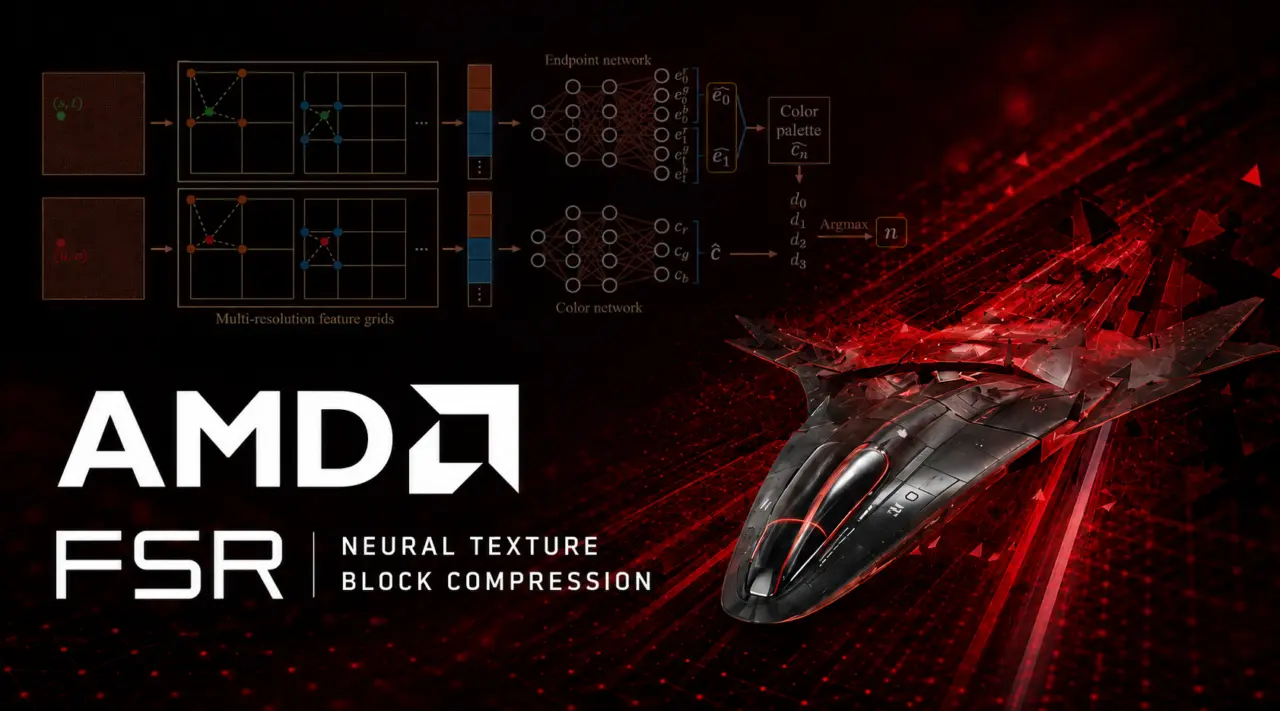
Neural texture compression aims to reduce game asset sizes while maintaining visual quality, though the underlying technical implementation presents significant challenges. AMD introduced a new research method called PEPS to make that compression more efficient. Reducing texture sizes can lower memory consumption and potentially improve load times, offering practical benefits for game development workflows. The technology is still in the research phase, so players will not see it in games today.
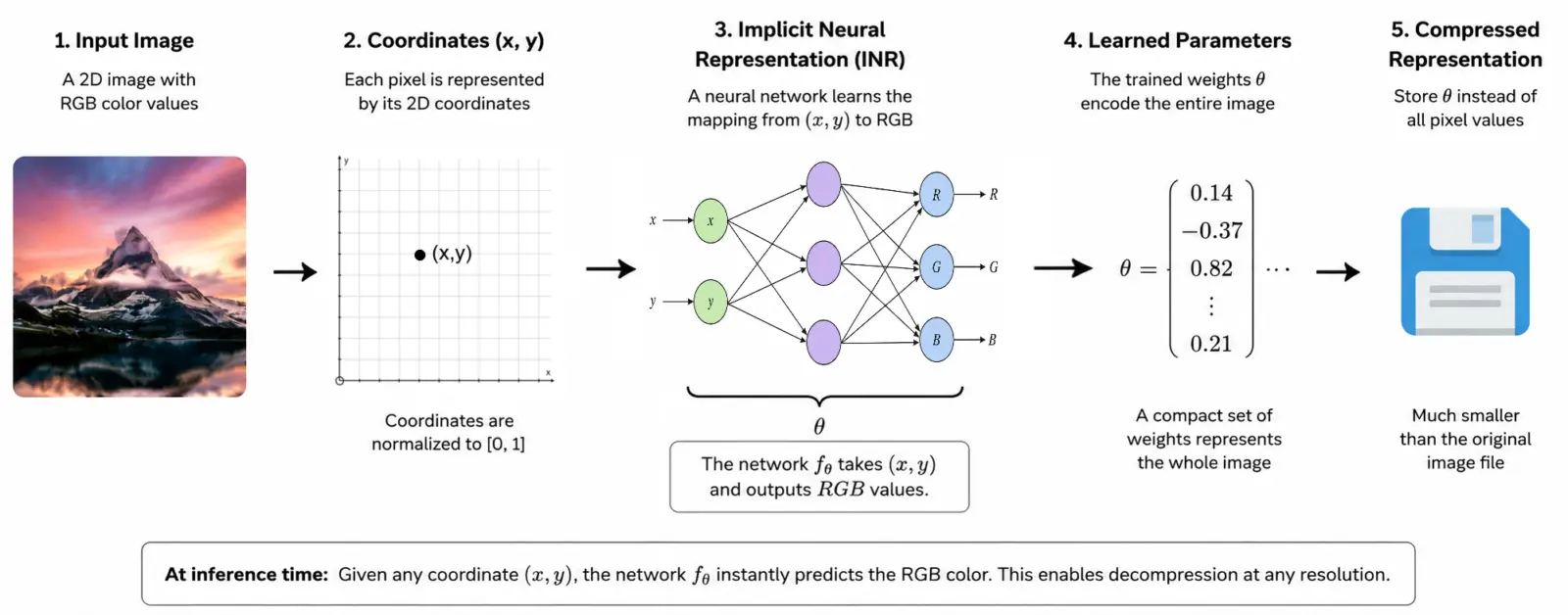
New technique reduces model size while maintaining visual quality
The technique, formally titled PEPS or Positional Encoding Projected Sampling, targets the encoder side of neural texture compression. AMD presented this work at the I3D Symposium to explain how it improves neural texture compression. The method uses Lissajous curves to sample encoder and grid points for higher-dimensional embeddings. This approach aims to reduce the number of parameters the model needs to store.
- Parameter Reduction: 25%
- Generation Time (Baseline): 4.32ms
- Generation Time (Grid-PEPS): 5.47ms
- Generation Time (Grid-PinkPEPS): 4.86ms
- Hardware Test Platform: 9070xt
Testing on an AMD 9070xt GPU shows a clear trade-off between size and speed. The baseline Grid method generates a 1024×1024 texture in 4.32 milliseconds. Switching to the standard Grid-PEPS version increases that time to 5.47 milliseconds. An optimized variant called Grid-PinkPEPS brings the generation time down to 4.86 milliseconds. PEPS reduces model parameters by 25 percent while maintaining comparable quality to baseline methods.
The research also applies to Signed Distance Functions, where Grid-PEPS matches Intersection over Union metrics. It achieves this match using eight times more encoder parameters than the baseline. AMD has not yet assigned an official brand name for Neural Texture Compression to consumers. There is currently no game with a full implementation of this technology available.


Discussion
0 comments
Log in to join the thread with a thoughtful take, question, or correction.