
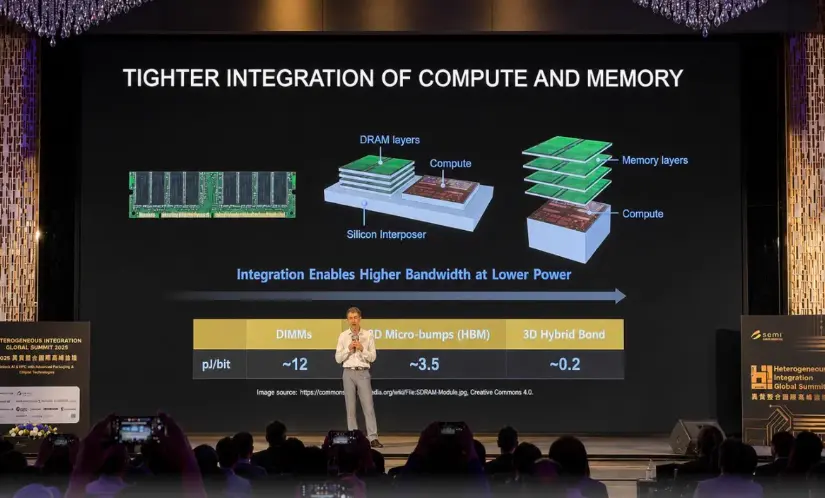
AMD is pushing the boundaries of memory architecture with a new 3D DRAM design that could fundamentally change how high-performance chips handle data. This shift matters because current memory bottlenecks force processors to wait for data, wasting energy and slowing down complex calculations. The new approach aims to eliminate that delay by bringing memory closer to the processor than ever before.
Hybrid bonding cuts energy use significantly while thermal challenges stall commercial release
The technology relies on a 3D DRAM architecture that stacks memory chips directly on top of the XPU, which includes processors and accelerators. AMD uses hybrid bonding to fuse copper to copper through direct fusion, a process that removes the physical gaps found in traditional micro-bump connections. This direct integration reduces the distance data must travel between the memory and the logic core.
- Energy Efficiency Improvement: Up to 17x compared to traditional HBM stacks
- Bonding Technology: Hybrid Bonding (Cu-Cu direct fusion)
- Architecture: 3D DRAM stacked directly on XPU
Performance claims from AMD state that this hybrid bonding approach improves energy efficiency by up to 17 times compared to traditional HBM stacks. The company notes that abandoning micro-bumps allows for atomic-level flatness, which eliminates the parasitic resistance that typically hinders data flow. By stacking DRAM directly on the XPU, the design minimizes the energy required to move information across the interface.
Despite these impressive efficiency gains, commercial availability remains far off due to significant thermal challenges. High-temperature bonding processes can degrade the charge retention of DRAM cells, leading to stability issues that must be resolved before mass production. We have been tracking 3D DRAM closely and previously covered the d-Matrix Raptor 3D DRAM Hits 100 to understand the broader industry landscape.
AMD confirmed these technical details during an internal technology seminar, highlighting the potential for next-generation AI and computing hardware. The company acknowledges that heat dissipation and data stability are the primary hurdles preventing immediate release. Until these thermal and stability issues are solved, the technology will remain in the development phase rather than the market.

Discussion
0 comments
Log in to join the thread with a thoughtful take, question, or correction.