
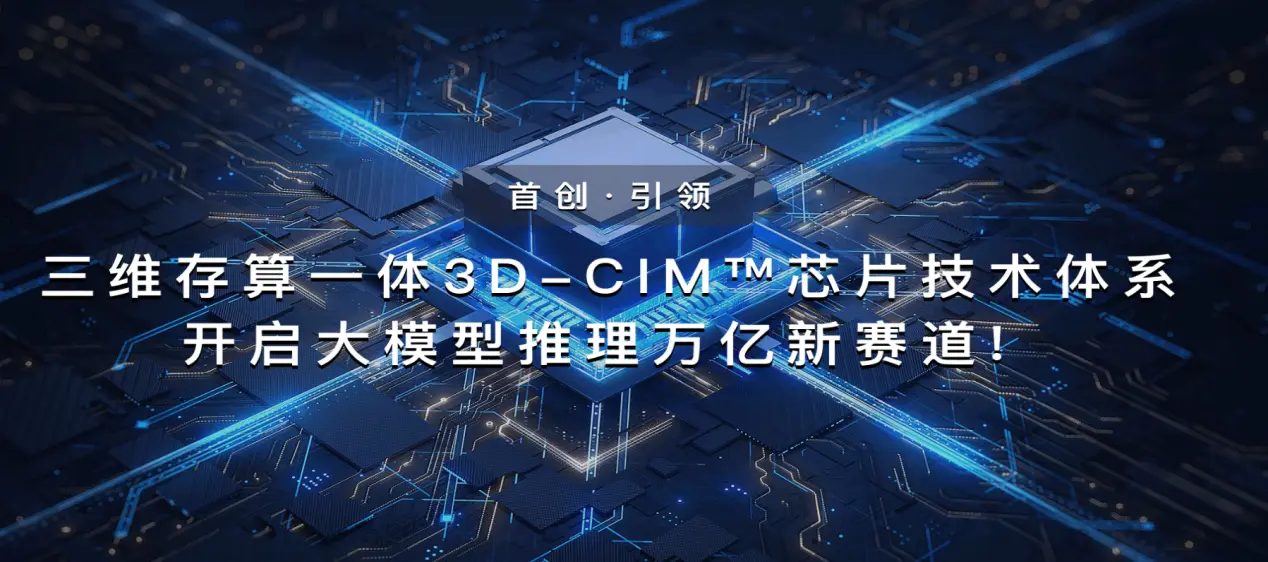
Weina Hexin secured 1 billion RMB (around $140 million) in C1 financing to advance its 3D-CIM AI chip technology. This capital injection supports a new approach to artificial intelligence hardware that aims to overcome the energy and speed limits of traditional computing designs. Buyers and developers interested in next-generation AI accelerators should watch this development closely as it targets the core bottlenecks of current systems.
Peking University spin-off targets AI accelerator bottlenecks with new architecture
The company operates as a spin-off from the Zhejiang University Peking University Institute of Information Technology. Ye Le, an associate professor at Peking University, serves as the actual controller and chairman. The financing round attracted major institutional investors including Yuanhe Puhua, Jinpu Investment, Sunshine Life Insurance, Meigle Intelligent, and Huaqin Technology.
Key Specifications
- Architecture: 3D-CIM (3D Compute-in-Memory)
- Compute Density Increase: 4 to 6 times
- Energy Efficiency Increase: 5 to 10 times
- Funding Amount: 1 billion RMB
The 3D-CIM architecture integrates DRAM near-memory computing, SRAM compute-in-memory, and RISC-V heterogeneous processing. This design allows the chip to achieve a compute density increase of 4 to 6 times compared to standard architectures. It also delivers an energy efficiency improvement of 5 to 10 times, directly addressing the memory and power walls that constrain conventional Von Neumann systems.
Weina Hexin plans to begin commercial mass production of these chips in the near future. The company claims this integration breaks through the traditional limitations of data movement and power consumption in AI workloads. The specific launch date for these products remains unconfirmed, but the funding provides the resources needed to scale manufacturing.
This financing marks a significant step for the 3D-CIM AI chip from Weina Hexin. The company now has the financial backing to move from research to commercial availability. The technology promises higher performance per watt for AI applications as it moves toward market release.

Discussion
0 comments
Log in to join the thread with a thoughtful take, question, or correction.