
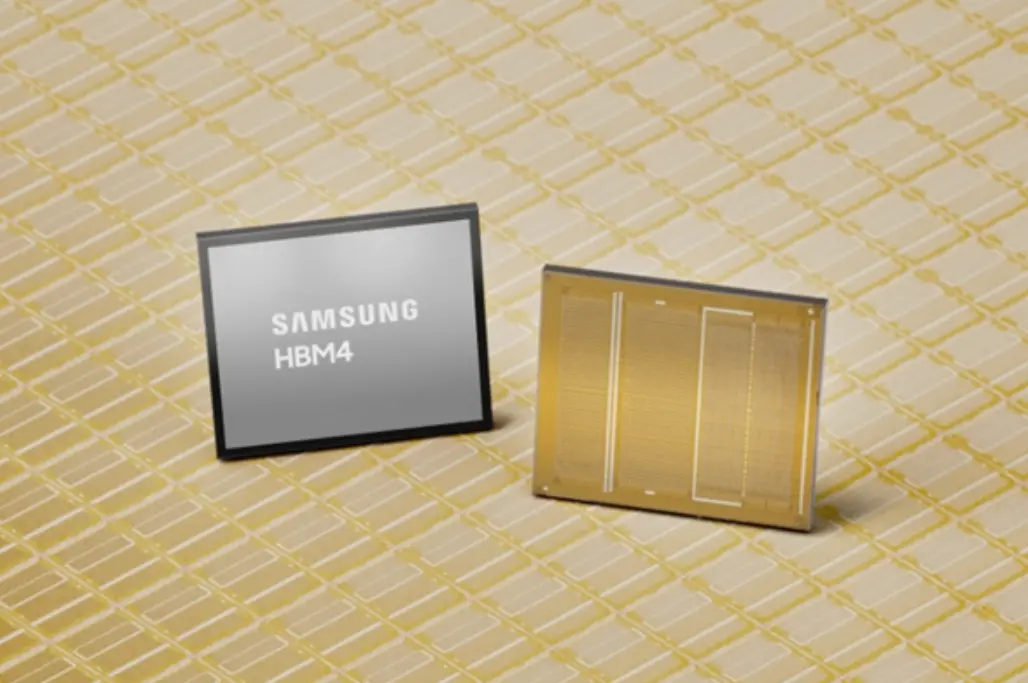
Samsung's HBM4 memory chips have crossed a $1 billion sales threshold just four months after mass production began. This milestone signals strong demand from data centers and AI workloads that rely on high-speed memory bandwidth. Buyers of server hardware and system integrators now face tighter supply constraints as major cloud providers scale their deployments.
Samsung's next-gen memory chips drive rapid adoption across AI data centers and server hardware.
The product involves Samsung's HBM4, a next-generation high-bandwidth memory stack designed for advanced computing tasks. The chip architecture increases transmission capacity by 2.7 times compared to earlier generations while cutting energy use by 40%. This efficiency gain matters because it reduces power costs in large-scale data centers that run continuously.
Samsung achieved a peak data processing speed of 11.7 Gbps, which runs 46% faster than the current industry standard. Samsung has already begun supplying its HBM4 chips to leading memory module manufacturers and server producers. SK Hynix is currently slowing its own HBM4 expansion to prioritize commercial DRAM products and protect profit margins.
The sales milestone occurred within a narrow four-month window following the start of mass production. Samsung's rapid adoption contrasts with competitors who are adjusting their output strategies for financial reasons. The company continues to lead in data processing speed metrics that drive AI training and inference tasks.
With major cloud providers increasingly adopting HBM4 technology, Samsung has established itself as a leading supplier of advanced memory solutions. Server producers are expected to modify their purchasing schedules due to ongoing supply constraints as they upgrade their equipment.
Discussion
0 comments
Log in to join the thread with a thoughtful take, question, or correction.