
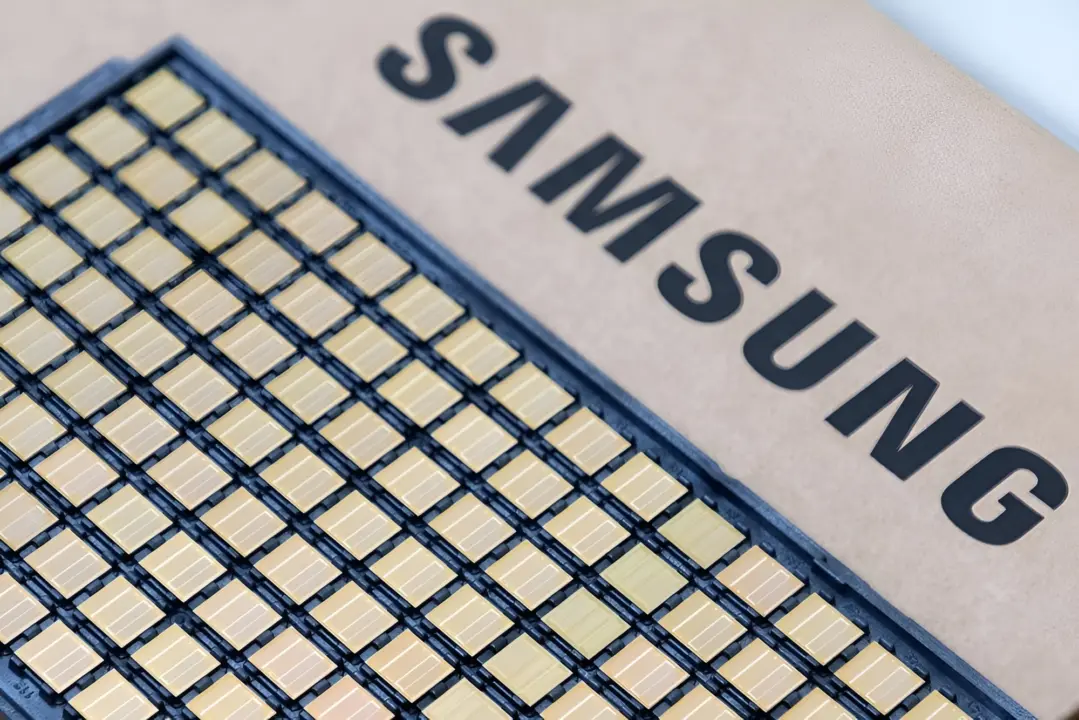
Samsung has accelerated its HBM4 memory production to a point where it directly challenges the dominant supplier in the AI hardware market. The company achieved an 80% yield rate for its high-end stacks, a milestone that signals a shift in the supply chain for next-generation AI accelerators. This manufacturing breakthrough allows Samsung to increase its revenue forecasts and compete more aggressively for major GPU contracts.
Samsung accelerates HBM4 production with 80% yield rate
The core product driving this shift is Samsung's HBM4 memory, which ships in 12-layer and 16-layer configurations. These stacks offer capacities of 36 GB and 48 GB respectively, delivering bandwidth of up to 3.3 TB/s per stack. The memory modules operate at pin speeds between 11.7 and 13.0 Gbps, providing the high throughput required by modern AI workloads.
Specifications
- HBM4 Yield Rate: 80%
- HBM4 Stack Capacity: 36 GB (12-Hi) / 48 GB (16-Hi)
- HBM4 Pin Speed: 11.7-13.0 Gbps
- HBM4 Bandwidth: Up To 3.3 TB/s Per Stack
- HBM4 Power Efficiency: 40% Improvement
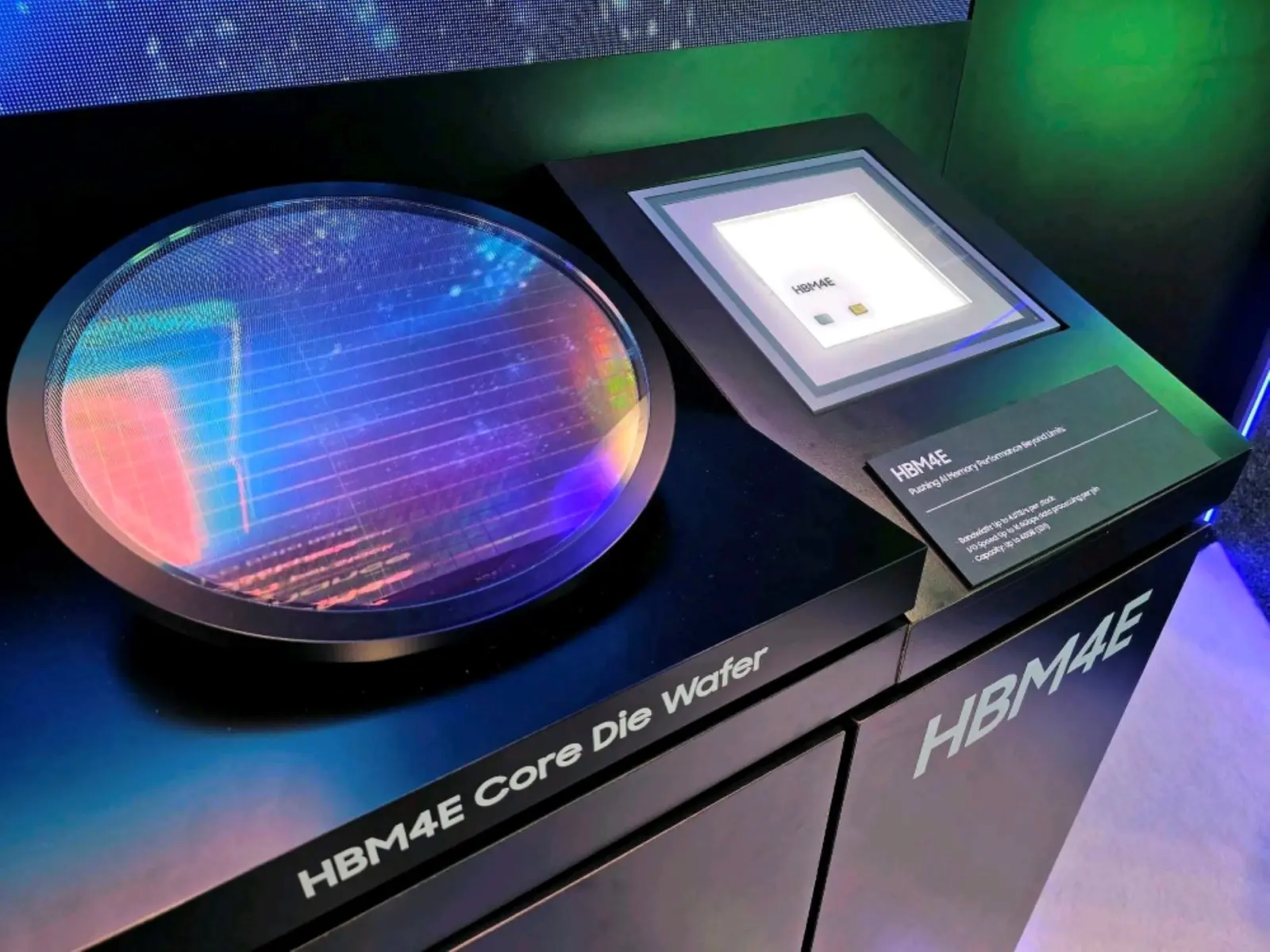
Samsung improved the efficiency and thermal management of these chips significantly compared to the previous HBM3E generation. The company reports a 40% improvement in power efficiency, which helps reduce the energy consumption of dense AI servers. Thermal resistance is 10% better, and heat dissipation performance is 30% better, addressing critical cooling challenges in high-density computing environments.
Samsung also advanced its HBM4E variant, raising the reliability test yield to 70% while targeting up to 4 TB/s bandwidth per stack. AMD is already leveraging Samsung HBM4 for its Instinct MI400 series accelerators, securing a key customer for the current generation. The company is simultaneously aiming to supply NVIDIA with HBM4E for its upcoming Rubin Ultra GPUs, though this remains a reported aim rather than a confirmed contract.
Samsung commenced mass production of its latest HBM4 solution in February 2026, and the company has since raised its third-quarter revenue forecast for HBM4 DRAM threefold. This rapid scaling demonstrates the speed at which the company is moving from initial production to high-volume manufacturing. The improved yields and thermal metrics position Samsung as a viable alternative to its primary competitors in the high-bandwidth memory market. We've been tracking HBM4 closely — see our earlier coverage on SK Hynix HBM4 Mass Production Starts.
Discussion
0 comments
Log in to join the thread with a thoughtful take, question, or correction.