

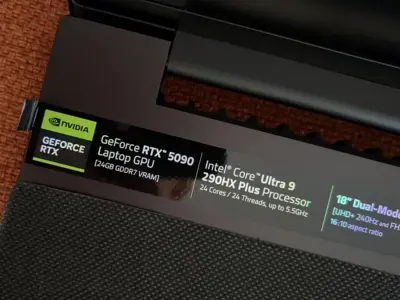
Razer has released the Blade 16 laptop with an RTX 5090 GPU, but independent testing reveals significant design and thermal issues. The device exhibits structural flexibility in its backplate that allows internal fans to contact the outer shell under slight pressure. This mechanical interaction raises concerns about long-term durability and potential hardware damage during normal use.
Independent testing reveals structural flexibility and thermal risks with the new laptop.
Thermal performance metrics indicate severe surface temperature risks when the RTX 5090 GPU operates under heavy load. Test data shows specific areas of the laptop reach temperatures too high for human contact. The chassis design fails to dissipate heat effectively, creating unsafe conditions for users who keep their hands on the keyboard or palm rest during intensive tasks.
Power efficiency remains problematic even when the system is idle. Standby power consumption measures between 30W and 40W due to repeated GPU process wake-ups. This figure drastically exceeds the expected 4W to 5W baseline for modern discrete graphics cards. Razer previously pushed a firmware update aimed at resolving this issue, but the update failed to reduce standby draw.
The Blade 16 carries a price tag of $4899 USD, which equates to approximately 35,375 CNY in certain markets. This premium positioning contrasts sharply with the reported hardware shortcomings. Competing systems like the MacBook Pro achieve significantly lower standby power consumption thanks to Apple Silicon efficiency advantages.
Reports indicate Razer mass-produced the Blade 16 despite it failing surface temperature certification during testing. The vendor proceeded with manufacturing without resolving the thermal safety concerns. Hardware analysts note these unresolved issues undermine the product's value proposition at its current price point.


Discussion
0 comments
Log in to join the thread with a thoughtful take, question, or correction.