
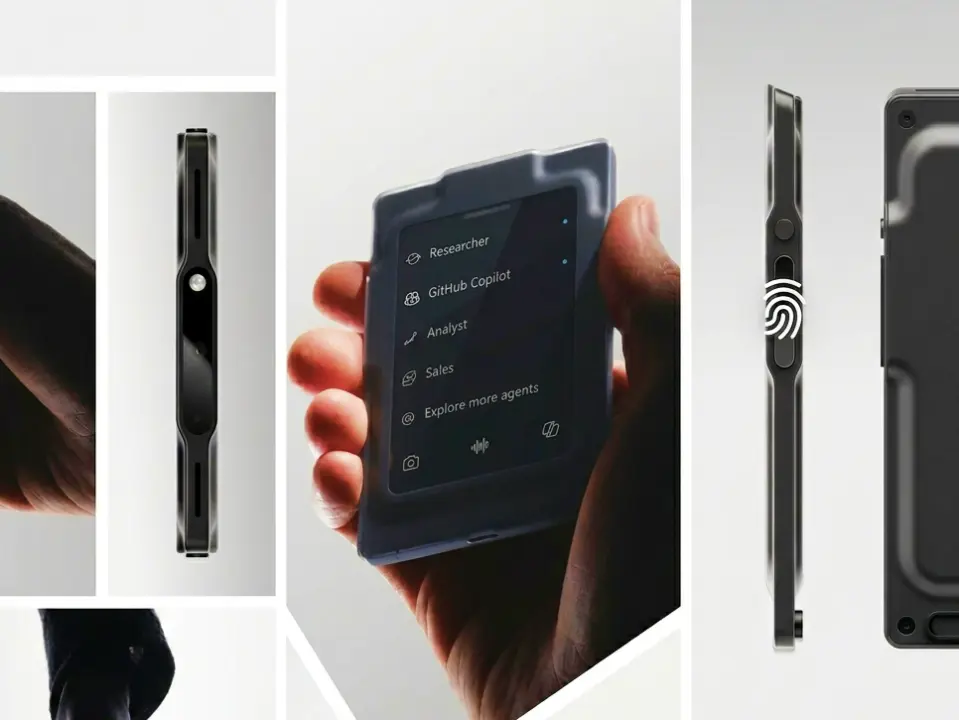
Microsoft is testing a wearable AI device called Project Solara Badge that runs on an Android-based operating system known as the Microsoft Device Ecosystem Platform. The company plans to roll out enterprise pilot programs across healthcare, retail, hospitality, financial services, legal, industrial, and field services sectors. Internal testing involves hundreds of employees evaluating the badge alongside similar smart display hardware.
Wearable badge integrates Qualcomm silicon and environmental cameras for professional workflows
The wearable badge relies on Qualcomm wearable silicon to power its AI agent capabilities rather than traditional applications. It features a small touchscreen for interacting with these agents, a top-facing camera designed for environmental awareness, and a side-facing camera for additional context. The device also features a built-in fingerprint sensor to ensure secure authentication.
Connectivity options include WiFi, Bluetooth, GNSS, and 5G wireless support to ensure reliable operation in various field environments. The device operates on the Microsoft Device Ecosystem Platform, which prioritizes agentic AI workflows over conventional app ecosystems. The system design enables the wearable device to operate as a specialized artificial intelligence assistant tailored for professional workflows.
Microsoft is positioning Project Solara Badge to compete with rumored smartphone efforts from OpenAI focused on agentic AI hardware. The announcement highlights a strategic move into wearable AI devices that integrate directly with enterprise workflows. Internal testing and upcoming pilot programs signal early adoption interest across multiple industries.
The company is currently conducting internal tests among hundreds of employees before expanding to broader enterprise pilots. These initial phases will gather feedback from healthcare, retail, hospitality, financial services, legal, industrial, and field services sectors. The rollout strategy emphasizes practical integration into professional environments rather than consumer markets.
Discussion
0 comments
Log in to join the thread with a thoughtful take, question, or correction.