
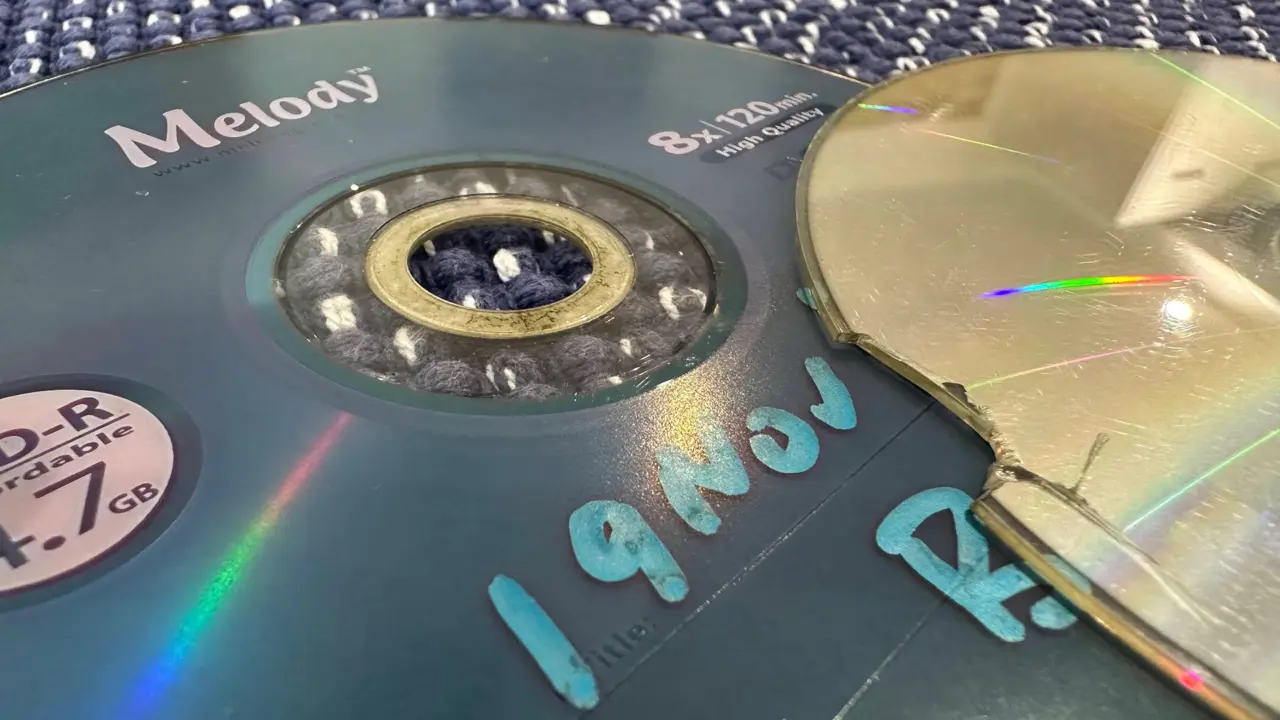
Compact discs are failing in ways that threaten long-term data storage. Users who rely on optical media for software archives or backups risk losing access to their files as discs shatter or split apart. This physical degradation means that storing sensitive data on CDs is no longer a reliable preservation strategy.
Ammonia from storage foam corrodes polycarbonate layers in sealed environments
The root cause lies in the chemical breakdown of the polycarbonate substrate that makes up the disc. A Twitter user shared images of a destroyed CD-ROM after storing it in a tightly sealed trunk alongside precision equipment. The storage environment triggered a reaction that compromised the disc’s structural integrity.
Investigation points to two main culprits: cleaning chemicals and ammonia off-gassing from polyurethane foam. When users clean discs with harsh substances or store them in cases containing cushioning foam, the resulting fumes corrode the polycarbonate. This chemical attack is particularly dangerous because it happens silently inside closed containers.
CDs are significantly more vulnerable to this type of damage than DVDs. Optical discs use a single layer of polycarbonate, whereas DVDs bond two layers together for added stability. The single-layer construction offers less resistance to the corrosive effects of ammonia and cleaning agents, leading to faster and more catastrophic failure.
Discussion
0 comments
Log in to join the thread with a thoughtful take, question, or correction.