
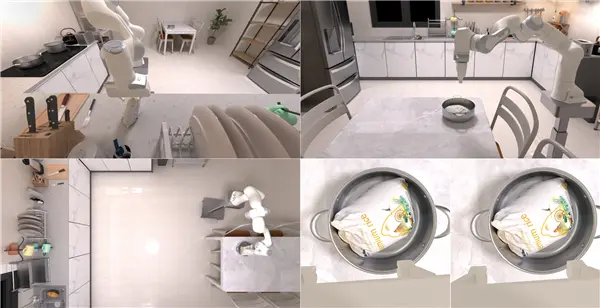
Moore Threads and Lightwheel AI have announced a partnership to build a domestic embodied intelligence simulation platform. The collaboration combines Moore Threads' full-function GPU and KUAE cluster with Lightwheel AI's simulation platform. The goal is to address data scarcity and high costs in embodied intelligence through synthetic data generation.
GPU and simulation software integration
The platform leverages Moore Threads' MTT S5000 GPU, which is based on the company's proprietary MUSA architecture. The GPU includes dedicated hardware ray tracing units (RT Core) and supports both AI training and inference. Lightwheel AI's physics solver achieves over 99% accuracy in key physical parameters. According to Moore Threads, using the MTT S5000's RT Core for hardware-accelerated ray tracing delivers a 2.7x rendering performance improvement. The system can render a single trajectory at 48,000 frames, and hundreds of trajectories can reach millions of frames.
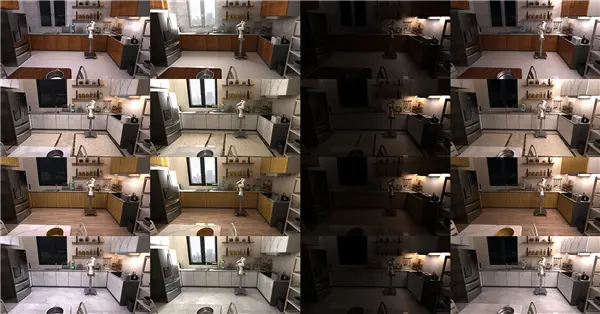
The partnership aims to provide a foundation for embodied intelligence research and development in China. By generating synthetic data, the platform seeks to reduce reliance on expensive real-world data collection. The combination of domestic GPU hardware and simulation software could lower barriers for companies working on robotics and autonomous systems.
Moore Threads and Lightwheel AI have not disclosed pricing or availability for the platform. The companies have not confirmed a specific launch timeline.


Discussion
0 comments
Log in to join the thread with a thoughtful take, question, or correction.