
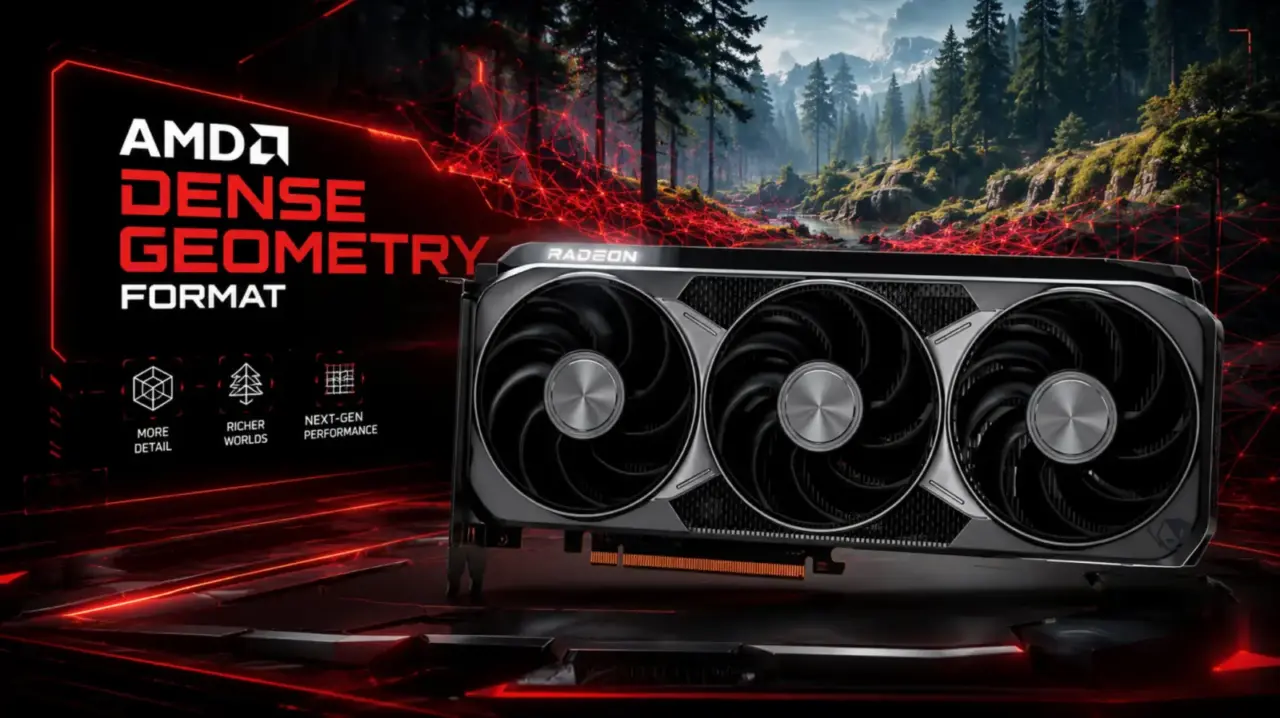
AMD has introduced DGF SuperCompression, a software-based technology designed to reduce the storage costs of geometry data in ray-traced games and 3D workloads. The system builds upon the existing Dense Geometry Format by applying an additional layer of compression. This approach allows developers to handle massive polygon counts while managing memory constraints more effectively.
Efficient decoding allows content to run on current RDNA 4 GPUs
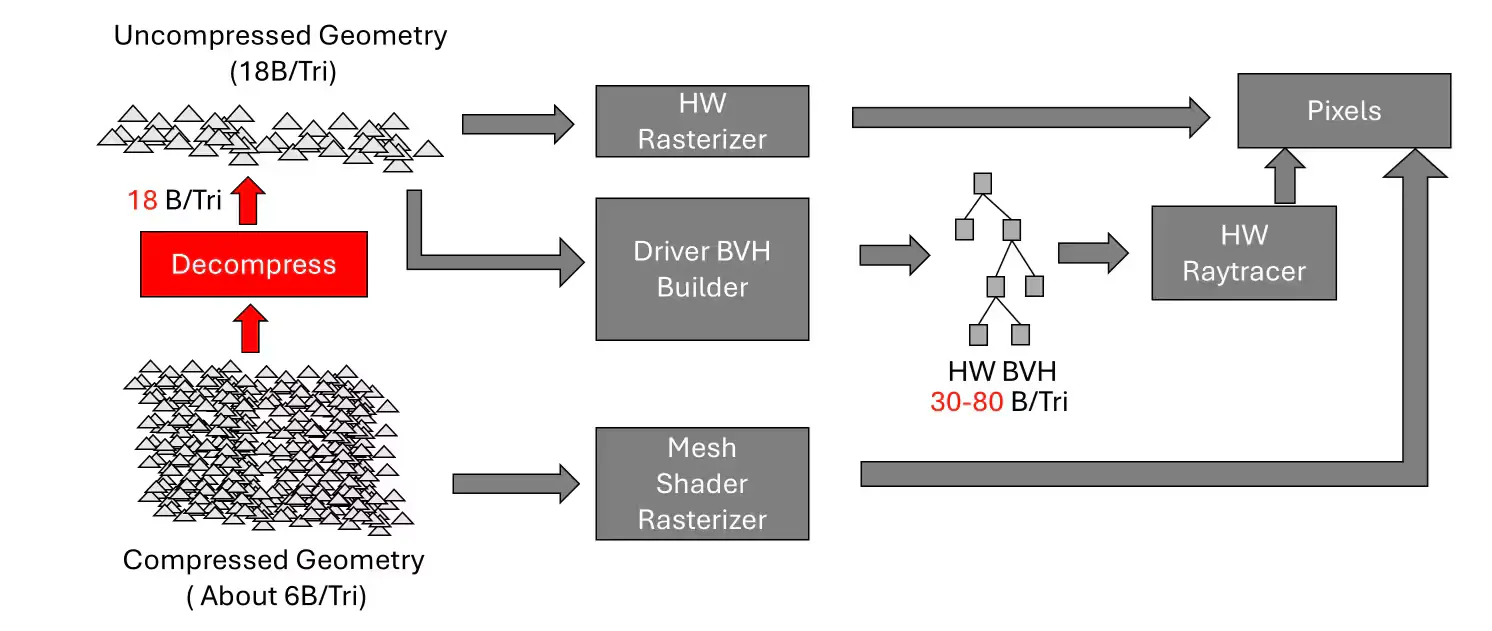
A standard DGF block stores 64 vertices and 64 triangles within a fixed 128-byte structure. The new SuperCompression feature reduces the size of this data by up to 30 percent compared to standard DGF blocks. AMD states that the compressed format can exactly reconstruct the original input blocks without loss of fidelity. This ensures that visual quality remains intact during the compression and decompression process.

The technology supports efficient decoding into conventional vertex and index buffers. This capability allows DGF SuperCompression content to run on hardware that does not natively support the DGF format. Current RDNA 4 GPUs and prior generations can utilize this software-based compression. Future RDNA 5 graphics cards will offer fuller hardware support for the technology.
Testing for the technology utilized an AMD Ryzen 9 7950X processor, an AMD Radeon RX 9070 XT graphics card, and 64GB of DDR5 6000 RAM. The system aims to solve memory latency and stuttering issues that often arise when decoding compressed triangles in modern ray tracing APIs. By reducing the data footprint, the technology helps maintain smoother performance in demanding graphical scenarios.


Discussion
0 comments
Log in to join the thread with a thoughtful take, question, or correction.