
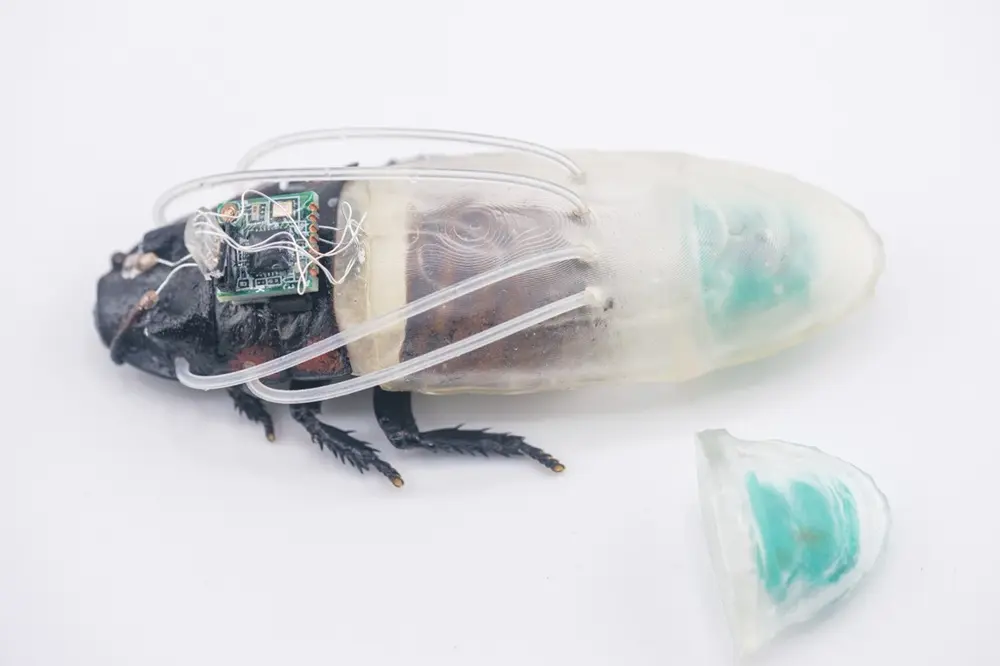
Researchers at Nanyang Technological University have demonstrated a 3D-printed cyborg cockroach that operates underwater for three hours, addressing the common failure of traditional mini-robots in wet disaster zones. This bio-hybrid platform offers a tangible example of how biological resilience can be paired with electronic control for search-and-rescue missions where standard equipment struggles. The team bypassed heavy oxygen tanks by using a simple chemical reaction to keep the insect breathing, marking a shift from previous land-based swarm demonstrations to submerged operations.
NTU researchers demonstrate bio-hybrid robot for disaster response
The device consists of a living cockroach fitted with a flexible 3D-printed ‘diving suit’ that houses the necessary electronics and chemical components. Researchers control the insect remotely, guiding its movements while the suit provides the interface between the biological organism and the electronic systems. This design allows the cyborg to navigate environments that are typically inaccessible to rigid, battery-powered drones.
Specifications
- Underwater Duration: 3 hours
- Test Depth: 20 inches (50 cm)
- Land Speed: 3.5 inches per second
- Water Speed: 3.1 inches per second
- Oxygen Source: Chemical reaction
The cockroach moves at 3.5 inches per second on land, slowing slightly to 3.1 inches per second while submerged in water. The underwater suit contains a sponge with hydrogen peroxide and manganese dioxide, which react to output oxygen for the insect. The team tested the device at a depth of 20 inches or 50 centimeters, where it survived and maintained mobility for the full three-hour duration.
Natural cockroaches can hold their breath for up to 40 minutes by closing their spiracles, but the cyborg suit extends this capability significantly through chemical oxygen generation. The device is equipped with infrared cameras to aid in navigation and data collection during these missions. Biological batteries in the insect theoretically last for weeks, as one roach needs food only every few weeks, though the chemical oxygen supply limits the underwater operation time.
The technology aims to assist in rescue operations in disaster areas and could eventually support exploration in harsh environments or on other planets like Mars. Tom’s Hardware noted that this achievement follows two decades of DARPA research into cyborg insects, representing the latest accomplishment in the field. The researchers confirmed the three-hour underwater survival but noted that it is possible the insects can go deeper than the 50 centimeters tested.
This demonstration confirms that chemical oxygen generation can sustain a living cyborg insect for extended underwater periods. The platform bridges the gap between biological endurance and electronic control for specific industrial and scientific applications.

Discussion
0 comments
Log in to join the thread with a thoughtful take, question, or correction.