
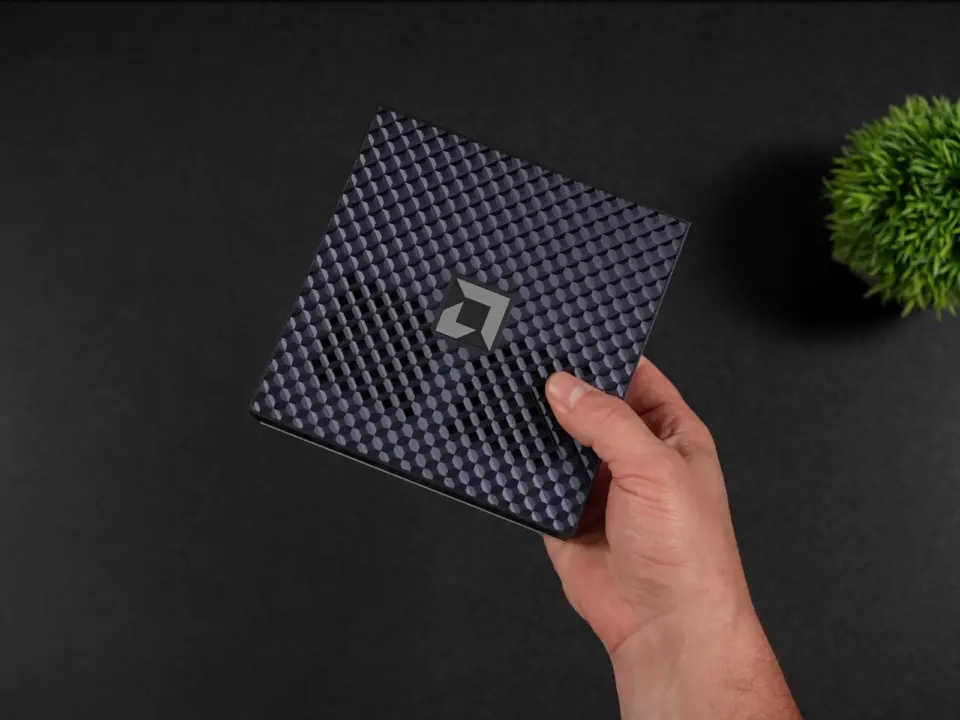
Valve’s Steam Machine offers a compact entry into console-style gaming, but a new AMD mini PC built on the Ryzen AI Max+ 395 platform delivers significantly higher frame rates under the same SteamOS environment. This performance gap matters to buyers who want a small form factor without sacrificing high-end gaming capability. The AMD system proves that the newer silicon can handle demanding titles at 4K resolutions much better than the current Steam Machine hardware.
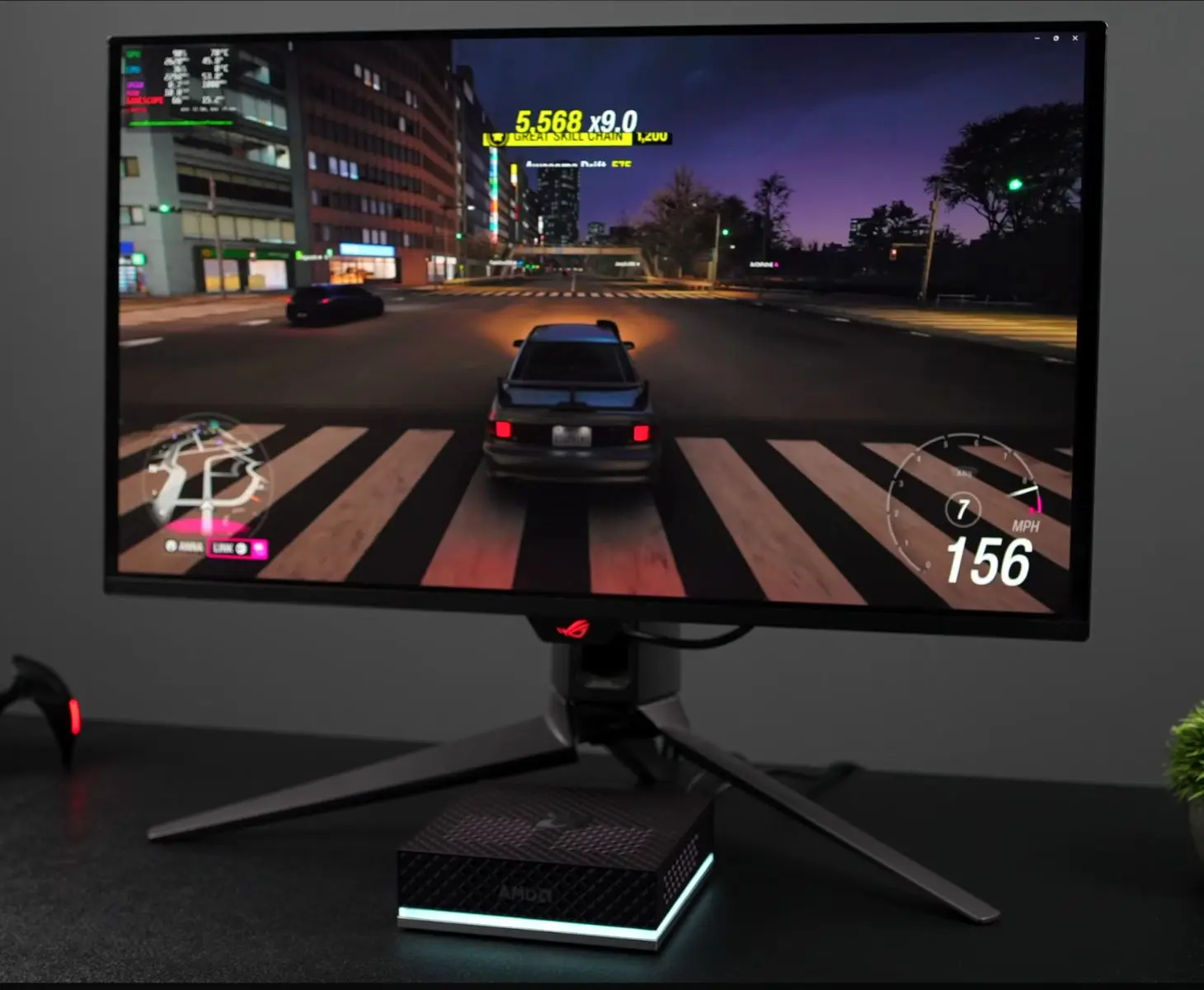
Zen 5 silicon and 96GB VRAM deliver significant frame rate gains
The tested AMD unit features a 16-core, 32-thread Zen 5 processor with boost speeds up to 5.1GHz. It pairs this CPU with an integrated Radeon 8060S GPU that contains 40 RDNA 3.5 compute units. The system runs SteamOS version 3.8.14, which allows it to compete directly with Valve’s own prebuilt console alternative.
Spec comparison
| Spec | AMD Ryzen AI Max+ 395 Mini PC | Valve Steam Machine |
|---|---|---|
| CPU | 16-core Zen 5 (up to 5.1GHz) | 6-core Zen 4 |
| GPU | Radeon 8060S (40 RDNA 3.5 CUs) | 28 RDNA 3 CUs |
| VRAM | 96GB shared | 8GB dedicated |
| Price | Approx. $3,999 | Approx. $1,049 |
Memory allocation plays a critical role in this performance difference. The AMD mini PC dedicates 96GB of its shared memory pool to the GPU, leaving 31GB for system tasks. In contrast, the Steam Machine relies on a 6-core Zen 4 CPU and a GPU with only 28 RDNA 3 compute units and 8GB of dedicated VRAM. This hardware disparity explains the raw power advantage seen in benchmarks.
Benchmark results from tester ETA Prime show the AMD mini PC outperforming the Steam Machine across multiple titles. In Shadow of the Tomb Raider at 1080p, the AMD system averaged 138 FPS compared to the Steam Machine’s 118 FPS. At 4K, the gap widened significantly, with the AMD unit hitting 62 FPS against the Steam Machine’s 44 FPS. Cyberpunk 2077 at 4K saw an even larger margin, with the AMD PC averaging 27 FPS versus 18 FPS for the Steam Machine.
The AMD mini PC costs approximately 3999 USD (around $3,999), which is nearly four times the starting price of the Steam Machine at 1049 USD (around $1,049). This price difference highlights a clear trade-off between affordability and raw performance in the mini PC gaming category. We've been tracking AMD Ryzen AI Max+ 395 Mini PC closely — see our earlier coverage on SteamOS 3.8.6 Beta Brings HDMI VRR.
The tested AMD system is an unbranded Ryzen AI Halo based unit rather than a specific vendor model like the GMKtec EVO-X2. It confirms that the Zen 5 architecture provides a substantial uplift for SteamOS gaming, particularly at higher resolutions where VRAM and compute unit counts matter most.

Discussion
0 comments
Log in to join the thread with a thoughtful take, question, or correction.