
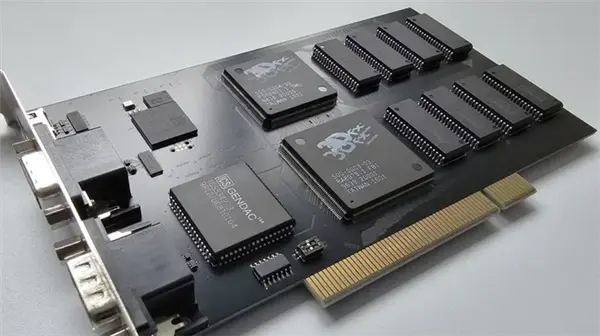
October 15, 2002. The end of an era. When the curtain is drawn on 3dfx, the end of an era shall be sealed. The end of the era when 3dfx dominated 85% of the 3D gpu market in 1997.
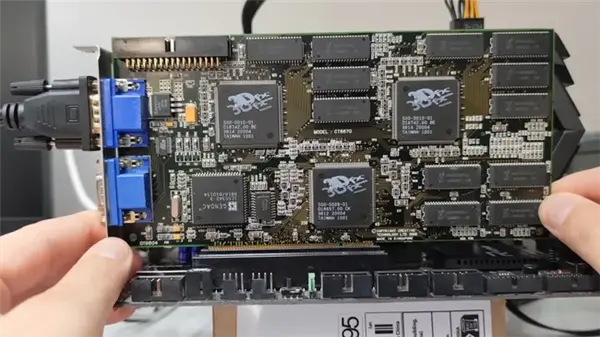
A retrospective on the hardware giant that dominated the 3D GPU market before its collapse
A quick read on hardware dominance and how a company that had dominance can collapse with strategic errors.
In 1994, after being founded by former Silicon Graphics guys, they created quite a following with their add in boards the Voodoo Graphics and Voodoo2. It gave a pc the ability to have 3D graphics of a quality that the integrated chips just couldn't reach at that time. The Voodoo Graphics core was running at 50MHz with 4MB of EDO VRAM with a pixel fill rate of 45-50 MPixel/s.
Trying to stay on top, 3dfx introduced the Voodoo2, with an upgrade in process from 500nm to 350nm with a fill rate doubled to 90 MPixel/s. This was followed by the Voodoo3 and Voodoo5 5500, using the VSA-100 with a 250nm process. The Voodoo5 5500 had 64MB of VRAM and a 166MHz core. But it was too late. The Geforce2 GTS from NVIDIA.
They had a chip in final test stage called Rampage before their fall. Rampage had 4 render pipelines. With dual chips, it had 2000 MPixel/s and 2000 MTexel/s. But this product was never released.
All the trademarks, chips and patents were sold to their rival NVIDIA in late 2000 for $112 million.
The fall for 3dfx came after a compromise in the Voodoo3 with just 16bit color depth. Strategic errors like their purchase of STB Systems in 1998 turned away channel partners which jumped to the other ship – NVIDIA. Finally, in 2002 with the liquidation of 3dfx, the end of an era is sealed. The end of a brand that dominated gaming hardware at its peak.
Discussion
0 comments
Log in to join the thread with a thoughtful take, question, or correction.