
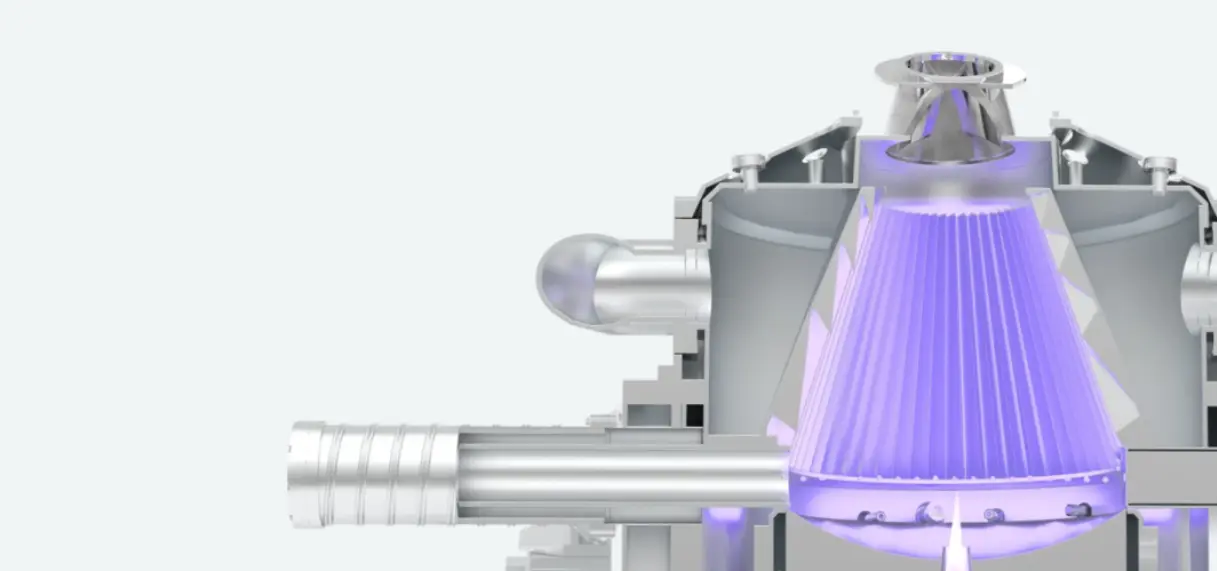
Langdao Suiyan shows a prototype of an extreme ultraviolet light source at the 26th China International Industry Expo in Shanghai. This is a very interesting development, because extreme ultraviolet light sources are a key component to enable manufacturing of advanced chips in 7nm nodes and below. Industry is watching the show to see if domestic supply chains can decrease the use of foreign technology in high-end fabrication.
Langdao Suiyan displays EUV prototype with 90% domestic localization at Shanghai expo
Langdao Suiyan showed two series at the show: A low power one, FlintNano LPP-OXXO, and a high power one, FlintMicro-LPP Series. According to on-site personnel, the equipment on display has a localization rate of 90% in China. Most of the core components are developed by them. Furthermore, the technical route is the same as the leading international manufacturers and the equipment can be used for chip exposure test.
Specifications
- Domestic Localization Rate: 90%
- Low Power Model: FlintNano LPP-OXXO
- Low Power Drive Laser: 1000W
- Low Power Laser Frequency: 1-20kHz
- Low Power Conversion Efficiency: >2%
The low-power model of FlintNano LPP-OXXO has a 1000W drive laser with a frequency of 1-20kHz. The conversion efficiency is above 2% and the output energy of EUV is more than 15W. The plasma size is 60micrometers and the equipment can continuously work for more than 100h. The low power model is entering a stage of active productization.
As for high-power model of FlintMicro-LPP Series, they have finished the theoretical demonstration. The vendor expects it takes 3-5 years to achieve mass production. That means while they have established the technical foundation, the far-reaching commercialization is far away for the short term.
With the public demonstration of technical capabilities of the EUV prototypes at the Shanghai expo, Langdao Suiyan has successfully validated the technical capabilities of their extreme ultraviolet light sources. They claim domestic components are sufficient to achieve the localization goal and to be able to conduct independent chip exposure testing. The industry will wait for 3-5 years to see whether their theoretical and low power show can be converted to the reality of mass production.


Discussion
0 comments
Log in to join the thread with a thoughtful take, question, or correction.