
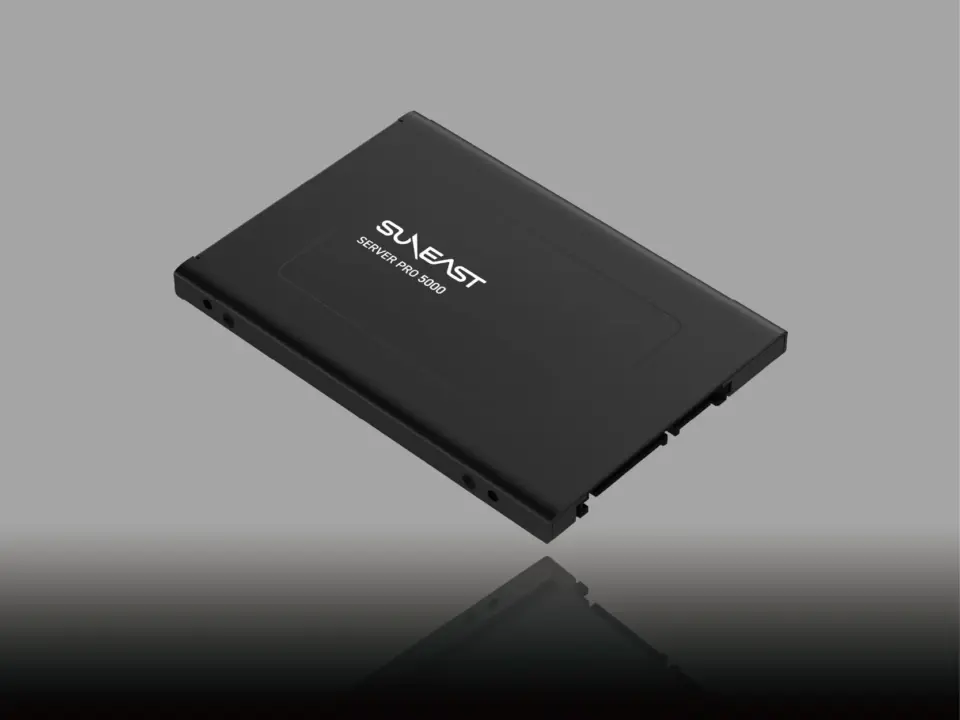
Japanese solid-state drive maker SUNEAST debuts its first enterprise storage product. Introducing the SERVER PRO 5000 solid-state drive. The launch of SERVER PRO 5000 is important because it gives us a new alternative for data centers who are looking for a reliable and budget-friendly 2.5-inch SATA SSD. In other words, those customers who are interested in regular form factor enterprise storage can now have a new vendor to help them with their infrastructure.
Japanese manufacturer enters enterprise storage with 2.5-inch SATA drive
SUNEAST's SERVER PRO 5000 series is a new product aimed at the enterprise market that focuses on robustness and stable performance. SUNEAST's SERVER PRO 5000 SSD was made for demanding write environments commonly seen in servers. It features 3D TLC NAND flash memory that strikes a good balance between performance and reliability.
Specifications
- Form Factor: 2.5-inch
- Interface: SATA III (6Gbps)
- NAND Type: 3D TLC NAND
- Endurance: 5 years 1DWPD
- MTBF: 2 million hours
The drive has 5 capacities from 240GB to 3840GB. Sequential read speed up to 536MB/s. Sequential write speed up to 505MB/s.
Random read performance is up to 96K IOPS. Random write performance is up to 48K IOPS.
The SERVER PRO 5000 by SUNEAST is designed to last 5 years with 1 Drive Write Per Day (1DWPD). They claim a Mean Time Between Failures (MTBF) of 2 million hours. There's also an Unrecoverable Bit Error Rate (UBER) of 10^-17 to ensure data reliability.
November 4, 2024 is the date sample shipments of the SUNEAST SERVER PRO 5000 series will begin. At this time we do not know what the prices are or when they'll be available for retail. This initial release helps enterprise users test out the performance of the drive when used in a typical server.

Discussion
0 comments
Log in to join the thread with a thoughtful take, question, or correction.