
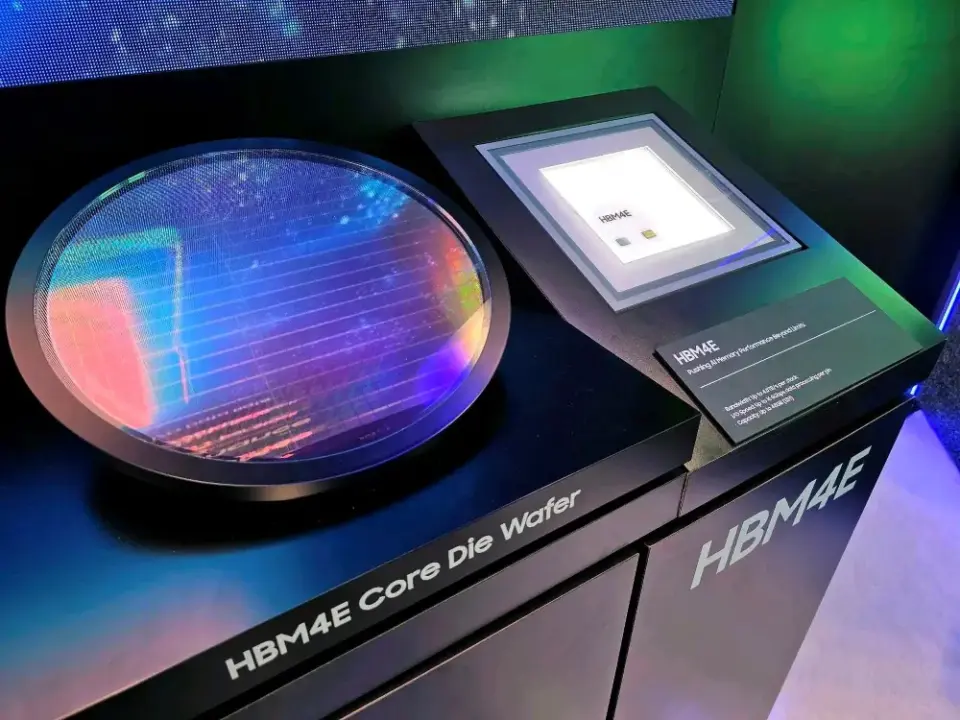
Samsung announced a shift in its high bandwidth memory development strategy on April 18, 2024. Samsung's development The company plans to reduce its HBM development cycle from two years to one year. This change marks a significant acceleration in Samsung's product iteration timeline. The current latest product in Samsung's lineup remains the HBM3E. The company targets the next generation HBM4 for release this year. Industry analysts suggest this faster cycle helps Samsung consolidate its technical advantage against Micron and SK Hynix.
Samsung attributes this accelerated timeline to its control over the full industry chain. The company relies on its internal capabilities to manage the entire production process. This vertical integration enables the rapid iteration of memory products. The previous two-year cycle served as the baseline for Samsung's development pace. The new one-year cycle represents a departure from that historical standard.
The release of HBM4 depends on the launch of specific computing platforms. Samsung expects to introduce HBM4 alongside NVIDIA Vera Rubin and AMD Instinct MI400 platforms. NVIDIA Vera Rubin This timing makes the exact release date dependent on third-party hardware launches. The product availability spans the global market in 2024. No specific pricing information is available for these memory modules.
Samsung shifts to one year cycle for HBM4 release
The shift to a one-year development cycle impacts the competitive landscape for high bandwidth memory. Industry analysts view this move as a strategic effort to strengthen Samsung's position. The company aims to leverage its full industry chain control to maintain this pace. This strategy contrasts with the previous two-year iteration model. The accelerated timeline requires precise coordination with platform partners.
Samsung's approach to HBM development focuses on speed and integration. The company targets the global market for its next generation memory products. The release of HBM4 will coincide with major platform launches. This strategy links Samsung's product availability to the broader ecosystem. The one-year cycle represents a fundamental change in Samsung's development process.


Discussion
0 comments
Log in to join the thread with a thoughtful take, question, or correction.