
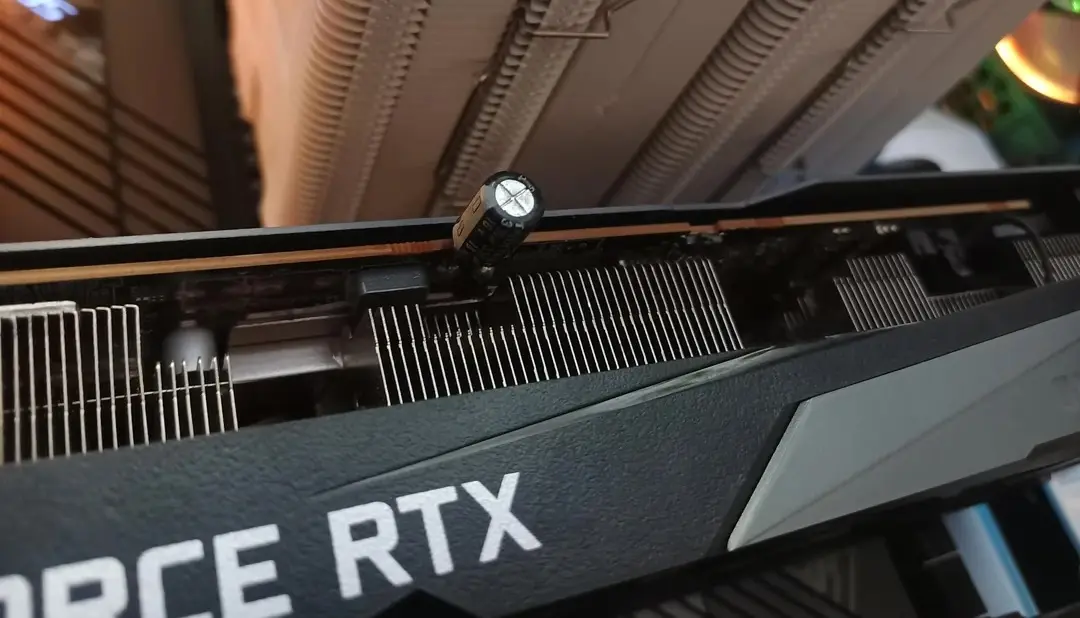
A displaced capacitor on an NVIDIA RTX 3070 graphics card caused a complete failure, prompting a DIY repair that highlights the growing cost of professional GPU maintenance. The incident matters because the official repair quote reached $120, a significant expense that often approaches the value of older hardware. The incident illustrates how a small component failure can disable high-end gaming hardware without professional repair.
Electrician uses salvaged radio part to bypass expensive professional service
The damaged GPU belonged to a user in Serbia who shared the repair details online. The card stopped functioning after a capacitor shifted position between the circuit board and the cooling radiator. A professional shop identified the issue and demanded 12,000 Serbian Dinars for the fix, which translates to approximately $120. The user’s father, an electrician by trade, decided to attempt a repair instead of paying the service fee.
- Failed Component: Capacitor knocked out of place
- Required Replacement: 16V, 270 μF hard polymer capacitor, no longer than 3mm
- Temporary Replacement Used: Different, cheaper, larger capacitor with higher resistance
- Thermal Paste Used: Special thermal paste designed for high-voltage lines
- Peak Gaming Temperature: Does not exceed 80°C
The electrician sourced a replacement capacitor from an old radio, which was larger and cheaper than the original part. The factory component was a 16V, 270 microfarad hard polymer capacitor with a height limit of 3mm. The salvaged part had higher electrical resistance, making it unsuitable for long-term reliability in this high-performance application. He also applied special thermal paste designed for high-voltage power lines rather than standard GPU thermal compound.
Despite using the improvised component, the GPU operated without immediate catastrophic failure during gaming sessions. The peak temperature of the graphics processor remained below 80 degrees Celsius under load. The user reported that the card appeared to work better than before the initial failure. However, the higher resistance of the temporary capacitor could allow clock speeds to run unchecked, posing a risk to the card’s longevity.
The repair serves as a temporary solution rather than a permanent fix for the hardware. The displaced capacitor was the primary cause of the shutdown, and the jerry-rigged replacement addresses the immediate electrical gap. Owners encountering comparable issues may weigh the $120 professional repair quote against the option of a do-it-yourself fix. This case highlights the vulnerability of certain power delivery components within contemporary graphics processing units.
Discussion
0 comments
Log in to join the thread with a thoughtful take, question, or correction.