
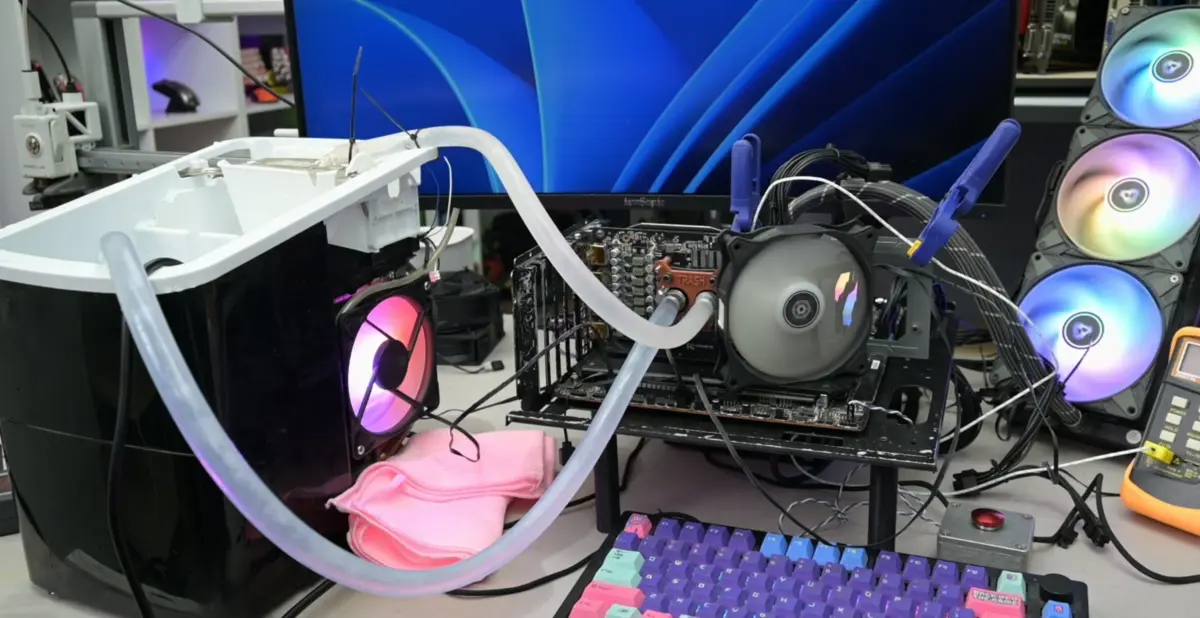
An experimental cooling setup using a modified ice cube maker keeps an NVIDIA RTX 3060 graphics card at a remarkably low temperature. This extreme method allows the GPU to run significantly cooler than standard air or water cooling solutions. Hardware enthusiasts interested in thermal performance limits now have concrete data on how far extreme cooling can push consumer hardware.
TrashBench tests extreme thermal limits with household appliance
The test was conducted by YouTuber TrashBench, who modified a standard ice cube maker to chill the graphics card. The experiment focused on the NVIDIA RTX 3060, a popular mid-range GPU known for its efficiency in standard conditions. The goal was to determine if a household appliance could effectively manage the heat output of a modern gaming component.
Cooling Performance
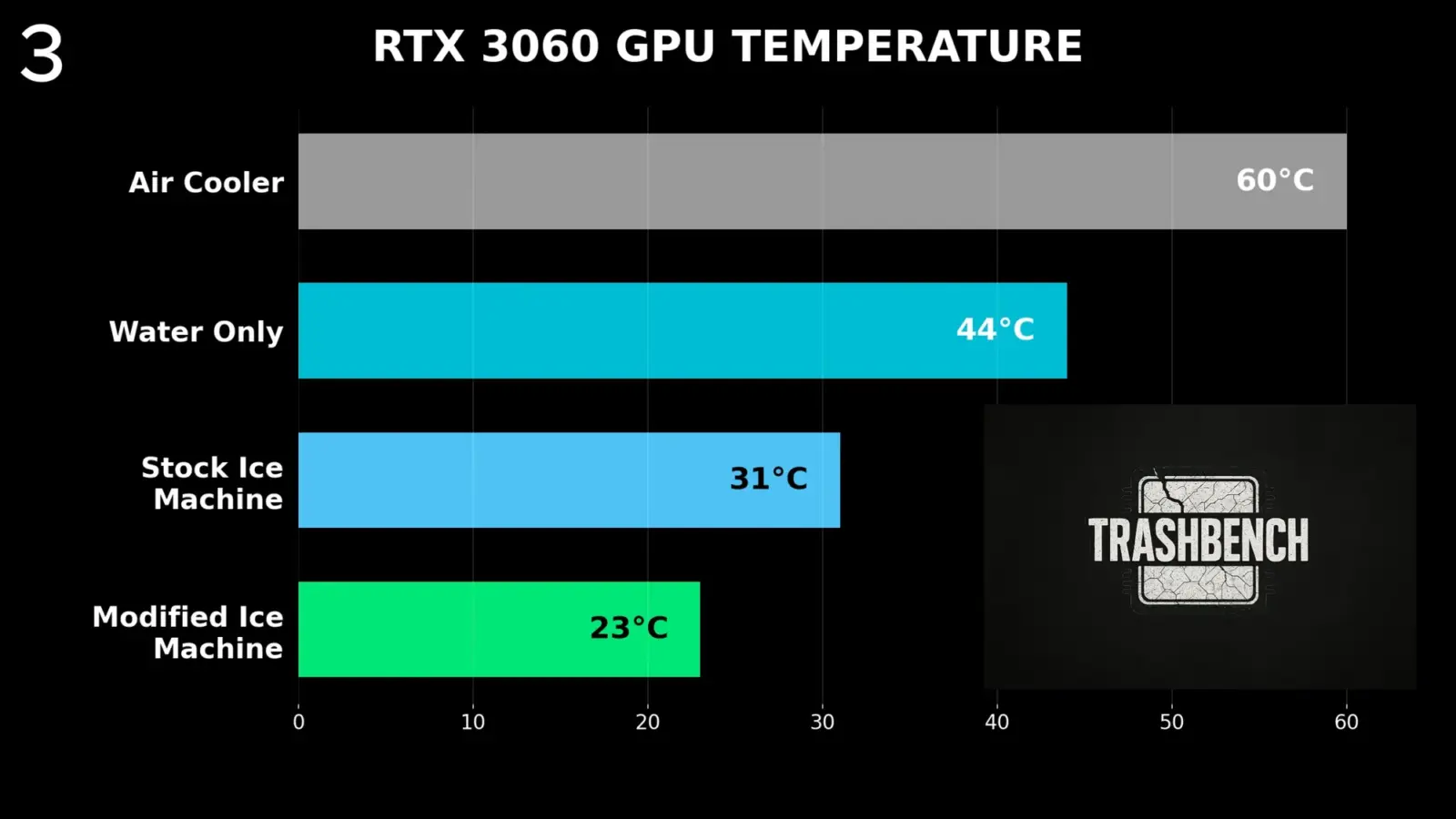
- Stock air cooler: 60°C GPU, 75°C hotspot
- Passive water cooling: 44°C GPU, 55°C hotspot
- Modified ice machine: 23°C GPU, 34°C hotspot
Under load with the stock air cooler, the RTX 3060 reached 60°C on the GPU and 75°C on the hotspot. Switching to a passive water cooling setup lowered these figures to 44°C on the GPU and 55°C on the hotspot. The modified ice machine cooling achieved the lowest temperatures, holding the GPU at 23°C and the hotspot at 34°C.
TrashBench maintained these stable temperatures during approximately 15 to 20 minutes of Cyberpunk 2077 gameplay. The ice machine successfully prevented the GPU temperature from exceeding 23°C during this gaming session. The setup demonstrates that extreme cooling can drastically reduce thermal headroom, though it introduces significant practical challenges.
The primary concern with this method is the risk of condensation forming on live electronic components. TrashBench explicitly warned against attempting this setup at home due to the danger of water damage. The experiment highlights the thermal potential of extreme cooling while underscoring the safety risks involved in such modifications.


Discussion
0 comments
Log in to join the thread with a thoughtful take, question, or correction.