
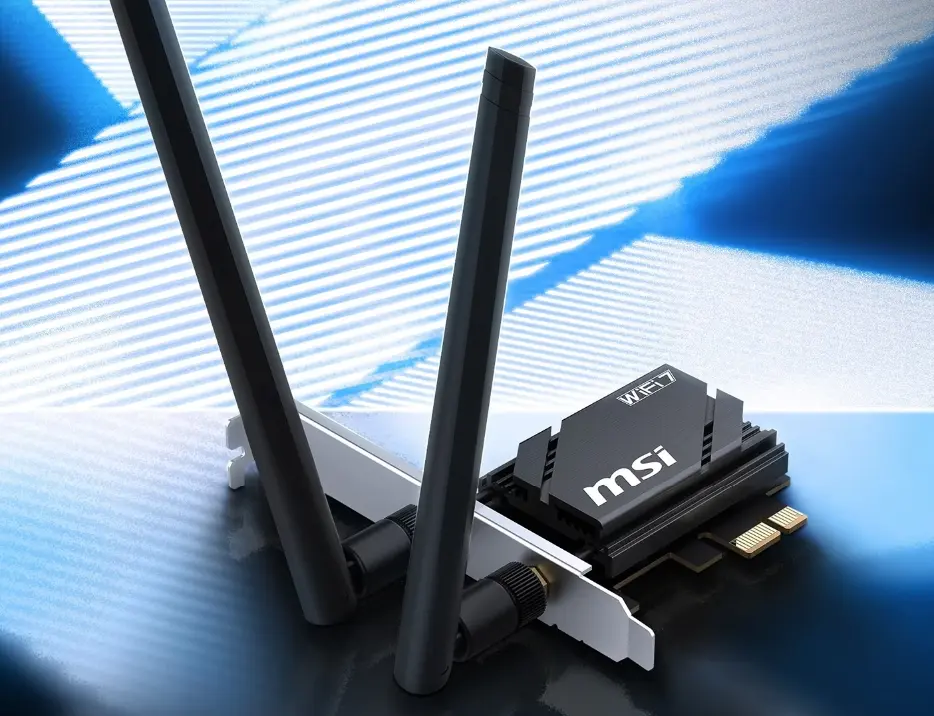
MSI has released a new Wi-Fi 7 network card that targets PC gamers looking to reduce lag in crowded wireless environments. The HERALD BE6500 uses a single PCIe x1 slot to deliver tri-band speeds up to 6452Mbps, which helps stabilize connections during heavy data transfers. This upgrade matters because it allows users to offload network traffic across multiple frequency bands, reducing the interference that typically causes stuttering in competitive games.
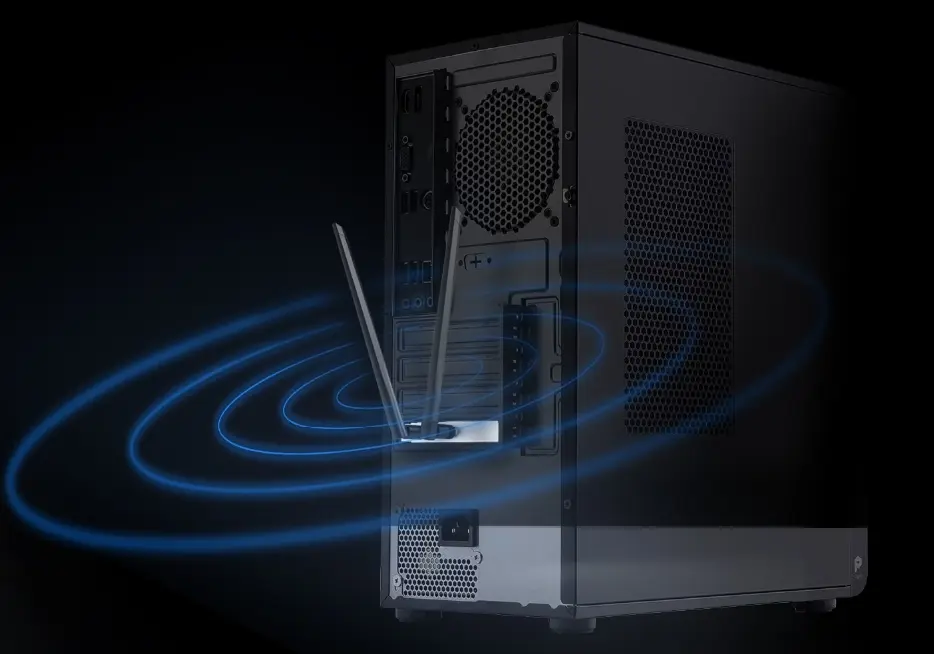
Affordable PCIe network card brings MLO and 6452Mbps throughput to desktops
The card integrates the latest Wi-Fi 7 standard alongside Bluetooth 5.4 for peripheral connectivity. It relies on Multi-Link Operation (MLO) to combine signals from different bands, ensuring a more consistent data stream. MSI equips the device with high-gain antennas to boost signal strength and extend the effective coverage range within a typical home or office setup.
Specifications
- Interface: PCIe x1
- Wi-Fi Standard: Wi-Fi 7
- Max Data Rate: 6452Mbps
- Frequency Bands: Tri-band
- Bluetooth Version: 5.4
Technical specifications include support for 4K QAM modulation and WPA 3 security protocols to handle dense data loads securely. The hardware operates on a PCIe x1 interface, making it compatible with most modern desktop motherboards that have an available expansion slot. These features work together to maximize throughput while maintaining a secure connection for sensitive online activities.
MSI claims that dynamic data stream allocation shifts traffic to less interfered channels, which lowers latency and improves overall network quality. The company states that the high-gain antennas significantly enhance transmit and receive capabilities compared to standard models. These performance claims suggest the card is designed for users who prioritize stable, low-latency connections over raw theoretical speed limits.
The HERALD BE6500 is available in China starting August 21, 2024. The launch price is set at 299 CNY (around $44.32). This pricing positions the card as an affordable entry point for users upgrading from older Wi-Fi 6 or Wi-Fi 6E adapters to the new Wi-Fi 7 standard.
Discussion
0 comments
Log in to join the thread with a thoughtful take, question, or correction.