
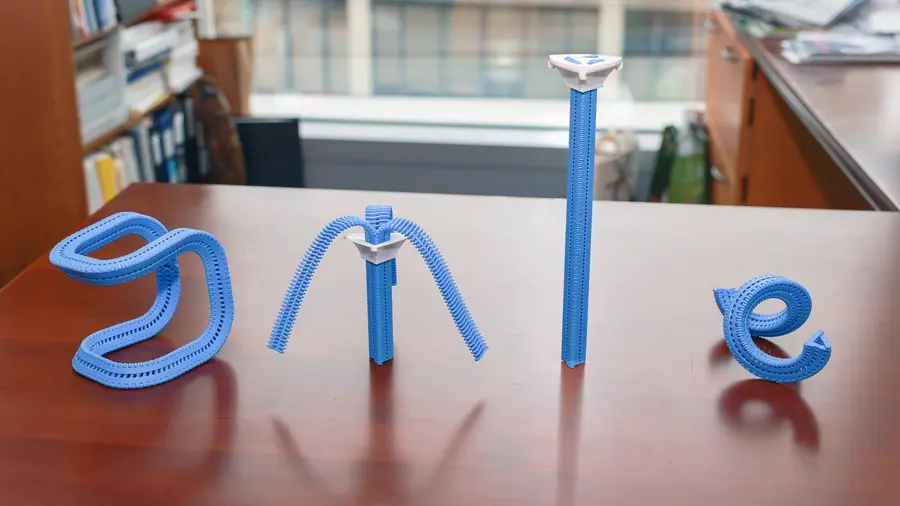
MIT CSAIL researchers have developed the Y-Zipper, a three-sided zipper mechanism that can transform flexible 3D-printed structures into rigid, load-bearing forms in seconds. The mechanism creates a rigid triangular tube when zipped, enabling rapid assembly of beams, arches, robotic limbs, and deployable frameworks.
Y-Zipper tested with PLA and TPU
The Y-Zipper was tested using two common 3D-printing materials: polylactic acid (PLA) and thermoplastic polyurethane (TPU). PLA handled heavier loads more effectively, while TPU provided greater flexibility. Durability testing showed the mechanism surviving approximately 18,000 zip-and-unzip cycles before failure. Setup time dropped from roughly six minutes to one minute and 20 seconds because the zipper snaps the structure into place.
Specifications
- Structure Type: Three-sided zipper forming a rigid 3D triangular tube
- Materials Tested: Polylactic acid (PLA) and thermoplastic polyurethane (TPU)
- Durability: Approximately 18,000 zip-and-unzip cycles
- Deployment Speed Improvement: Setup time dropped from roughly six minutes to one minute and 20 seconds
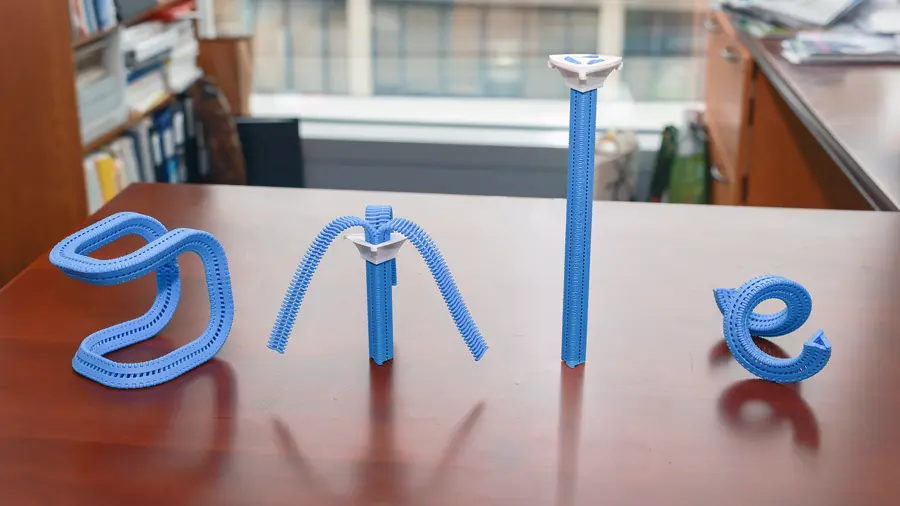
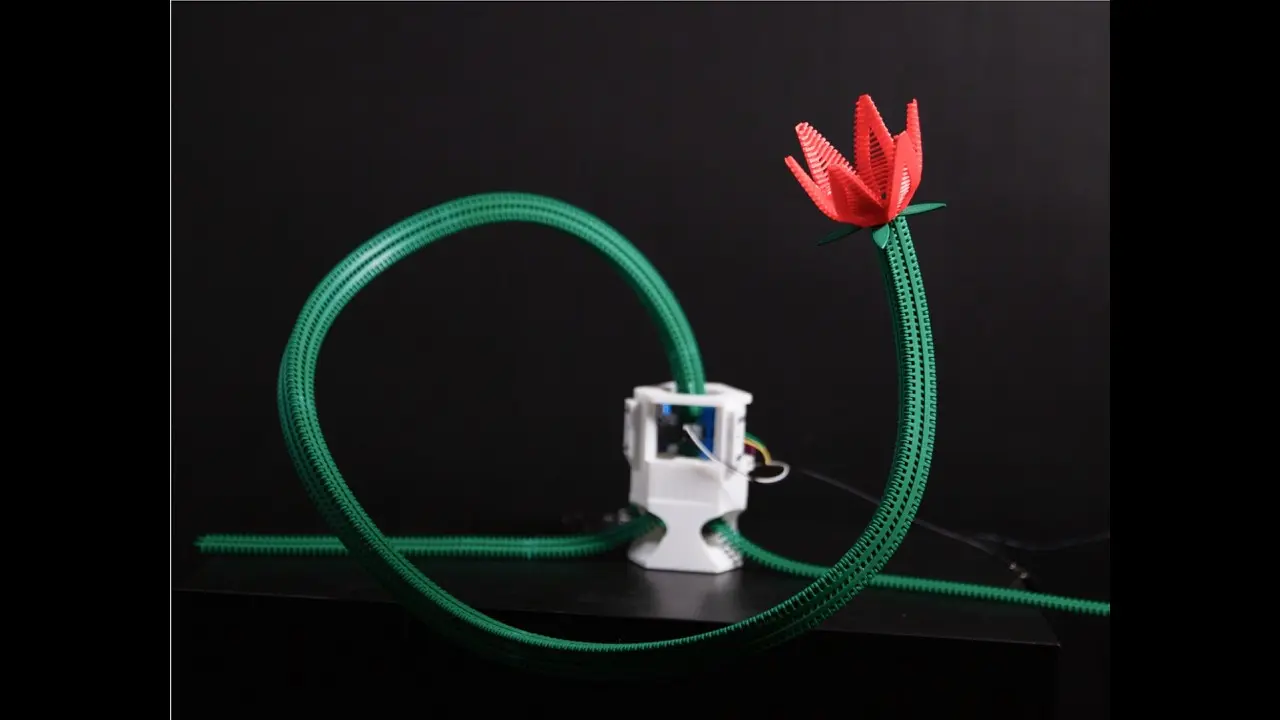
The Y-Zipper revives a 1985 triangular zipper concept originally proposed by William Freeman, made possible now by modern 3D printing. Demonstrations included a robotic quadruped with adjustable limb stiffness and a deployable tent structure. The mechanism allows shape-shifting between soft and rigid states.
MIT CSAIL has not confirmed any pricing or availability for the Y-Zipper. The research was presented in April 2024.

Discussion
0 comments
Log in to join the thread with a thoughtful take, question, or correction.