
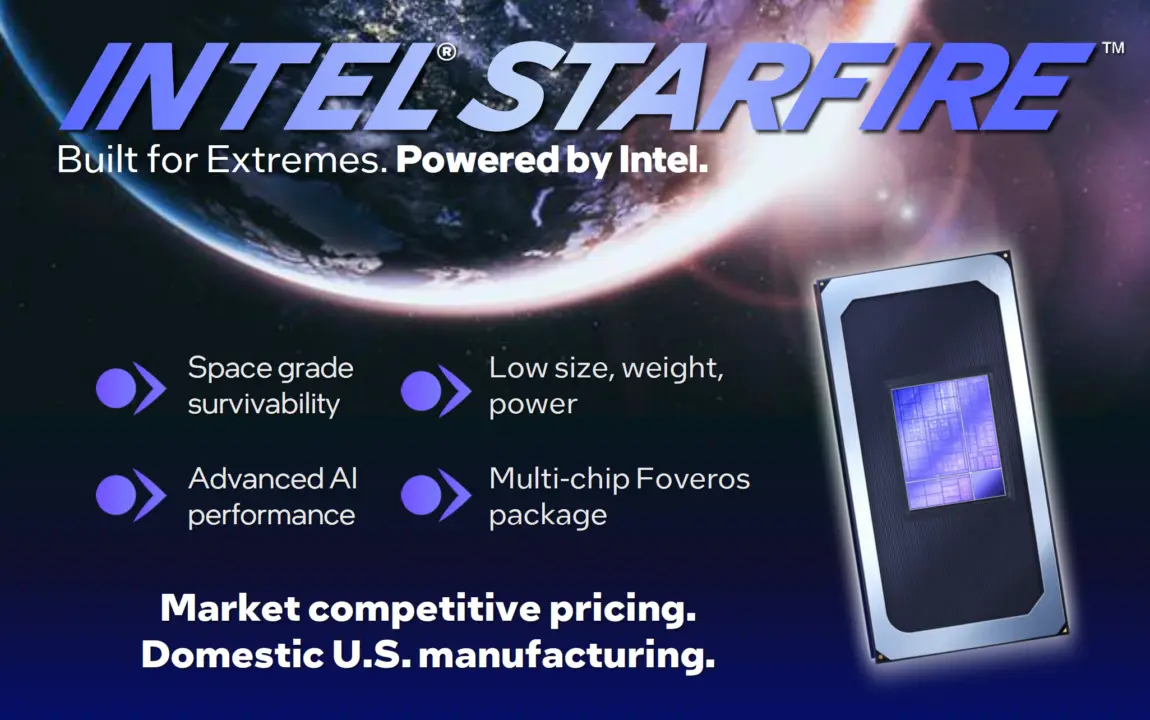
Intel introduced Starfire, a new system-on-chip designed specifically for space applications. This launch matters because it brings advanced 18A process technology into orbit, offering a path for satellites to handle heavier workloads like AI inference in harsh environments. Buyers in the aerospace sector now have a domestic option that balances high performance with extreme durability.
New processor enables satellite AI inference in harsh environments
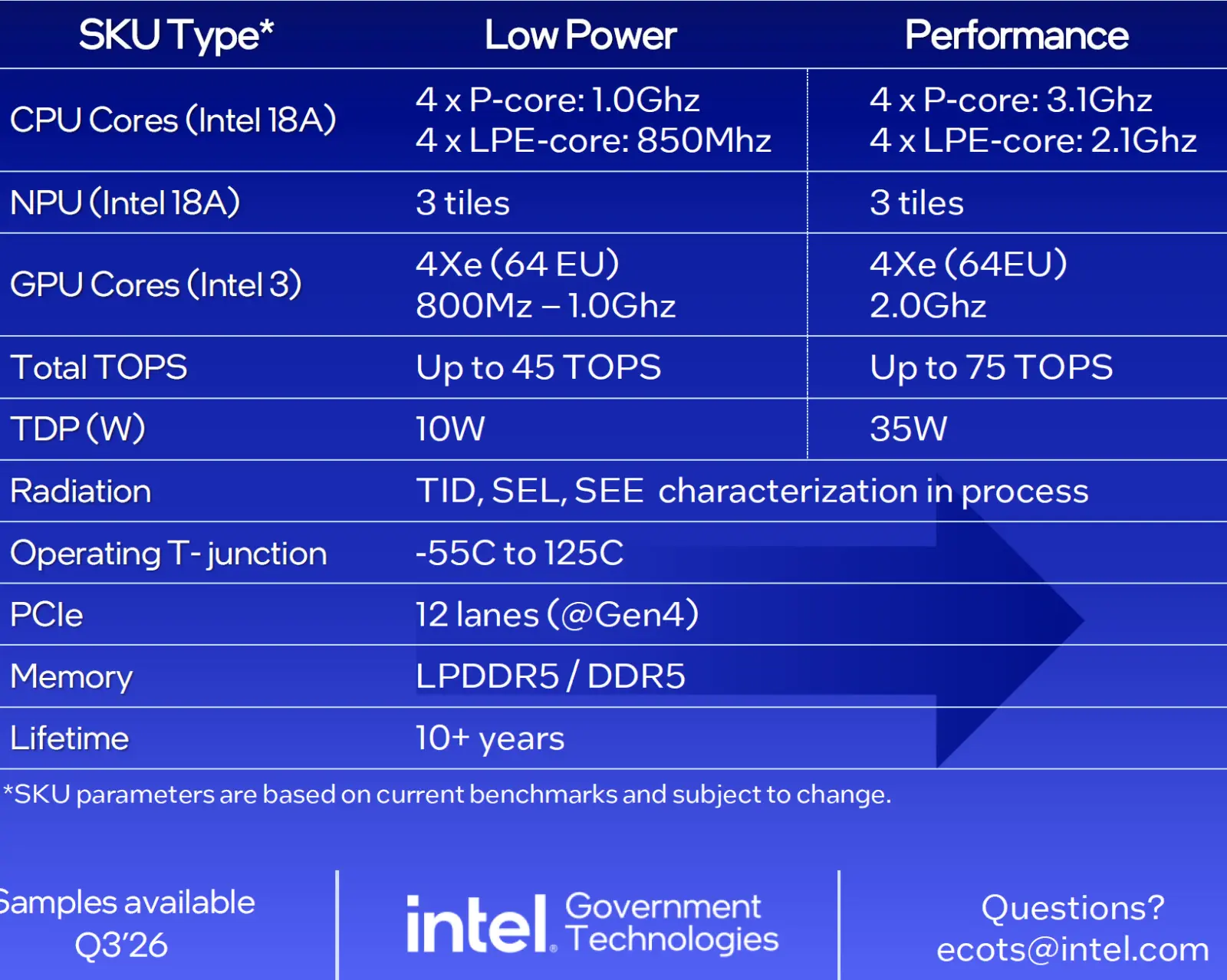
The Starfire SoC features an 8-core configuration derived from the Panther Lake architecture. It pairs 4 performance cores with 4 low-power efficiency cores. Both the Low-Power and Performance SKUs share this identical core layout to ensure consistent design across the product line.
Specifications
- Process Node: Intel 18A (SoC/NPU), Intel 3 (iGPU)
- Core Configuration: 8 Cores (4 P-Cores, 4 LPE Cores)
- NPU Performance: 45 TOPs (Low-Power), 75 TOPs (Performance)
- Operating Temperature: -55°C to 125°C
- Warranty: 10+ years
Manufacturing relies on the Intel 18A process for the main SoC and NPU, while the integrated graphics use the older Intel 3 node. The chip includes 4 Xe3 iGPU cores and supports both LPDDR5 and DDR5 memory. It also provides 12 PCIe Gen4 lanes for high-speed data transfer.
Intel offers two distinct power tiers for different mission profiles. The Low-Power SKU runs at 10 Watts with 1 GHz performance cores and delivers 45 TOPs of NPU performance. The Performance SKU operates at 35 Watts with 3.1 GHz performance cores and reaches 75 TOPs. Both chips are rated to function between -55 degrees Celsius and 125 degrees Celsius.
The chips include specific radiation protection against total ionizing dose, single-event latchup, and single-event effects. Intel manufactures these processors in the United States for the US Government. The company backs the hardware with a 10+ year warranty to support long-duration space missions.

Discussion
0 comments
Log in to join the thread with a thoughtful take, question, or correction.