
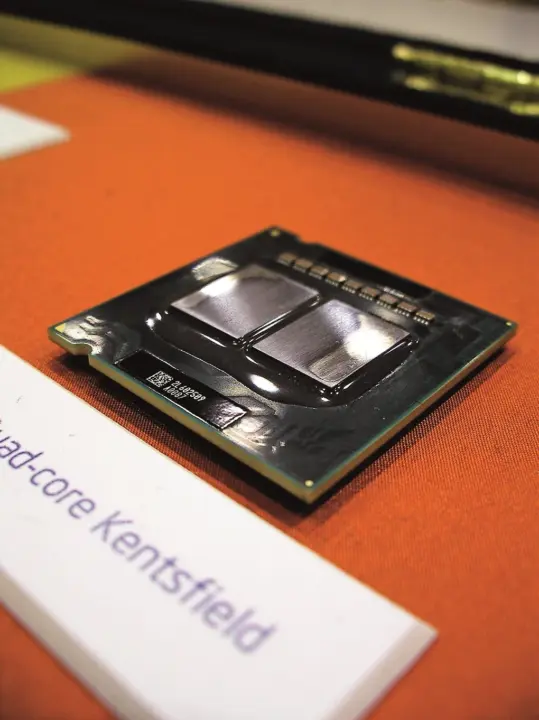
This week marks the 20th anniversary of the Intel Core 2 Extreme QX6700. This was a landmark product for desktop computing as this was the first time an x86 quad-core processor was available for consumer-level PCs. It completely changed the way people tackled multi-tasking and processing-intensive applications. For those still using dual-core hardware, it meant a massive leap in parallel processing power was available for the first time.
Commemorating the Kentsfield processor that introduced four physical cores to desktop PCs
The Intel Core 2 Extreme QX6700 was launched by Intel on November 2nd, 2006 under the Kentsfield brand. It was built using a Multi-Chip Module (MCM) based approach where they literally stacked 2x 65nm Conroe dual-core dies together on the same substrate. This was Intel's way to get a quad-core processor out there before they were able to offer a native quad-core die.
Specifications
- Architecture: Kentsfield (MCM: two 65nm Conroe dies)
- Cores: 4
- Clock Speed: 2.67GHz
- L2 Cache: 8MB (4MB x 2)
- Socket: LGA775
The QX6700 was a four physical core processor. It clocked in at 2.67GHz and had a total of 8MB L2 cache (4MB per dual-core die). It was a LGA775 socket product.
Intel rated the TDP for this chip at 130W. This made sense with how much power you would need to handle two separate dies being squeezed into one.
As we look back on performance numbers of the time, the QX6700 clearly had a huge advantage when it came to multi-threaded applications over other dual-core processors of the time. In single-threaded gaming, the X6800 (faster dual-core) was up by about 10%. But when you started taking advantage of the third or fourth core with software, the QX6700 had the upper hand. The multiplier unlock on this chip was a favorite of overclockers looking for a bump in clock speeds as well.
It was ridiculed by AMD because they said it was like gluing two cores together (MCM), but Intel had the quad-core advantage. This ultimately set the table for the mainstream Q6600 (which was a very popular chip with enthusiasts). It's definitely a landmark piece of history to remember when it came to that switch from dual-core to quad-core.
Comments (0)