
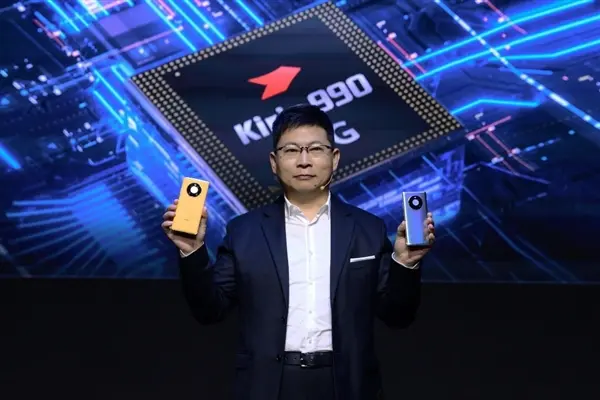
Huawei has officially introduced Tao Law (τ Law), a new guiding principle for its semiconductor business, at the 2026 International Conference on Circuits and Systems. The announcement marks a strategic shift in how the company approaches long-term chip development.
New guiding principle for semiconductor business strategy
The principle was presented by He Tingbo, President of Huawei's Semiconductor Business Division. It outlines a framework designed to sustain innovation despite external manufacturing restrictions that halted access to advanced fabrication nodes after 2020.
Over the past six years, Huawei has designed and mass-produced 381 distinct chip products based on this Tao Law methodology. The company traces its semiconductor roots back to HiSilicon's establishment in 2004 and a critical R&D pivot in 2007 when unstable 3G baseband supplies forced the development of proprietary Balong chips.
Huawei's mobile SoC history demonstrates steady architectural progress under this framework. The Kirin 970 (2017) became the first mobile system-on-chip to integrate an independent neural processing unit, followed by the 7nm Kirin 980 (2018), which introduced dual NPUs for enhanced AI workloads.
The company reached a manufacturing peak with the Kirin 9000 (2020), built on a 5nm process. This chip represented Huawei's most advanced mobile processor before geopolitical restrictions forced a transition toward domestic supply chain independence and mature-node production strategies.
Huawei achieved a major milestone in August 2023 when the Mate 60 series launched with the Kirin 9000S chip. Built on a 7nm process, this release signaled significant progress in local component localization and demonstrated the company's ability to sustain advanced mobile silicon production under constrained conditions.
The Tao Law framework continues to guide Huawei's semiconductor roadmap as it navigates ongoing supply chain challenges. The principle emphasizes self-reliant research pathways and long-term architectural planning rather than short-term performance benchmarks alone.


Discussion
0 comments
Log in to join the thread with a thoughtful take, question, or correction.