
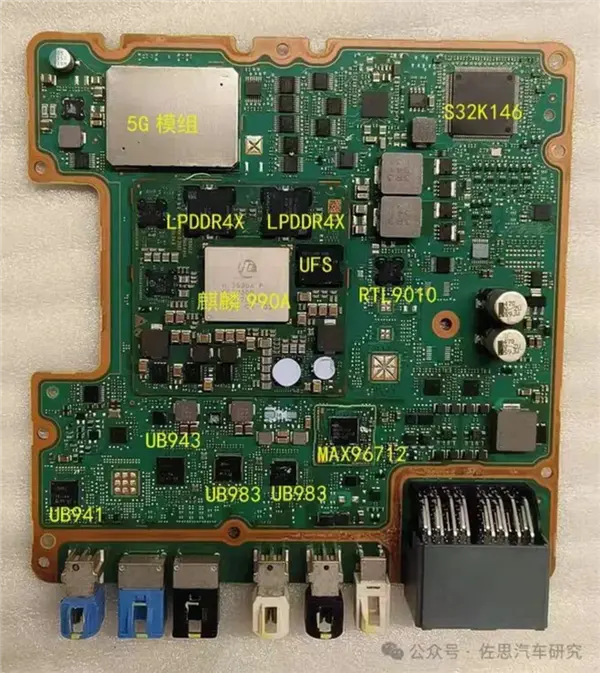
Huawei has integrated a dual-chip architecture into the cockpit controllers for its new Aito M8 and M9 vehicles. This design choice shifts away from single-system-on-chip solutions to improve system stability and fault tolerance. The move addresses previous reliability concerns by providing full-link backup for critical driving functions.
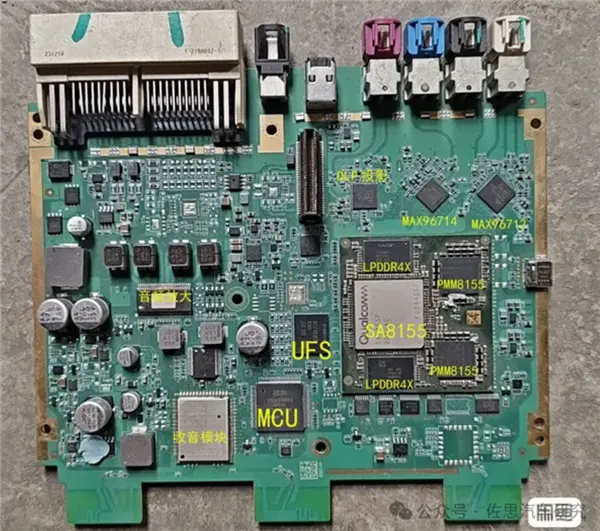
Dual-chip architecture replaces older hardware to improve stability and reduce costs
The primary processing unit is Huawei's own HiSilicon Kirin 990A, built on a 7-nanometer process. This chip features four ARM Cortex-A76 derived TaiShan V120 cores and four A55 efficiency cores running up to 2.86GHz. It also includes an integrated 16-core Mali-G76 GPU and handles the native 5G baseband connectivity.
A secondary Qualcomm SA8155 chip manages auxiliary tasks such as audio decoding and 360-degree camera views. This separation prevents non-core functions from consuming resources on the main processor, reducing the risk of system lag. The architecture replaces the older Kirin 9610A found in previous models with a focus on redundancy.
The system utilizes UFS 2.1 storage standards to keep manufacturing costs lower than high-end single-chip alternatives. Industry analysts note that this configuration offers better cost efficiency compared to solutions using the Qualcomm SA8295. The dual-chip setup aims to balance performance with economic viability for mass production.
Discussion
0 comments
Log in to join the thread with a thoughtful take, question, or correction.