
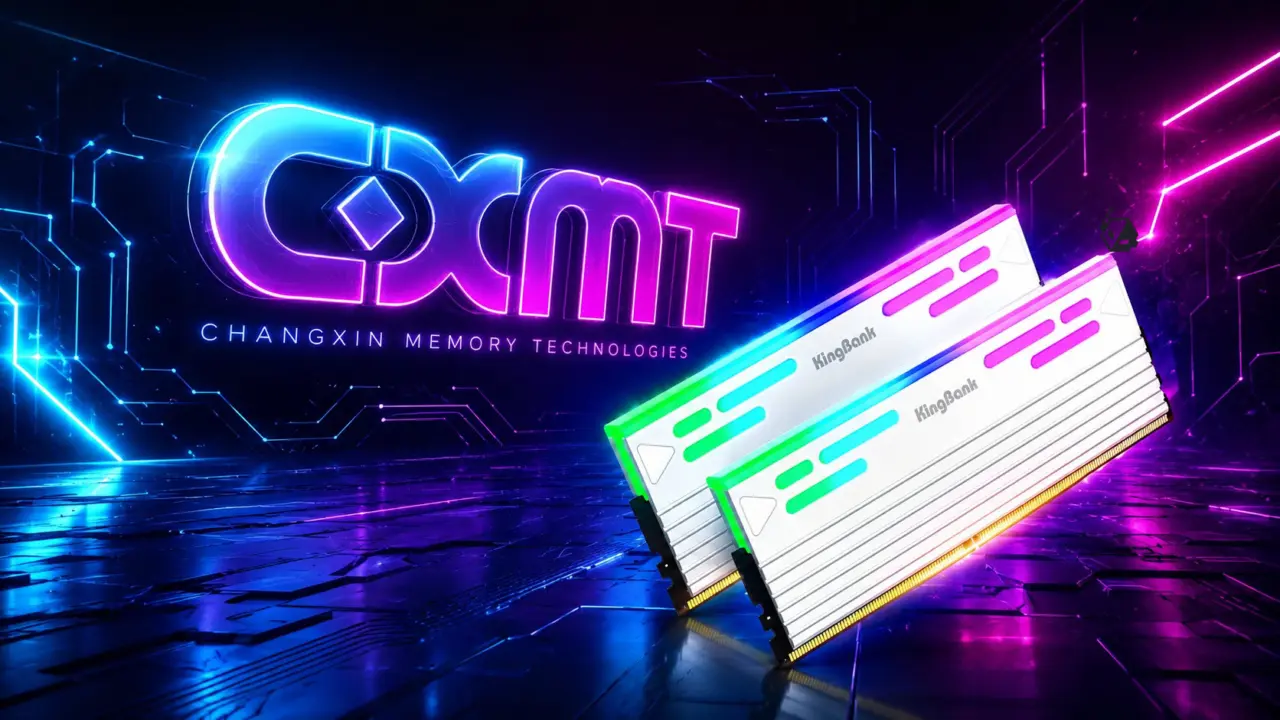
CXMT DDR5 memory modules are entering the market with a significant performance gap compared to established rivals, which matters for builders seeking maximum overclocking headroom. Motherboard vendors like ASUS, MSI, and Colorful have demonstrated support for these chips up to 8600 MT/s, but the silicon itself imposes strict limits on how far users can push the speeds. This reality means enthusiasts relying on manual tuning will likely see diminishing returns compared to kits using SK Hynix or Samsung dies. We have been tracking DDR5 Memory closely — see our earlier coverage on CXMT DDR5 Memory Pricing Matches Samsung.
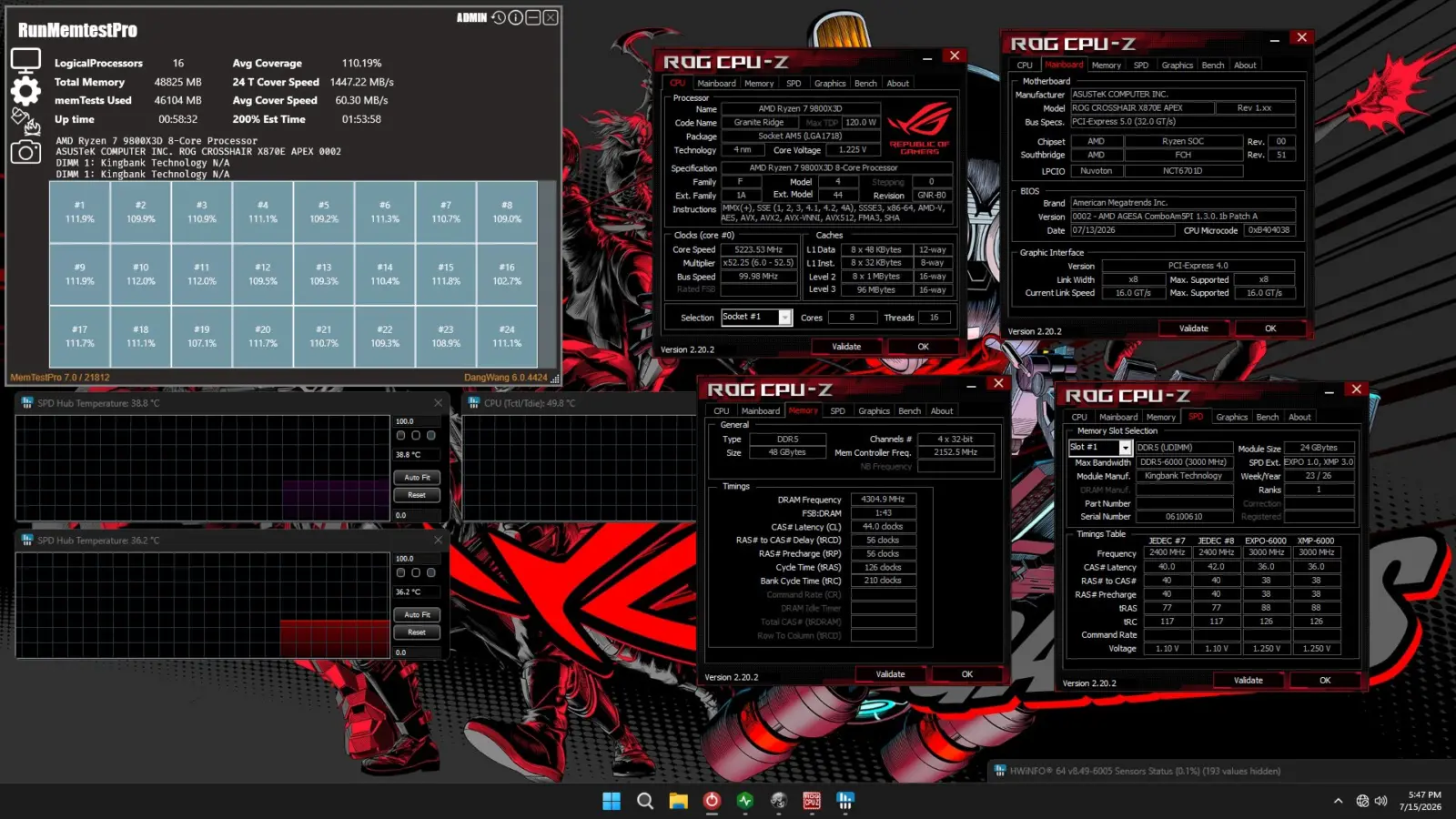
CXMT DDR5 memory lacks voltage scaling and timing flexibility compared to rivals
The core issue lies in the physical characteristics of the CXMT DRAM dies, which ASUS and independent analysts describe as fundamentally different from the 'big three' manufacturers. A Kingbank 48 GB kit using these modules runs at a baseline of 6000 MT/s with CL36 timings, but pushing beyond that reveals the chip's constraints. Users cannot tighten these timings beyond the baseline, locking them into fixed latency profiles regardless of BIOS adjustments. This limitation stands in contrast to the flexible tuning options available with competitors' memory modules.
CXMT DDR5 Memory Key Characteristics
- Max Overclocked Speed: 8600 MT/s
- Baseline Speed: 6000 MT/s
- Overclocked Latency: CL44
- Motherboard Used: X870E Crosshair APEX
Performance testing highlights that CXMT DDR5 modules deliver worse results than SK Hynix kits at identical clock speeds. The silicon does not scale with increased voltage, meaning users cannot force higher speeds by raising power delivery to the RAM sticks. ASUS notes that pushing more voltage into the modules yields no major benefit, effectively capping the overclocking potential. This behavior makes the memory less attractive for users who prioritize high-frequency operation over stability.
Significant silicon variance exists between different production batches of CXMT memory, adding another layer of unpredictability for buyers. This inconsistency means performance can vary widely even among modules from the same product line, making overclocking a gamble rather than a reliable process. While the modules fill supply gaps as major DRAM makers focus on AI segments, the trade-off is clear for high-performance PC builders. The memory works at stock speeds, but manual tuning offers little advantage over standard configurations.
CXMT is positioning its DDR5 modules to fill supply gaps as major DRAM makers like SK Hynix, Samsung, and Micron focus on AI segments. The company aims to provide a cost-effective alternative for general computing, though the performance limitations remain a notable drawback for enthusiasts. Users can expect baseline performance comparable to standard kits, but manual overclocking capabilities are severely restricted. This strategy allows CXMT to enter the market, but it requires buyers to manage expectations regarding speed and tuning flexibility.
The confirmed facts show that CXMT DDR5 memory supports up to 8600 MT/s on compatible motherboards but lacks the voltage scaling and timing flexibility of rivals. Users cannot tighten timings or improve performance through voltage increases, and batch-to-batch variance adds uncertainty to overclocking efforts. This makes the memory suitable for standard use cases but less ideal for enthusiasts seeking maximum performance. The trade-off between cost and capability defines the current offering from CXMT.
Discussion
0 comments
Log in to join the thread with a thoughtful take, question, or correction.