
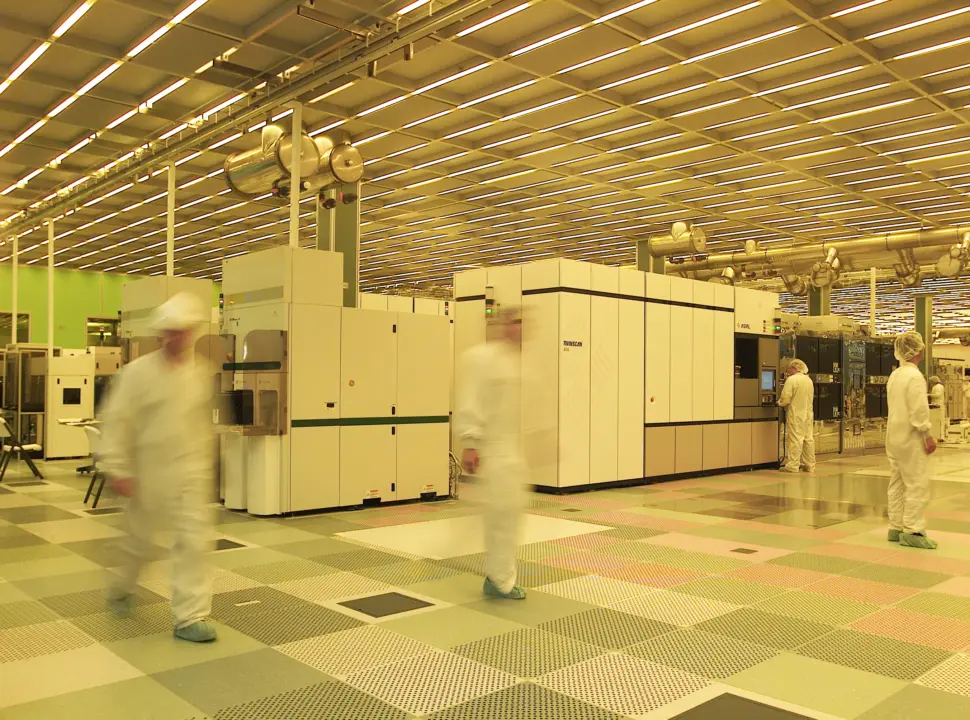
ASML has spent years fortifying its position in extreme ultraviolet (EUV) lithography, but a new competitive layer is emerging in the metrology sector. This shift matters because precise inspection tools are becoming just as critical as the printers themselves for manufacturing advanced chips. As transistor structures grow more complex, the industry is moving toward EUV-based inspection to catch defects that older methods miss.
Five startups develop high-resolution inspection tools for advanced chip manufacturing
The core technology driving this change is High Harmonic Generation (HHG), which the International Roadmap for Devices and Systems identifies as essential for next-generation EUV metrology. HHG sources cover the full spectrum from soft X-rays to vacuum ultraviolet light. This broad coverage allows for higher resolution imaging that surpasses traditional deep ultraviolet (DUV) light sources by more than ten times.
Five Chinese companies are now entering the EUV metrology market to challenge the status quo. Haoyu Xinguang is pursuing the HHG route, aiming to leverage its superior resolution capabilities. Huaxin Jiguang, founded by Professor Lin Nan, focuses on the dynamics of tin droplets in laser-produced plasma (LPP) light sources. Langdao Technology is also developing LPP-EUV light sources and has completed its first round of financing.
Other players include Yunqi Jiyao, which is building compact plasma light sources, and Huari Laser, which is industrializing coherent light source technology. These firms are addressing the limitations of traditional optical metrology, which struggles with the precision needed for gate-all-around (GAA) structures. The IRDS 2024 roadmap confirms that EUV metrology is becoming the inevitable choice for advanced process nodes due to its speed and non-destructive testing advantages.
Significant technical hurdles remain for these domestic efforts. LPP systems require extreme precision in handling tin droplets, while HHG sources currently operate at low power levels ranging from milliwatts to watts. Despite these challenges, the formation of a complete domestic matrix suggests a strategic push to secure supply chains for critical semiconductor equipment.

Discussion
0 comments
Log in to join the thread with a thoughtful take, question, or correction.