
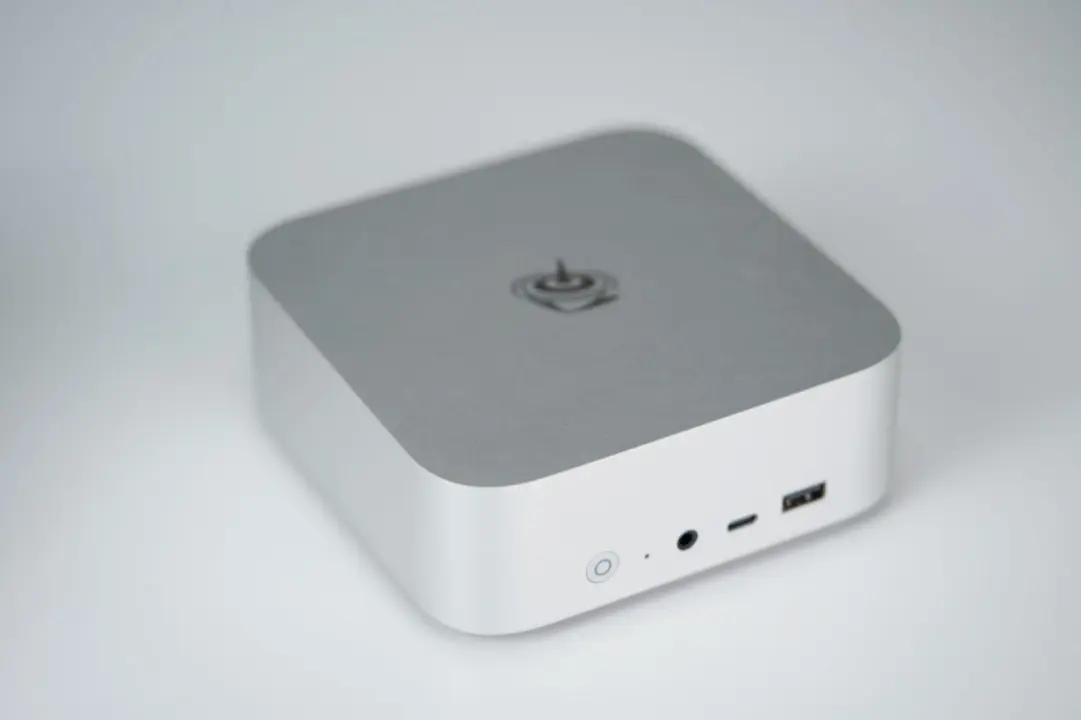
Beelink has brought us a new compact and thermally friendly mini PC, the SER9 Max. It’s intended for users that want to have fast storage, but without the massive cooling that typically comes with it. That’s why they paired it with AMD Ryzen AI 7 H 350 and standard PCIe 5.0 SSD.
Beelink SER9 Max mini PC features 54W power limit and 10Gbps Ethernet
The Beelink SER9 Max is powered by an AMD Ryzen AI 7 H 350 processor that has 4 Zen 5 cores and another 4 Zen 5c cores. This octa-core, 16-thread CPU is capable of clocking up to 5.0GHz in boost mode. Beelink has set a power wall of 54W for the system to keep it compact.
Specifications
- Processor: AMD Ryzen AI 7 H 350 (8 cores, 16 threads, up to 5.0GHz)
- Storage: Standard PCIe 5.0 SSD (Internal M.2 2280 slots in PCIe 4.0×4 mode)
- Networking: 10Gbps Ethernet
- Power Limit: 54W TDP/Power Wall
- Thermal Performance: SSD temperature 42°C under full load
The SER9 Max uses standard PCIe 5.0 SSD that runs at 3600MT/s speeds. You can use the internal M.2 2280 slots in PCIe 4.0×4 mode. It also has a dedicated Ethernet port (10Gbps) to help you with your high-speed transfer needs.
It can handle a bit of stress when it comes to heat. The SSD stays at a cool 42°C under full load in testing. That’s nice and cool without needing an extra heatsink for the drive. So you can use this unit in light laptops or compact hosts that have limited air space.
The Beelink SER9 Max was released in November 2024. It features the Ryzen AI 7 H 350 processor, PCIe 5.0 storage and 10Gbps. 54W power limit and a passive SSD cooling method for more compact installations.
The article states the internal M.2 slots run in PCIe 4.0×4 mode. Is the PCIe 5.0 SSD strictly a marketing feature since it downshifts to Gen4 speeds internally?
Yes. The controller negotiates the link width and generation. Even with a Gen5 drive installed the slot will only utilize Gen4 lanes. You lose the bandwidth advantage.
so i guess i can save money on a gen4 drive then 😅
42 degrees is impressive for a passive drive but only under sustained load. Burst transfers will still spike the temp before the thermal throttling kicks in.
I doubt the SSD stays that cool without a heatsink when the Ryzen AI 7 H 350 is pushing 54W of heat in the same tiny chassis. Airflow must be compromised.
The power limit is 54W. That is not a TDP. It is a power wall for the system. Do not confuse the two when comparing to other mini PCs.
The Zen 5c cluster efficiency matters more than the core count here. If the scheduler handles the 8c/16t layout well the 54W limit will hold steady.
Does this come with Windows preinstalled or do I need to buy a license separately?
10Gbps ethernet is the real feature. Most mini PCs still stick to 2.5G.