
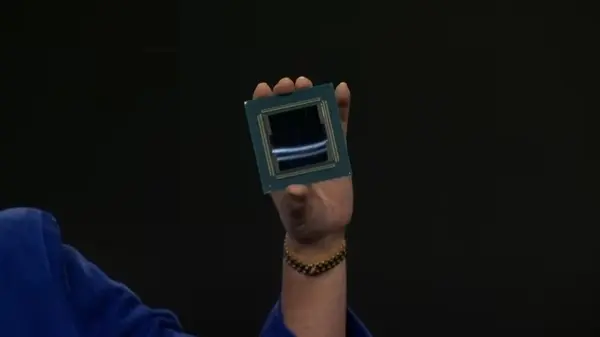
New leaked benchmarks are showing us that AMD's new Zen6 architecture is bringing a massive efficiency boost, even for their scaled-down server design of Zen6. The 16 percent boost in instructions per clock is an extremely strong base for this architecture and this means that consumer Ryzen CPUs are going to likely have some serious performance boosts for real world applications. If you're a consumer looking at the mid-range, just be ready for a big change in the pecking order when this new generation arrives.
Leaked server benchmarks reveal 16% IPC boost for reduced-spec Zen6c architecture
Breaking down the benchmark numbers, we're looking at the Zen6c core design, which is designed for AMD to use in high density EPYC server CPUs. While not directly applicable to consumer desktop CPUs, Zen6c is a scaled down architecture with a simplified cache design compared to Zen6 itself, but still puts up a strong IPC performance of 691 points per gigahertz. That's an obvious 16 percent bump in IPC compared to last generation Zen5 at 596 points per gigahertz.
A 16 percent IPC boost sounds right in line with AMD's normal slow improvements year over year. We've seen that before with a 19 percent boost with Zen3, 13 percent with Zen4, and about 16 percent with Zen5. It's possible that we're going to see some massive improvements for gaming performance coming for consumer Zen6 Ryzen processors when they drop at CES next January. Possibly more than 20 percent improvement for gaming performance.
For gaming performance, we're expecting anywhere between a 5-8 percent improvement for gaming performance at current memory speeds and as high as 9-17 percent at faster memory speeds. We are also expecting the next Zen6 X3D CPUs to come with L3 cache sizes above 200 megabytes. They could even go as high as 300 megabytes.
We've been keeping an eye on Ryzen, like when we wrote about how Dell locks Ryzen 9 9950X3D to certain motherboards. It's a crazy world out there.
The Geekbench 7.1 scores for the EPYC 9996 using the Zen6c core give us an indication of a 16.5 percent improvement in single core performance over Zen5. These are the first real numbers that show us how much more efficient the Ryzen ecosystem is going to be. It shows us that AMD is going to keep their single threaded performance lead for the next generation.


Comments (0)