
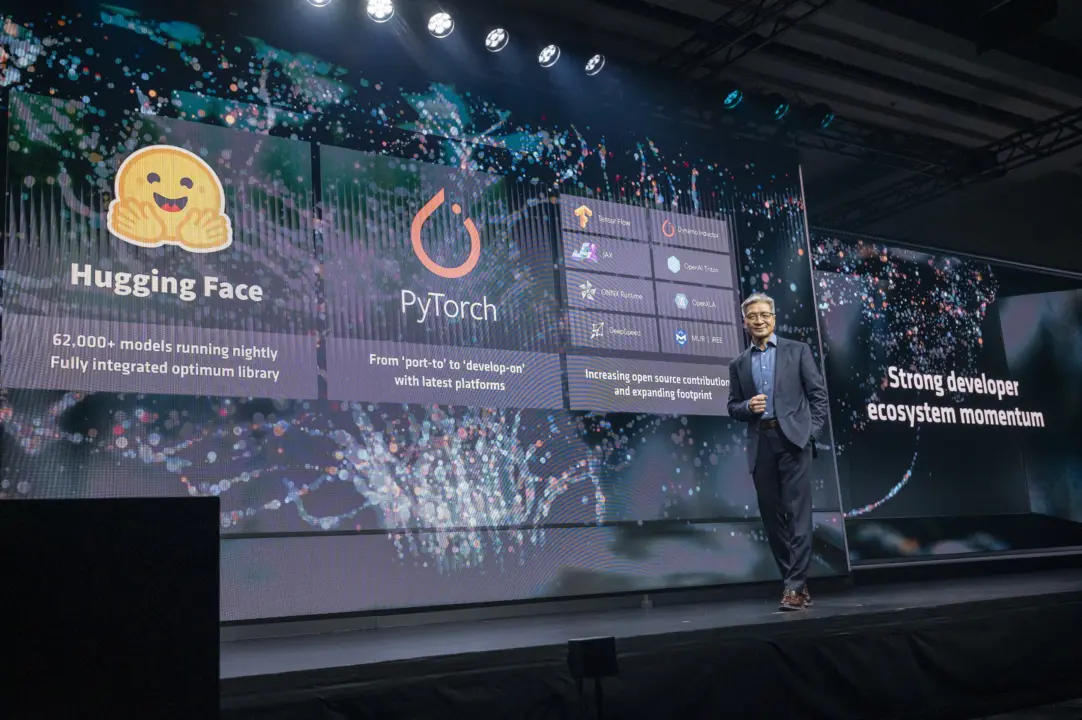
Intel and AMD are consolidating their respective CPU optimization libraries into a unified, open-source project named oneDNN. This unification streamlines the software development landscape for AI inference models targeting x86 platforms. Developers no longer have to deal with hardware-specific code pathways in PyTorch, minimizing fragmentation in the AI space. End users get a streamlined backend that works across Intel and AMD hardware, with no manual setup.
AMD and Intel merge AI libraries to simplify PyTorch development
Specifically, Intel's oneDNN library, published and managed by Intel under the UXL Foundation, will serve as the focal point for unification. AMD's ZenDNN library is being integrated directly into oneDNN. The outcome is a unified PyTorch CPU inference stack for both leading x86 hardware players. This collaboration guarantees that performance enhancements for both Zen and Intel Core will reside in the same codebase.
AMD is becoming a steering member of the UXL Foundation to facilitate this technical change. AMD contributes an annual $20,000 fee to the foundation. This collaboration is per recommendation from the x86 Ecosystem Advisory Group (EAG). The EAG adopted this unification approach in 2024 to ease software development on the platform.
With oneDNN, it becomes the default PyTorch CPU inference backend for both vendor ecosystems. Developers don't have to juggle distinct optimization libraries for different x86 CPUs. It makes it easier to roll out AI models on varied hardware. This unification changes the x86 machine learning landscape.
Discussion
0 comments
Log in to join the thread with a thoughtful take, question, or correction.