

Samsung is developing a new version of High-Bandwidth Memory specifically designed for smartphones and tablets. The South Korean manufacturer aims to transform mobile devices into powerful on-device AI platforms. This initiative focuses on integrating advanced memory packaging technologies to overcome current hardware limitations.
New packaging tech boosts bandwidth for mobile AI
The company plans to use Fan-Out Wafer Level Packaging combined with a Vertical Copper Post Stack. This approach allows for ultra-high aspect ratio copper pillars with a ratio of 15:1 to 20:1. Samsung has significantly increased this ratio from the previous 3:1 to 5:1 standard. The packaging method also increases the number of input and output terminals. These changes contribute to a 30 percent increase in memory bandwidth. The technology aims to improve heat resistance and sustain heavy workloads more effectively.
Spec comparison
| Spec | Samsung HBM Mobile |
|---|---|
| Packaging Technology | Fan-Out Wafer Level Packaging (FOWLP) with Vertical Copper Post Stack (VCS) |
| Copper Pillar Aspect Ratio | 15:1–20:1 |
| Bandwidth Increase | 30 percent |
| Potential Minimum Pillar Diameter | Below 10 micrometers |
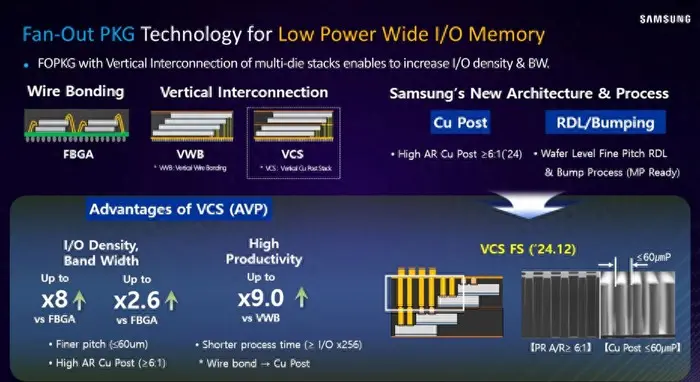
Samsung intends to target the Exynos 2800 and Exynos 2900 system-on-chips with this new memory solution. Reports suggest that Apple is also exploring the integration of mobile HBM for its iPhones. It remains unconfirmed whether Apple will source this technology directly from Samsung. Huawei is reportedly considering the technology as well. Geopolitical and commercial constraints make it unlikely that Samsung will supply Huawei with these components.
The technology is currently in the development phase. Samsung has not provided a specific timeline for when mobile-based HBM will debut in consumer devices. The company faces engineering challenges regarding the physical durability of the copper pillars. Pillars with diameters below 10 micrometers are prone to bending or breaking during manufacturing. Samsung must resolve these structural issues before mass production can begin.


Discussion
0 comments
Log in to join the thread with a thoughtful take, question, or correction.