
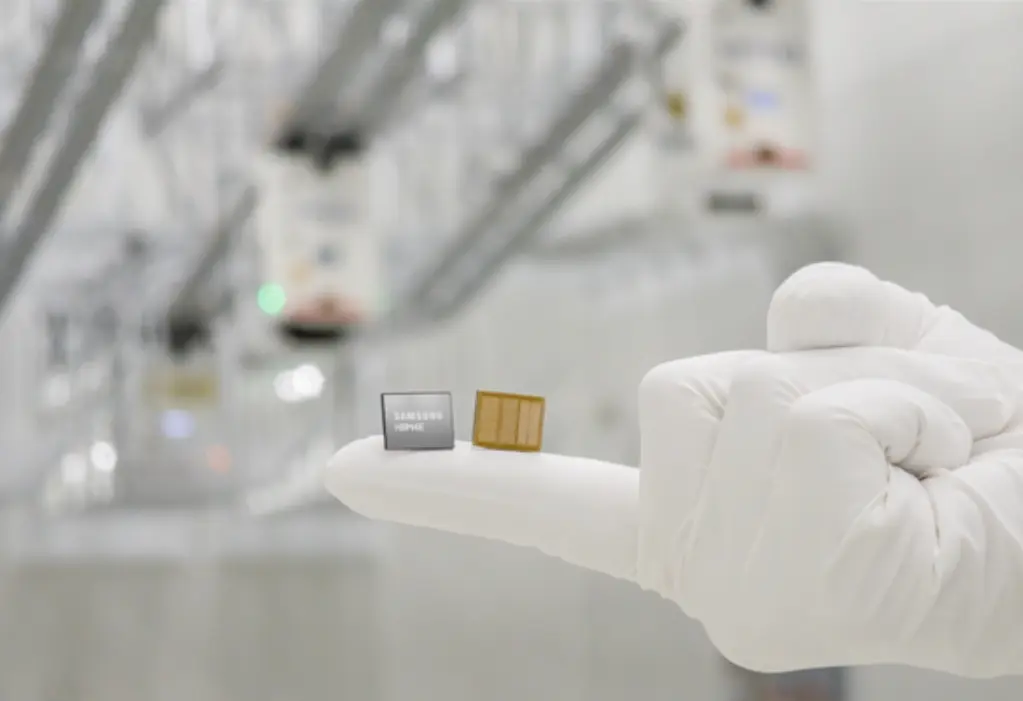
AI data centers face a critical bottleneck in memory bandwidth, and Samsung has moved its next-generation HBM4E solution into a stable production phase. The company confirmed that the yield rate for reliability testing of this high-bandwidth memory has risen to over 70%. This milestone signals that Samsung has cleared the initial development hurdles and is now ready to deliver consistent volumes to its key customers. Buyers relying on advanced AI accelerators will see this as a signal that supply chain constraints for top-tier memory are easing.
Samsung delivers industry first 48GB stacks to key customers
Samsung delivered the industry's first 12-layer 48GB HBM4E samples to these major clients earlier this year. The new memory stack integrates 6th Gen 10nm-class DRAM with Samsung Foundry's 4nm logic substrate to maximize density and speed. This combination allows the chips to handle the massive data throughput required by modern large language models. The architecture supports a stable pin speed of 14 Gbps, which can expand to 16 Gbps in later revisions.
Specifications
- Yield Rate: Over 70%
- Pin Speed: 14 Gbps (expandable to 16 Gbps)
- Memory Bandwidth: 3.6 TB/s per stack
- Capacity: 48GB (12-layer)
- Performance Improvement: Over 20%
The technical specifications for the HBM4E stack show significant gains over the previous HBM4 generation. Each stack delivers a memory bandwidth of 3.6 TB/s, which supports the high-throughput demands of AI training workloads. Samsung claims an overall performance improvement of over 20% compared to its predecessor. These gains come from a low-power design and optimized packaging that also reduce heat generation. The thermal resistance improved by over 14%, while energy efficiency increased by 16%.
Samsung plans to complete Production Readiness Approval for its 7th Gen DRAM process by November. This timeline aligns with the company's strategy to maintain leadership in AI memory infrastructure. The company's CTO stated that the current yield rates indicate the development process has entered a stable phase. This stability is crucial for manufacturers who need predictable supply chains for their hardware deployments.
We looked at the last hbm4e update, several of the same balance and stability themes came up. The focus remains on ensuring that high-speed memory can keep pace with the computational power of modern AI chips. Samsung continues to push the boundaries of what is possible with stacked memory architectures.
The transition to stable production marks a key step in the rollout of next-generation AI hardware. Samsung's ability to deliver 48GB stacks with high bandwidth and improved thermal properties sets a new standard for the industry. Data center operators can expect these chips to power the next wave of AI accelerators.
Discussion
0 comments
Log in to join the thread with a thoughtful take, question, or correction.