
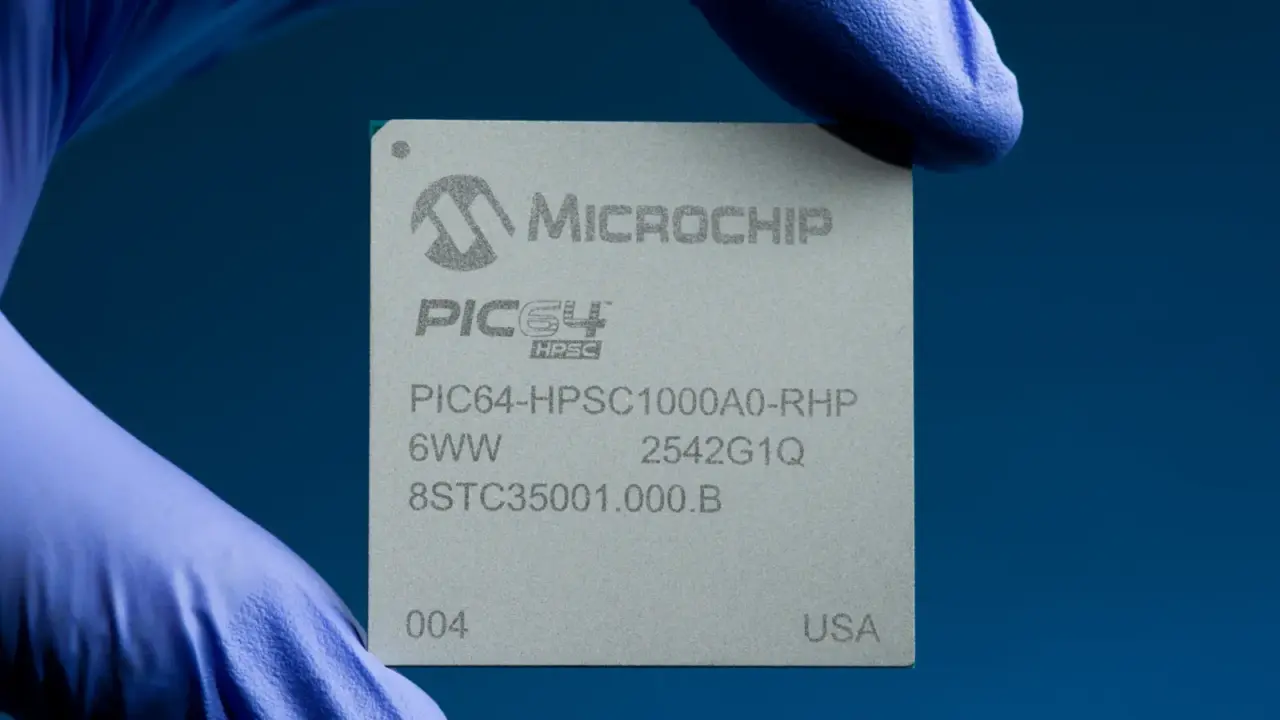
NASA and Microchip Technology Inc. have announced a partnership to develop the High-Performance Spaceflight Computing system-on-a-chip. This new semiconductor aims to drastically increase the computational power available to spacecraft. The project targets a significant leap in processing capability for missions ranging from low Earth orbit to deep space exploration.
Chip integrates computing and networking on single device for reduced complexity
The SoC is designed to deliver 100 times the computing capacity of current spaceflight processors. It features a scalable architecture that integrates both computing and networking capabilities on a single device. Engineers plan to connect multiple units using advanced Ethernet to scale performance as needed. This integration helps reduce system complexity and improves power efficiency for satellite operations.
The chip will be available in two distinct configurations to suit different mission profiles. A radiation-hardened version will support geosynchronous, deep-space, and long-duration missions such as those to the Moon and Mars. A radiation-tolerant version will serve low Earth orbit satellites. This dual approach ensures robust performance across varying levels of cosmic radiation exposure.
Increased processing power enables greater autonomy for spacecraft operations. The technology allows systems to make independent decisions, such as adjusting rover traversal speeds or analyzing images without waiting for ground control instructions. This capability reduces latency and improves mission responsiveness. The underlying technology may also find applications on Earth in drones, energy grids, medical equipment, and communications infrastructure.

Discussion
0 comments
Log in to join the thread with a thoughtful take, question, or correction.