
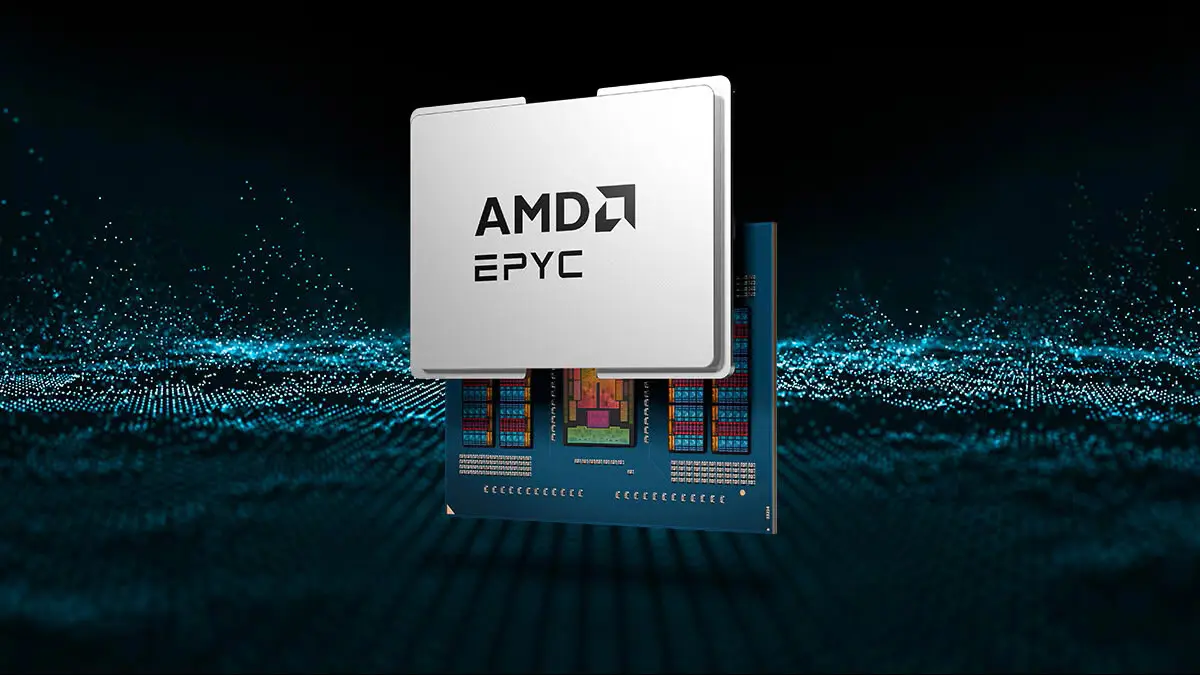
Server builders planning their 2027 infrastructure should note that AMD is preparing a significant architectural shift with its next-generation EPYC processors. The upcoming 'Verano' lineup introduces a new socket and memory standard that will likely dictate the design of future AI cluster host systems. This change matters because the transition to a new physical interface and memory architecture will require hardware vendors to redesign their server platforms entirely.
Zen 6 EPYC 9006 LP targets 72 cores and 5GHz boost for AI cluster hosts
The new processor family, internally codenamed EPYC 9006 LP, is built on AMD's Zen 6 architecture. It targets the high-performance computing sector with a maximum core count of 72 and boost clocks reaching up to 5GHz. AMD positions these chips specifically as host processors for AI GPU clusters, indicating a focus on dense, high-throughput workloads rather than general-purpose enterprise tasks.
Specifications
- Socket: SB1
- Architecture: Zen 6
- Core Count: Up to 72
- Boost Clock: Up to 5GHz
- Memory Interface: SOCAMM2 modules, 24-channel LPDDR5X
A key technical change is the adoption of the new SB1 socket, which replaces previous generations. The chip utilizes replaceable SOCAMM2 modules to support a 24-channel LPDDR5X memory interface. This modular approach allows for easier maintenance and potential future upgrades without replacing the entire processor package, a shift from traditional soldered memory designs.
Current cooling specifications suggest the Verano processors will require coolers with dimensions matching the Dynatron SP7 J26 model, measuring 128.05 x 106.6 x 130.7mm. These thermal solution details are currently tentative and based on preliminary listings. We have tracked AMD's EPYC roadmap closely, including earlier reports on the broader EPYC Venice and Verano CPUs, to contextualize this hardware leak.
AMD aims to release the EPYC Verano processors in the second half of 2027. No official pricing or immediate availability details have been confirmed by the company. The hardware remains in the pre-release phase, with specifications subject to change before final production.
Discussion
0 comments
Log in to join the thread with a thoughtful take, question, or correction.