

Linux kernel patches now enable the AMD Security Processor on the BC-250, a motherboard built from discarded PlayStation 5 components. This update matters because it unlocks hardware-level encryption capabilities on hardware that previously lacked full driver support. Users relying on this niche board for tasks requiring secure processing can now access features that were previously disabled by software conflicts.
Kernel patches fix driver errors to enable hardware encryption
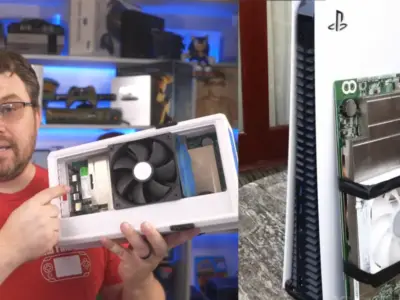
The BC-250 is a mining motherboard that utilizes a custom AMD APU derived from the Sony PS5 architecture. It features six Zen 2 CPU cores and 24 RDNA 2 GPU compute units paired with 16GB of GDDR6 VRAM. The device relies on the AMD Security Processor for managing secure operations, but previous Linux drivers failed to recognize the board's specific PCI ID. This recognition failure disabled the memory window required for the processor to function correctly.
A series of patches by Mattia Tadini addresses these driver limitations by adding specific PSP register layout support. The updates fix null pointer dereferences and prevent initialization failures for the PSP sub-device. System logs now confirm that platform access and the PSP are enabled after applying these changes. These technical adjustments allow the kernel to communicate properly with the security hardware embedded in the board.
Despite the successful enablement of the processor, the firmware does not provide full Trusted Execution Environment support. The patch author noted that the TEE ring buffer cannot function correctly with the current firmware state. This limitation means that while the hardware is active, certain high-security acceleration features remain unavailable. We looked at the last BC-250 update earlier while tracking similar stability themes in the community.
The BC-250 remains a specialized piece of hardware repurposed from console manufacturing for mining and niche computing tasks. The new kernel patches resolve critical driver errors that previously prevented the security processor from initializing. Users can now benefit from basic hardware security features, although full TEE acceleration is still blocked by firmware constraints.

Discussion
0 comments
Log in to join the thread with a thoughtful take, question, or correction.