
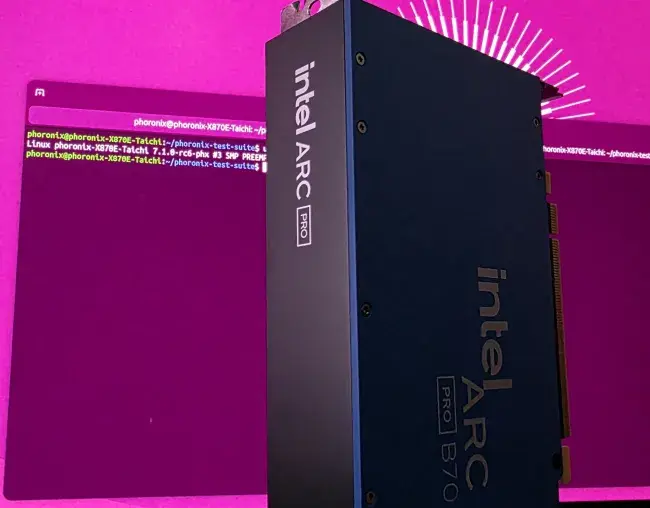
Intel released a new update for its Xe graphics driver on Linux 7.4 that changes how the system handles faulty video memory. This update matters because it allows graphics cards with minor VRAM defects to continue operating instead of failing completely. Users with Intel Battlemage or Crescent Island hardware can now benefit from automatic fault isolation that prevents system crashes and black screens.
New Linux 7.4 update isolates bad memory blocks to prevent crashes
The driver introduces a vRAM health check feature that uses a canary page stress test to detect memory issues early. Intel engineer Matthew Auld explained that the system tests the last page of memory as a canary bird to identify faults. This mechanism helps the driver recognize bad blocks before they cause visible artifacts or system instability.
- Feature: vRAM Health Check (Canary Page Testing)
- Feature: Memory Page Offline Support
- Platform: Linux Kernel 7.4
- Hardware Target: Intel Battlemage (BMG) / Crescent Island
- Debug Interface: /sys/bus/pci/devices/bdf/vram_bad_pages
A key addition is memory page offline support, which allows the system to blacklist faulty VRAM areas automatically. This feature was finalized after 21 rounds of review and directly addresses CCS offset errors on Battlemage GPUs. Linus Torvalds previously identified these errors as the cause of black screens and compositor restarts on affected hardware.
System administrators can check the health status of local GPU memory through the DebugFS interface at /sys/bus/pci/devices/bdf/vram_bad_pages. The vRAM health check is currently controlled by the CONFIG_DRM_XE_DEBUG_MEM kernel build flag. This means the feature is limited to developers and regression testing, and ordinary users will not see the detection process at startup.
Intel stated that this driver update means graphics cards with only a small number of faulty VRAM chips do not need to be scrapped directly. The driver detects and shields these faulty areas, allowing the graphics card to continue running with defects. This practical solution extends the usable life of hardware that might otherwise be discarded due to minor memory errors.

Discussion
0 comments
Log in to join the thread with a thoughtful take, question, or correction.