
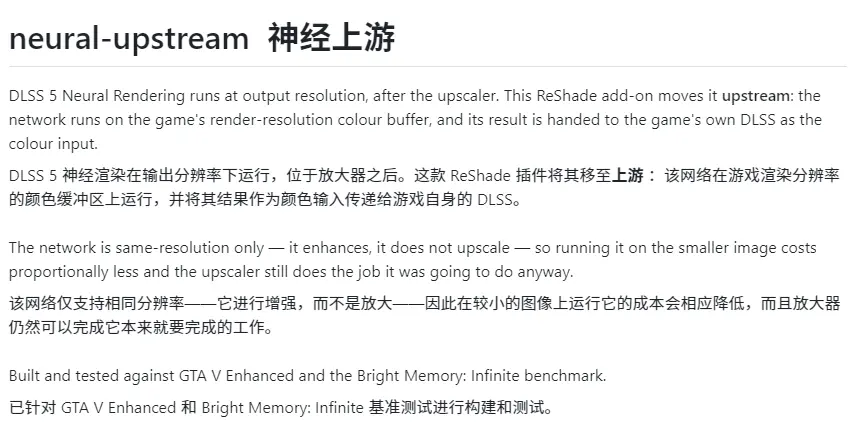
A new ReShade plugin called Neural Upstream changes how games use DLSS 5, giving players a way to boost frame rates on supported graphics cards. This tool matters because it allows games to render at lower resolutions while maintaining visual quality, which reduces the strain on your GPU. You can expect smoother gameplay in demanding titles if you install this specific optimization layer.
Third-party tool reorders DLSS 5 pipeline to lower internal resolution
Developer matiasLombo released Neural Upstream to adjust when DLSS 5 neural rendering happens in the graphics pipeline. The plugin moves the neural network execution before the upscaling step, which forces the system to run at a lower internal resolution. This shift cuts the computational cost to one-quarter of the original requirement, making heavy rendering tasks much lighter for the hardware.
Performance tests on an RTX 4080 show the plugin increases frame rates from 31 FPS to 50 FPS in Assassin's Creed Shadows at 4K resolution. This represents a 61% boost that correlates with the drop in frame time from 16.4ms to 4.1ms. The developer also noted similar effects in S.T.A.L.K.E.R. 2: Heart of Chernobyl, where frame rates increased by up to 50%.
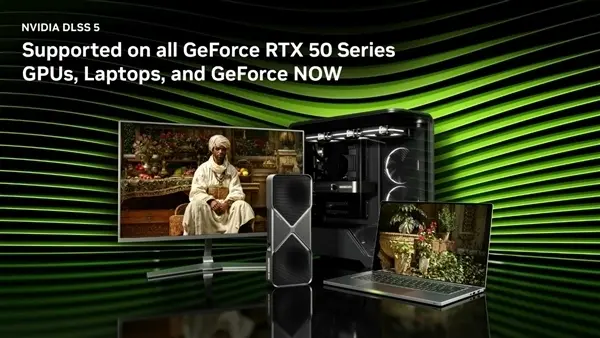
The plugin requires a game to support DX12 and include a DLSS implementation, along with a ReShade installation that supports Add-ons. Users must also provide the nvngx_dlssnr.dll library file to make the system work. NVIDIA is currently optimizing DLSS 5 separately, having already reduced compute load by five times since March, but this tool offers an immediate third-party solution.
Users should be cautious because online games may trigger anti-cheat systems when using ReShade plugins. The source warns that this risk exists but does not specify which specific titles or engines are affected. The source code for Neural Upstream is open-sourced on GitHub under the MIT license, allowing for community review of the code.


Discussion
0 comments
Log in to join the thread with a thoughtful take, question, or correction.