
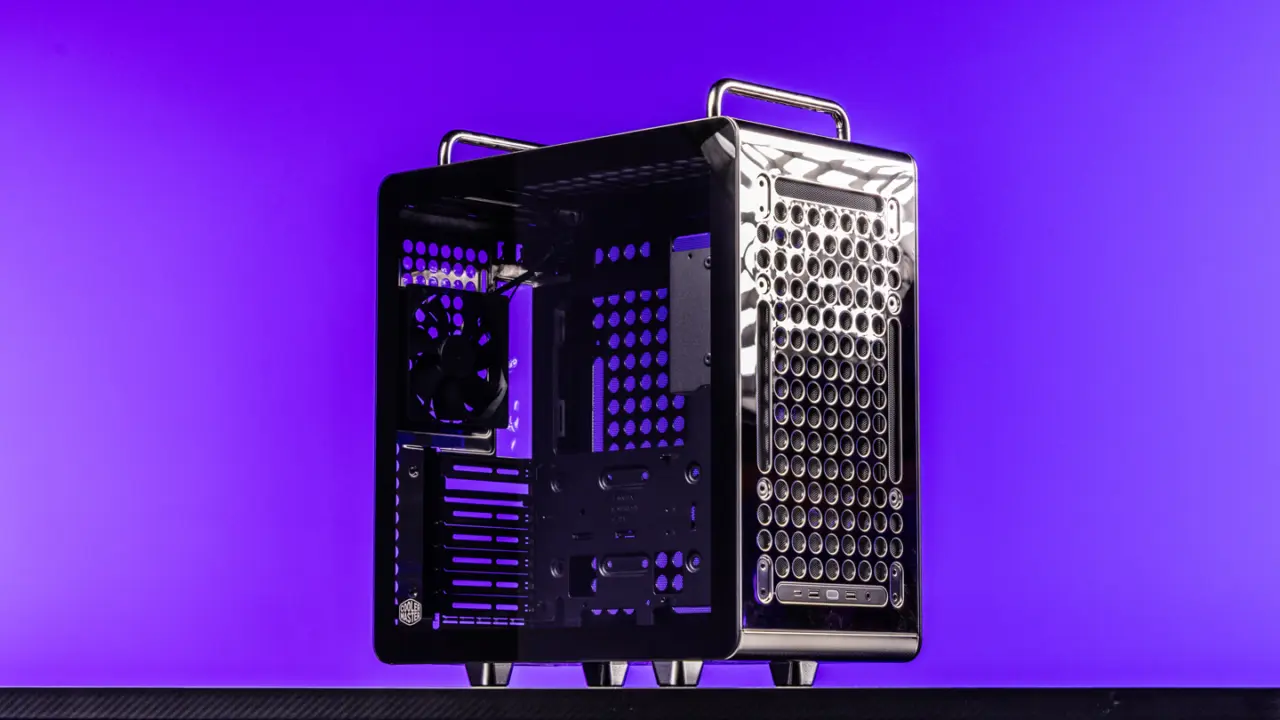
Cooler Master is updating its QUBE series with a new stainless steel variant that changes the aesthetic for buyers who prefer reflective surfaces over matte finishes. The QUBE 540 replaces the previous matte steel look with a mirror finish, which matters to builders who want their chassis to act as a visual centerpiece in their setup. This shift in material gives the mid-tower case a distinct identity compared to the original model.
New mirror steel finish updates the modular mid-tower chassis design
The chassis maintains the modular mid-tower form factor that defines the QUBE line. It supports partial E-ATX motherboards and accommodates full-length graphics cards. Builders can mount the system in either a horizontal or vertical orientation. This flexibility allows users to adapt the case layout to their specific cooling or space requirements.
Specifications
- Material: Mirror stainless steel
- Form Factor: Mid-tower
- Motherboard Compatibility: Partial E-ATX
- Expansion Slots: 7
- Orientation: Horizontal/Vertical
The case includes seven expansion slots for add-in cards. Cooler Master designed a movable I/O panel to help users route cables more easily. The ventilation panels on the chassis allow for custom accessory mounting. These features provide practical adjustments for cable management and peripheral placement.
Cooler Master previewed this stainless steel version on September 7, 2024. The company has not yet released pricing or availability details for the new model. We looked at earlier QUBE iterations while tracking these chassis updates. The product remains in the preview stage with no confirmed launch date or cost information.
Discussion
0 comments
Log in to join the thread with a thoughtful take, question, or correction.