
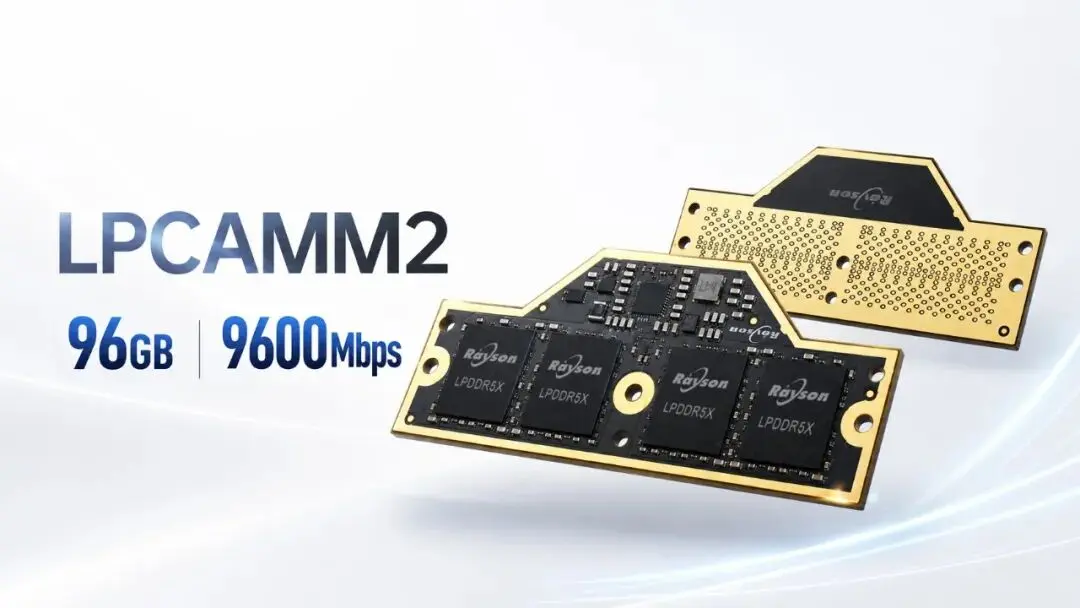
Integrating high-capacity memory into slim laptop designs has historically presented significant engineering challenges. Rayson has released a new memory module that shrinks the physical footprint while boosting capacity, which allows manufacturers to build more powerful AI PCs without increasing device thickness. This development addresses a major physical limitation that previously restricted the availability of high-end memory configurations in laptops.
New 96GB module shrinks board area by 60 percent
The new product is a 96GB LPDDR5X LPCAMM2 memory module from Rayson. It uses the LPDDR5X LPCAMM2 form factor, which is a newer standard designed to replace older SO-DIMM modules in compact systems. The module operates at a speed of 9600MT/s, providing high bandwidth for demanding workloads.
Specifications
- Capacity: 96GB
- Speed: 9600MT/s
- Form Factor: LPDDR5X LPCAMM2
- Dimensions: 78x23x3 mm
- Size Reduction: Approx. 60% smaller than DDR5 SO-DIMM
Physical dimensions of the module measure 78 by 23 by 3 mm. This size reduction cuts the board area by approximately 60 percent compared to traditional DDR5 SO-DIMM modules. The smaller footprint directly enables tighter circuit board layouts in ultrathin laptops and mini PCs.
Rayson states that the module reduces power consumption by about 50 percent. Energy efficiency improves by roughly 70 percent over previous generations. The company confirms that the 96GB 9600MT/s module has passed adaptation verification on platforms from major international PC terminal manufacturers. Rayson also produces 16GB, 32GB, and 64GB variants of this LPCAMM2 memory line.
This release adds to the growing ecosystem of LPCAMM2 components aimed at the AI PC market. The availability of high-capacity, low-power memory options gives system integrators more flexibility in hardware design. Consumers interested in advanced laptop specifications may see devices incorporating this standard in the near future.

Discussion
0 comments
Log in to join the thread with a thoughtful take, question, or correction.