
Intel's new Arrow Lake desktop chips change how PC builders approach memory upgrades. You can now save money by buying a single stick of RAM instead of two, and you will likely lose very little performance doing so. This matters because it lowers the entry cost for high-end gaming rigs without forcing a compromise on speed.
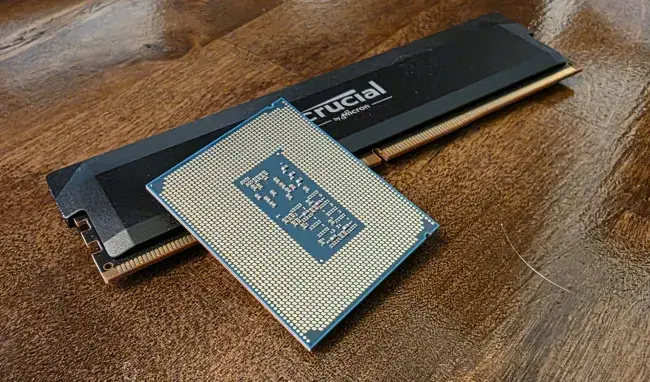
Phoronix tests show single stick RAM is enough for gaming
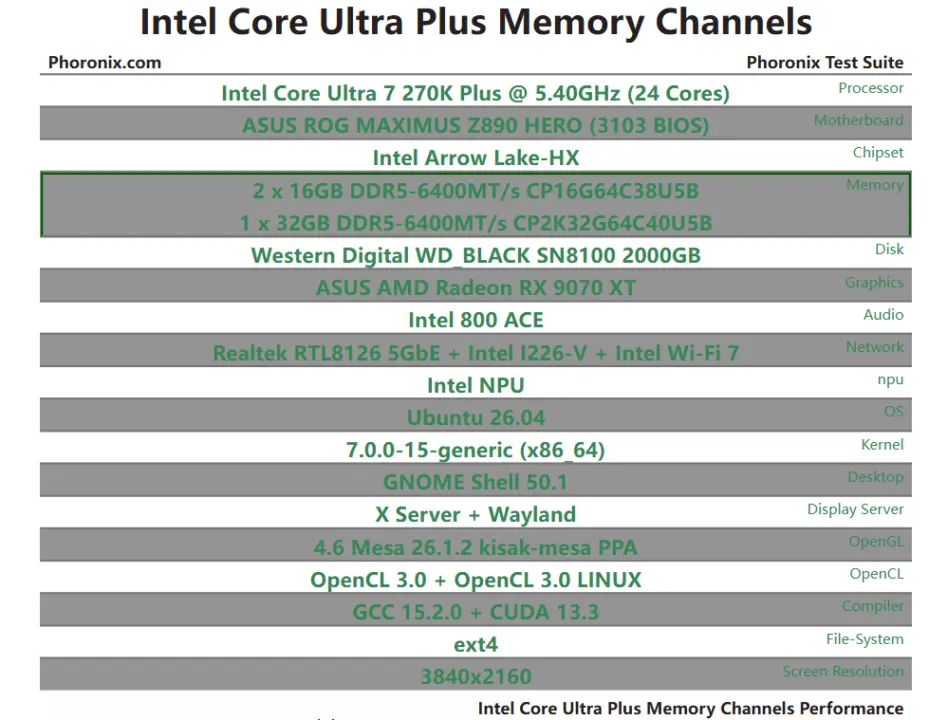
Phoronix tested the Intel Core Ultra 7 270K Plus processor to measure the gap between memory configurations. The team ran benchmarks on Ubuntu 26.04 using the Linux 7.0 kernel to ensure a consistent testing environment. This analysis focuses on how the CPU handles data when the memory bandwidth is restricted.
- Tested CPU: Intel Core Ultra 7 270K Plus (Arrow Lake)
- Single Channel RAM: 1x Crucial Pro DDR5-6400 CL40 32GB
- Dual Channel RAM: 2x 16GB DDR5-6400 CL38 (32GB total)
- OS/Kernel: Ubuntu 26.04 / Linux 7.0
- Performance Delta: <5% loss in single channel for most scenarios
The test setup compared a single 32GB stick of DDR5-6400 RAM against two 16GB sticks of the same speed. The single-channel configuration used Crucial Pro modules with CL40 timing, while the dual-channel setup used CL38 modules. Both configurations provided 32GB of total memory capacity for a fair comparison.
Results show that single-channel DDR5 causes less than a 5% performance loss in most scenarios. Light workloads and gaming frames remain nearly identical between the two setups. Tasks requiring heavy memory bandwidth, such as large code compilation, may show slightly larger gaps, but daily use is unaffected.
We've been tracking Intel Core Ultra 7 270K Plus closely — see our earlier coverage on Intel raises RCP for Core Ultra. The findings confirm that single-channel memory is sufficient for most users who pair these CPUs with discrete graphics cards. You can skip the dual-channel premium for standard gaming builds without hurting your frame rates.
Intel's Arrow Lake architecture handles single-channel DDR5 effectively for gaming and general computing. The performance difference is negligible for the average buyer. This gives builders more flexibility in choosing cost-effective memory configurations.


Discussion
0 comments
Log in to join the thread with a thoughtful take, question, or correction.