
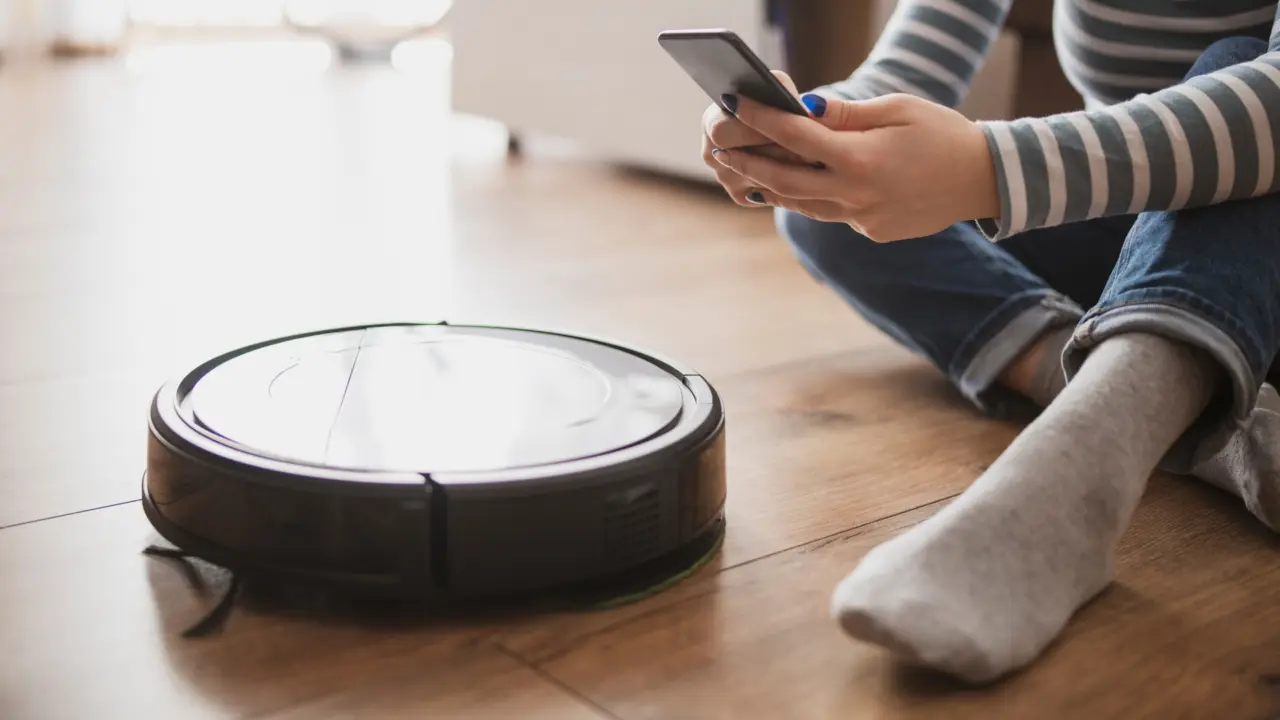
Home automation users are gaining a new option for local-only robot vacuums that eliminates cloud dependencies and data privacy risks. Maker’s Pet introduced Oomwoo, an open-source device designed to map and clean homes without sending telemetry to external servers. This approach matters to readers who prioritize security and want full control over their smart home infrastructure. The device processes all navigation data on the local network, ensuring that household activity remains private.
The open-source device runs fully offline to protect home privacy
The Oomwoo robot vacuum operates as a flexible hardware platform rather than a single fixed product. Users can build the device using a Raspberry Pi 5, an ESP32 microcontroller running micro-ROS, or both components together. The chassis is designed for accessibility, allowing anyone with a standard desktop 3D printer to fabricate the body. This modularity supports makers who want to customize the robot’s form factor or compute capabilities.
Specifications
- Compute: Raspberry Pi 5, ESP32, or both
- Navigation: 2D LiDAR and bumper sensors
- Software: ROS 2, Nav2, Home Assistant
- License: Apache 2.0
- Chassis: 3D-printable
Navigation relies on a 2D LiDAR sensor for mapping and bumper sensors for physical collision detection. The software stack runs ROS 2 and the Nav2 navigation framework directly on the Raspberry Pi. This configuration enables native integration with Home Assistant, allowing the vacuum to function as part of an existing smart home ecosystem. All hardware, firmware, and software components are released under the Apache 2.0 license, permitting unrestricted modification and redistribution.
The project is currently in a request-for-comments stage, meaning the design is still open to community feedback. Build instructions are not yet available as the documentation is being finalized. A convenience kit will be sold to support development, but all parts can also be sourced independently by users. The first Bill of Materials is targeted for release around mid-July, marking the initial step toward public availability.
Oomwoo represents a shift toward transparent, locally controlled robotics for the maker community. The project combines open hardware with offline software to address growing concerns about cloud security in smart home devices. Users can expect to see the initial Bill of Materials later this month as the project moves from design to production.


Discussion
0 comments
Log in to join the thread with a thoughtful take, question, or correction.