
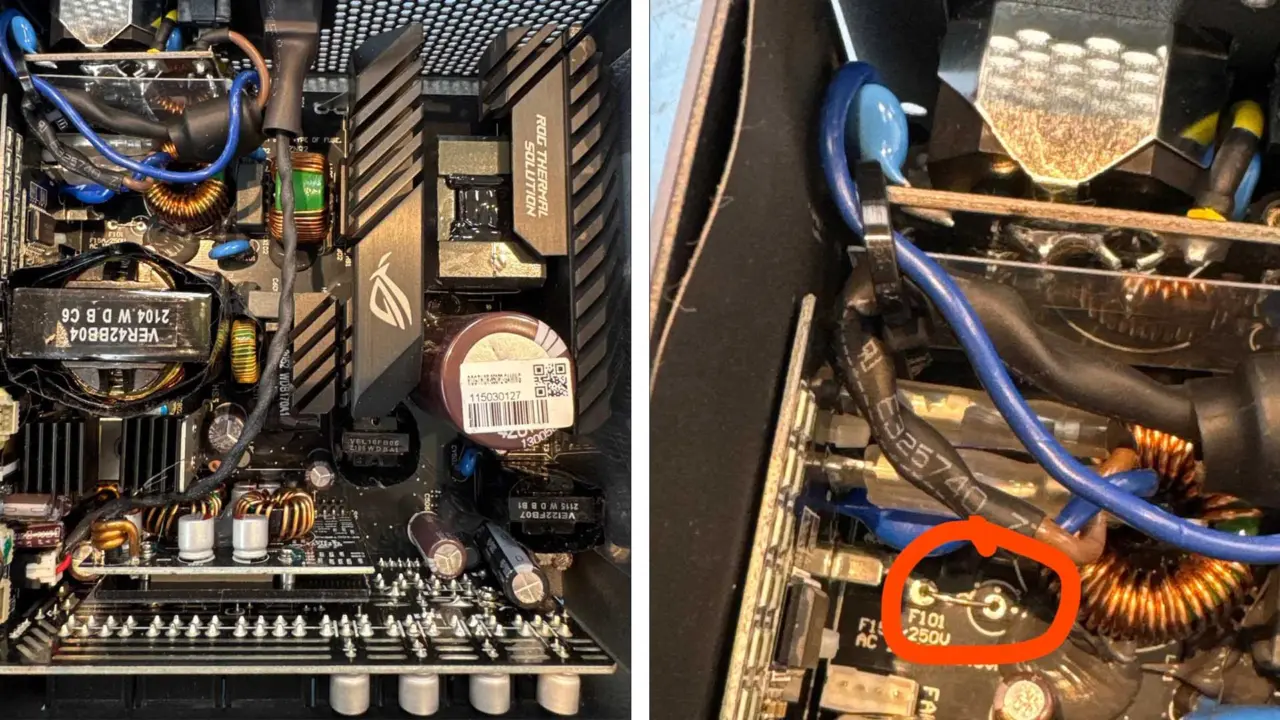
An ASUS ROG Strix 850W power supply unit returned from repair poses a serious fire risk due to improper handling at the service center. A user discovered that a critical safety fuse had been bypassed rather than replaced, turning a routine warranty claim into a potential hazard. This incident matters because it reveals a breakdown in quality control that could endanger users and their home electrical systems. Anyone relying on this model for high-power gaming builds should verify their unit's safety status immediately.
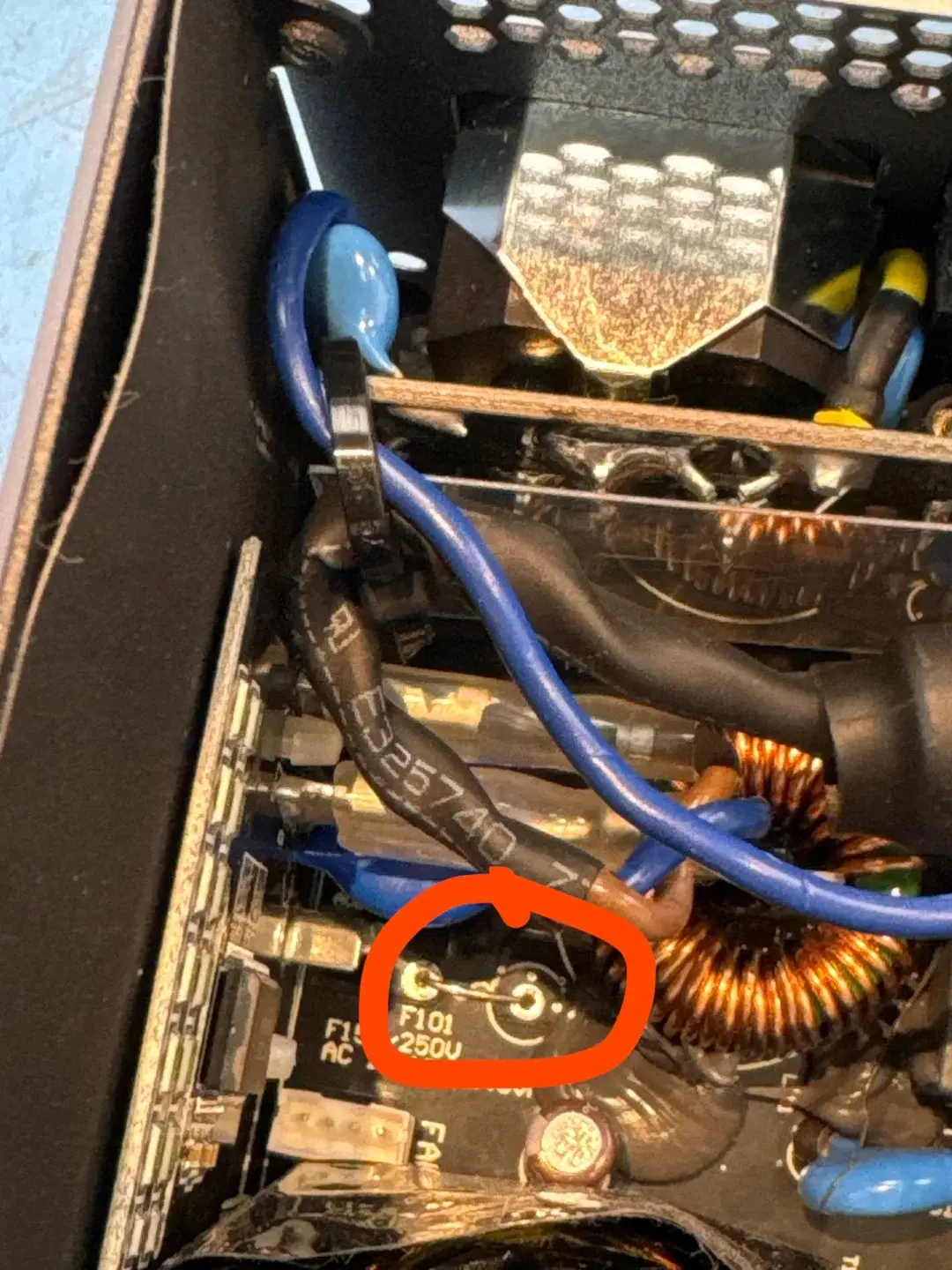
Returned unit found with soldered wire across fuse contacts
The affected device is an ASUS ROG Strix 850W power supply unit, a component designed to deliver stable electricity to demanding PC hardware. The unit was sent back to the manufacturer after an initial failure, but the repair process introduced a new and dangerous defect. Instead of swapping out the faulty internal components with new, certified parts, the technician used a soldered wire to bridge the safety fuse contacts. This action effectively removes the circuit protection designed to prevent catastrophic electrical failure during a fault.
The core technical issue involves the bypassing of an internal safety fuse, a standard component that interrupts power flow during overcurrent events. A wire was soldered directly across the fuse contacts, creating a permanent short that defeats the safety mechanism. This modification means the power supply can no longer shut down safely if a critical error occurs, leaving the system vulnerable to uncontrolled power surges. The user reported that running the PC for just two hours caused the room's main electrical breaker to trip twice, indicating severe instability.
ASUS has denied warranty service for this unit after the user opened the casing to inspect the damage, citing voided warranty terms for tampering. This decision highlights a conflict between the manufacturer's repair protocols and the actual quality of the service provided. The incident underscores a potential fire hazard and poor quality control at the RMA facility, raising concerns about the reliability of returned hardware. Users should be aware that opening a unit to check for such defects may result in a denied claim, even if the initial failure was legitimate.
This case serves as a stark reminder that returned hardware may not always be restored to safe operating condition. Consumers should remain vigilant about the safety of their power supplies, especially after a repair cycle. The incident confirms that safety mechanisms can be compromised during service, creating risks that extend beyond the device itself. Buyers should prioritize units with verified quality control and report any suspicious behavior to the manufacturer immediately.

Discussion
0 comments
Log in to join the thread with a thoughtful take, question, or correction.