
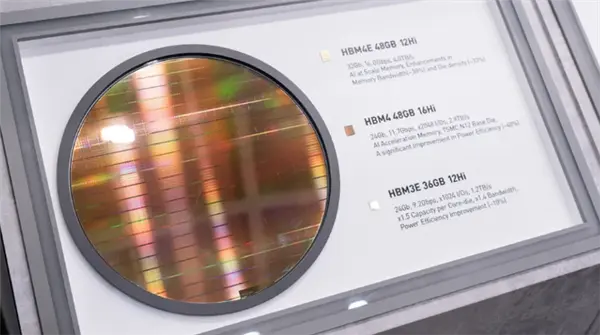
SK Hynix has unveiled a 48GB sample of its next-generation HBM4E memory at COMPUTEX, marking a significant step forward in high-bandwidth architecture for AI workloads. The new module uses a 12-layer stack design built on a 1cnm process node to deliver higher density and efficiency.
New memory module targets generative AI workloads with massive data throughput
The core of the HBM4E sample consists of 32Gb DRAM dies arranged into a single 48GB package. This configuration allows the memory to support demanding generative AI models and high-performance computing tasks that require massive data throughput without compromising on power consumption.
Specifications
- Stack Layers: 12
- Capacity: 48GB
- Die Density: 32Gb
- Process Node: 1cnm
- Pin Data Rate: 16.0Gbps
Technical specifications highlight a pin data rate of 16.0Gbps, which directly contributes to the module's impressive bandwidth capabilities. Each stack achieves up to 4.0TB/s of single-stack bandwidth, representing a substantial leap in raw data transfer speeds compared to prior iterations.
Performance claims indicate a 38% improvement in bandwidth over the previous generation and a 33% increase in single-die capacity. These metrics position HBM4E as a critical component for scaling large language models and accelerating complex computational workloads in modern server environments.
The announcement at COMPUTEX serves as the primary public debut of this hardware, with SK Hynix showcasing the engineering sample to industry partners and developers. No pricing or specific shipping dates have been disclosed yet, leaving the commercial availability timeline open for future updates.
This release aligns with growing industry demand for memory solutions that can keep pace with AI training and inference requirements. The 12Hi stacking architecture demonstrates SK Hynix's focus on density improvements while maintaining compatibility with existing high-performance computing platforms.
SK Hynix continues to lead the HBM market by delivering incremental but meaningful upgrades in capacity and speed. The confirmed specifications for the HBM4E sample provide a clear roadmap for next-generation AI hardware development, though broader market adoption will depend on final production scaling and ecosystem support.
Discussion
0 comments
Log in to join the thread with a thoughtful take, question, or correction.